Amazon US product dossier · captured 30 October 2026 · delivery context New York 10001 · prices in USD as displayed
Maja Perfumed Talcum Powder — Classic Oriental Scent — 2 × 7 oz. A scented dusting powder whose ingredient count is driven by its fragrance rather than by its function: fourteen declared entries, eight of them fragrance allergens, one of them talc.
01 · Product information
This is a two-bottle pack of a scented dusting powder, 200 g / 7 oz per bottle and 14 oz by unit count. It is a conventional perfumed talcum powder, not a talc-free or medicated one: the pack declares talc first and a fragrance blend second. The listing has no brand storytelling module — the A+ container renders only the words “From the manufacturer” — so almost everything specific about this product lives in three places: the specification table, five marketing bullets, and the four-language directions panel printed on the back of the bottle.
| Brand | Maja | Item form | Powder |
|---|---|---|---|
| Skin type stated | Normal | Benefits stated | Moisturizing, softening |
| Recommended use | Face makeup | Item volume | 1 |
| Item weight | 1.1 pounds | Number of items | 2 |
| Unit count | 14 ounce | Unit price | $1.07 per ounce |
| Dimensions | 3.2 × 2.85 × 7.5 in; 1.11 lb | UPC | 037836262227 |
| Manufacturer | FACTOR INT'L. / GRISI HNOS. | Sold by | Amazon.com |
| Category path | Beauty & Personal Care › Fragrance › Dusting Powders | ||
| Best sellers rank | #22,166 in Beauty & Personal Care · #9 in Fragrance Dusting Powders | ||
Two of those fields are worth pausing on. The stated benefit is “moisturizing, softening”, which the formula does not support — there is no emollient, humectant or oil anywhere in the fourteen declared ingredients, so softness here is a powder finish rather than a moisturising function. And the stated use is “face makeup”, which narrows a product the bullets sell for four other jobs as well.
What the listing says it is for
- Skin comfort. Applied to dry, irritated-feeling areas and rubbed in, it is offered as a way to leave a fresh, powdery finish.
- Makeup preparation. Used on the face before makeup, it is presented as an oil absorber that builds a dry-looking base and reduces visible shine.
- Friction control. Dusted where skin rubs — the listing's own example is between the thighs — it is offered as a buffer for daily wear.
- Waxing preparation. Applied after exfoliating and before waxing, it absorbs surface oil so the wax can grip hair rather than skin.
- Dressing aid. Applied before close-fitting clothing in warm weather, it helps fabric slide on while leaving scent behind.
No timeline is claimed anywhere and no active treatment ingredient is named. The promise being made is textural and olfactory: a dry finish plus the house Oriental scent, delivered five different ways.
Product images
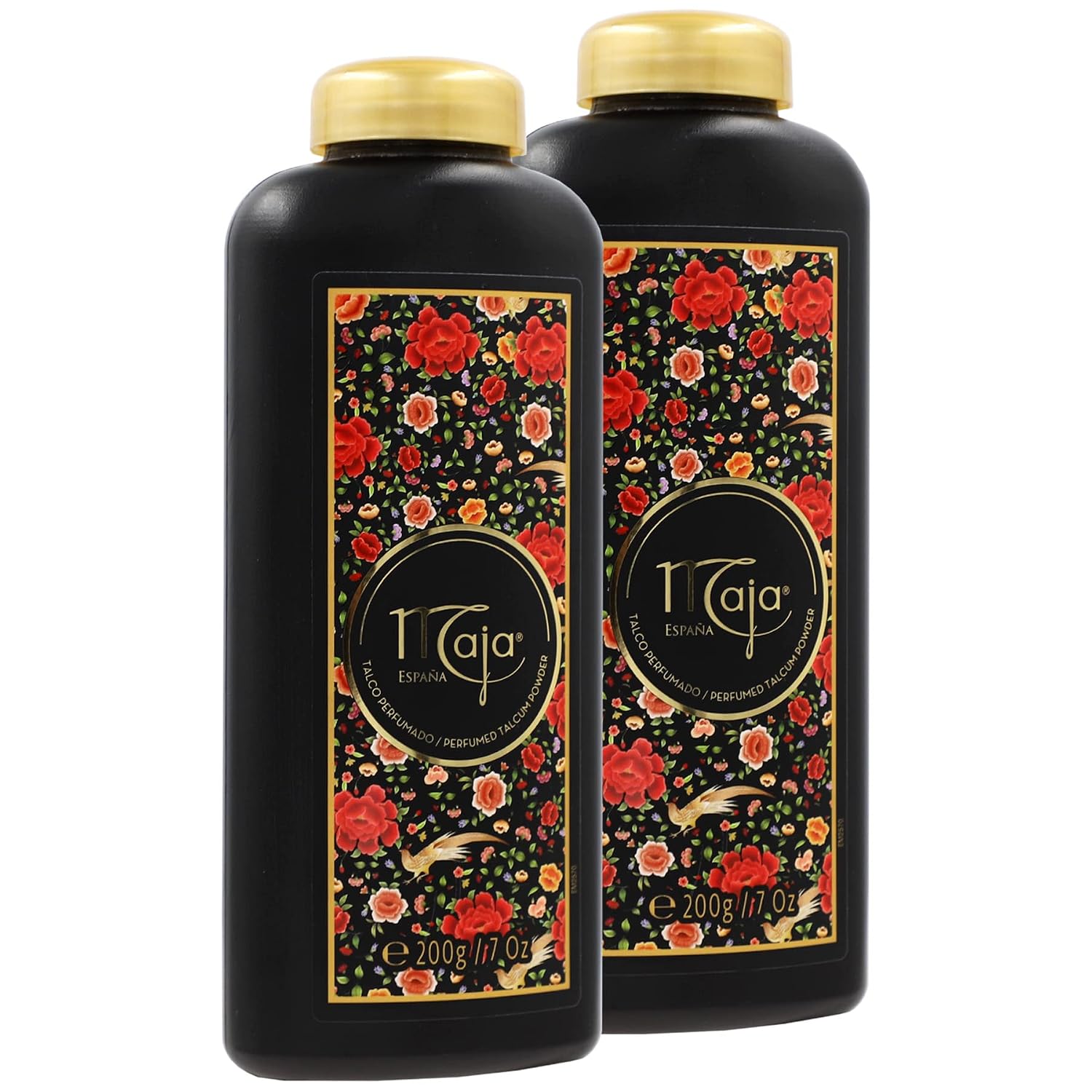
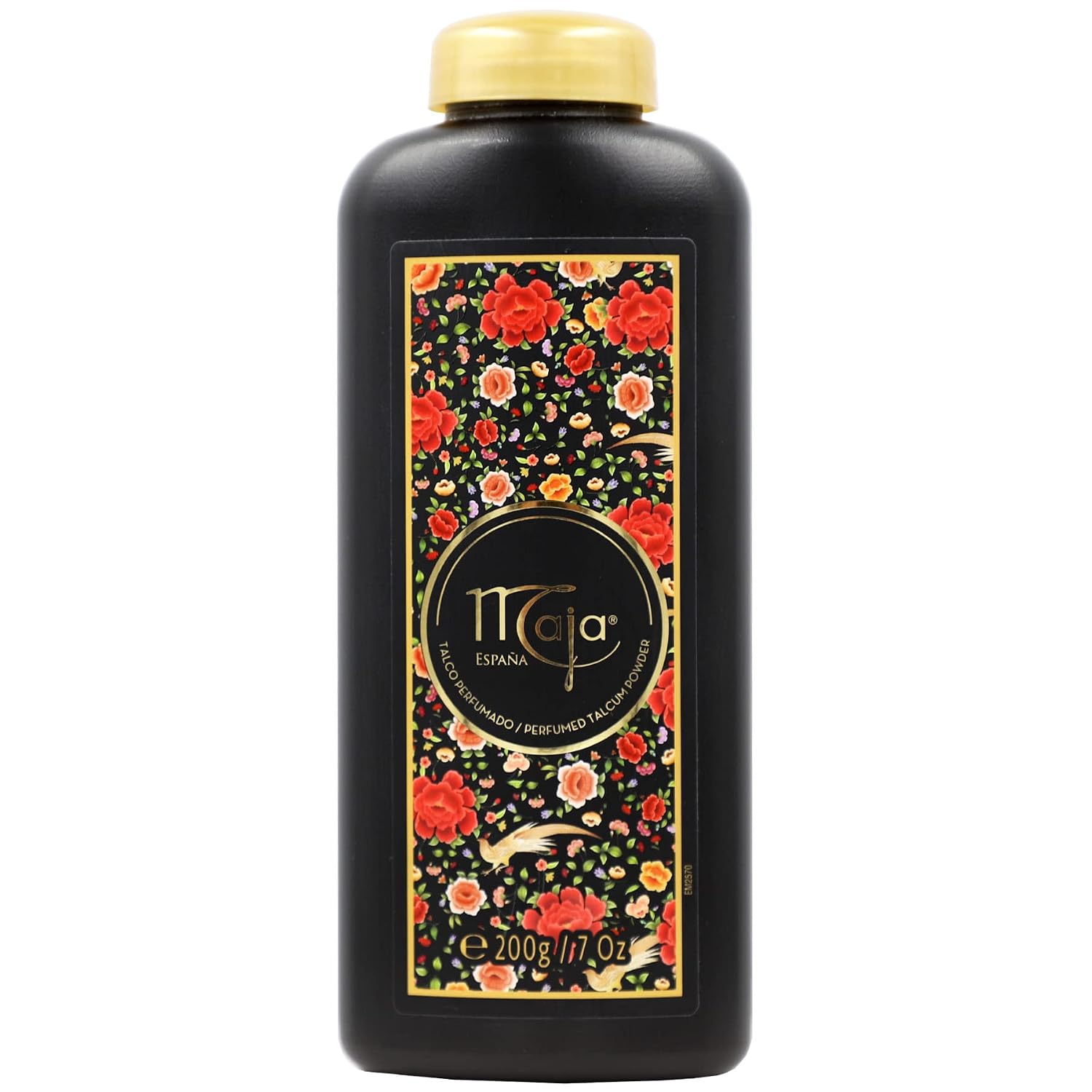
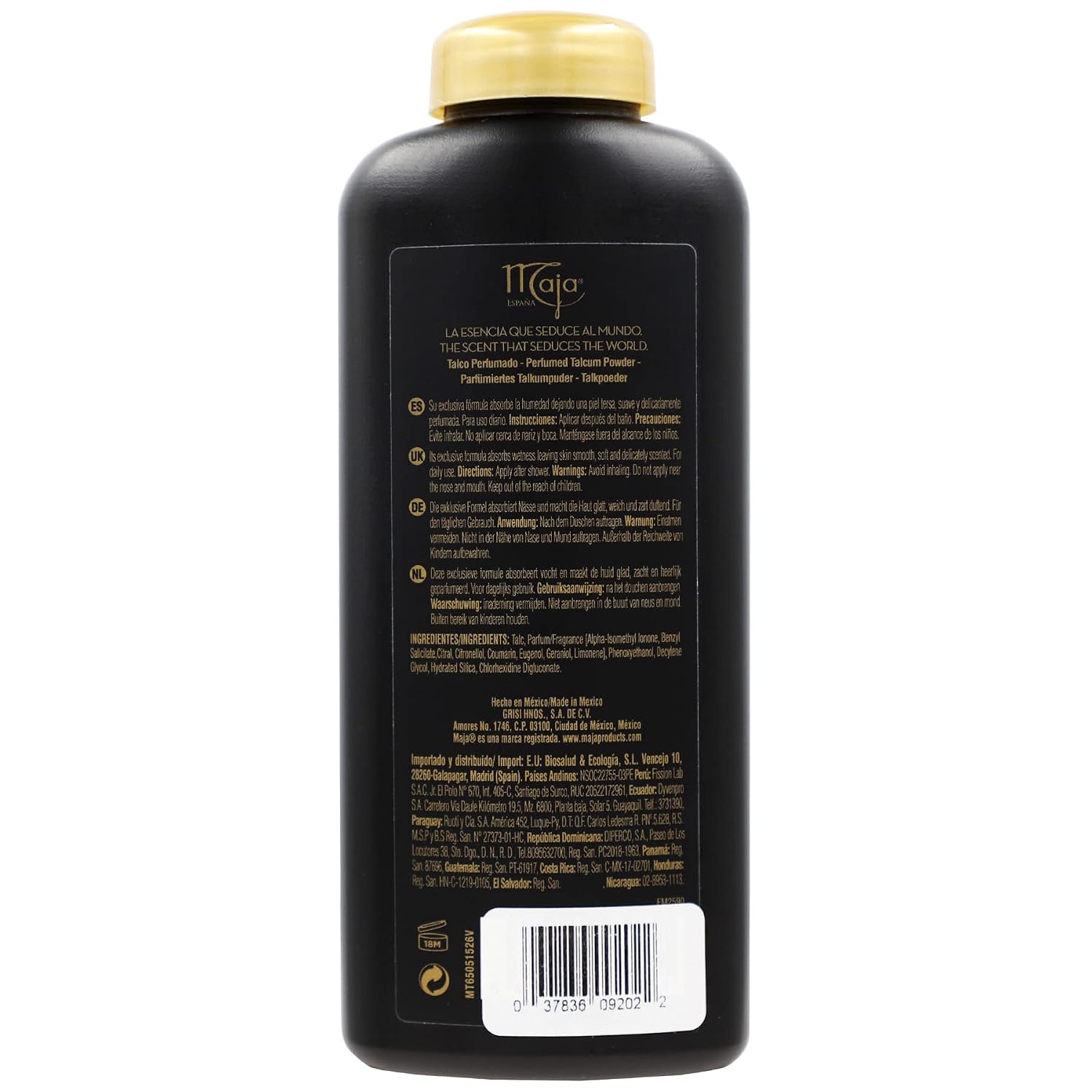
Three listing images were captured. The listing exposes no buyer-uploaded photographs on this capture, so no real-use photography is shown and none has been substituted from the marketing set.
02 · Product rating
The listing carries 4.7 out of 5 across 2,523 ratings. That is a large enough base for the shape of the distribution to mean something, and the shape is emphatically top-heavy.
4.7
out of 5
2,523
listing-reported
84%
of all ratings
4%
combined
| Stars | Share | Approximate ratings | Reading |
|---|---|---|---|
| 5 | 84% | ~2,119 | The core of the product's reputation |
| 4 | 8% | ~202 | Satisfied with a reservation |
| 3 | 4% | ~101 | Genuinely split |
| 2 | 2% | ~50 | Dissatisfied |
| 1 | 2% | ~50 | Dissatisfied |
Two caveats belong with those numbers. The shares are the rounded percentages the listing publishes, so a 2% bucket is a rounded share and cannot be read as exactly fifty ratings. And because the base is large, the tail is not noise: roughly a hundred ratings sit at one or two stars, which is enough for the irritation complaints described below to represent a real minority rather than a handful of outliers.
03 · What buyers say
The listing publishes an aggregated buyer summary over the full rating base. Its substance is that the texture and the scent carry the product, and that tolerance is the fault line.
Buyers praise the silky texture and the way the powder keeps skin fresh through the day, and several describe it as a convincing stand-in for baby powder. Fragrance, effectiveness, value and appearance all draw positive comment, with the scent described as feminine without being overbearing. Opinions on skin irritation are explicitly mixed: some buyers find it comfortable, others report they cannot tolerate it.
The aspect table is where the story becomes measurable. Eight themes were extracted, with mention counts and a positive share for each.
| Theme | Mentions | Positive | Negative | Positive share |
|---|---|---|---|---|
| Fragrance | 272 | 213 | 59 | 78% |
| Effectiveness | 157 | 140 | 17 | 89% |
| Softness | 73 | 63 | 10 | 86% |
| Value for money | 55 | 48 | 7 | 87% |
| Dryness | 50 | 47 | 3 | 94% |
| Skin irritation | 24 | 8 | 16 | 33% |
| Strength | 22 | 14 | 8 | 64% |
| Appearance | 21 | 21 | 0 | 100% |
Three readings follow directly. Fragrance is the most discussed thing about this product — 272 mentions, more than the next two themes combined — which makes sense for a scented powder sold on its scent and which also means the scent is where dissatisfaction concentrates: 59 of those mentions are negative, more than every other negative mention in the table added together. Skin irritation is the only theme that inverts, at 33% positive, and it is the only theme where a buyer should treat the average rating as uninformative. Dryness is the best-loved function at 94%, which is exactly what a talc-based powder is for and exactly what the “moisturizing” benefit claim does not describe.
One structural note on reading this table: mention counts are not review counts. A single review can raise several themes, so the columns do not sum to the rating base and should not be read as a partition of 2,523 buyers.
04 · Product ingredients
The listing publishes no ingredient panel of its own. No ingredient table appears in the specification block, in the bullets, or in the A+ area. The declaration below was read from the back-of-pack label reproduced in the third listing image, at 4× magnification, where it is printed in gold on black above the Mexico manufacturing statement.
Two independent ingredient databases that would normally corroborate a formula were both unavailable on this capture, and that is stated rather than papered over: one served a browser-verification challenge on both of its hosts, and the other does not index this product at all. No acne-risk, irritant or safety score appears anywhere in this report — those are community ratings assigned per ingredient by a database, they cannot be derived from an ingredient name, and inventing them would be worse than the gap. What follows is the manufacturer's own declaration plus a functional classification of it.
The declaration as printed
Talc, Parfum/Fragrance (Alpha-Isomethyl Ionone, Benzyl Salicylate, Citral, Citronellol, Coumarin, Eugenol, Geraniol, Limonene), Phenoxyethanol, Decylene Glycol, Hydrated Silica, Chlorhexidine Digluconate.
Fourteen declared entries: twelve distinct substances, plus eight fragrance components named individually inside the parenthetical that follows Parfum/Fragrance. Those eight are not eight extra ingredients added on purpose — they are the parts of the fragrance blend that labelling rules require to be disclosed on their own.
Classified by level
The panel resolves into five functional levels. Nearly six entries in ten exist only because a scent was added, which means this product's ingredient count is driven by its fragrance rather than by its function.
| Level | Function | Entries | Share of panel | Members |
|---|---|---|---|---|
| 1 | Bulking carrier and absorbent base | 1 | 7.1% | Talc |
| 2 | Fragrance, declared as a blend | 1 | 7.1% | Parfum/Fragrance |
| 3 | Declared fragrance allergens | 8 | 57.1% | Alpha-Isomethyl Ionone, Benzyl Salicylate, Citral, Citronellol, Coumarin, Eugenol, Geraniol, Limonene |
| 4 | Preservatives and antimicrobials | 3 | 21.4% | Phenoxyethanol, Decylene Glycol, Chlorhexidine Digluconate |
| 5 | Absorbent and texture agent | 1 | 7.1% | Hydrated Silica |
Classified by exposure tier
A second cut, by how much of the product each entry is likely to represent. This is a reading of the declaration order and of each material's normal use level, not a percentage breakdown — the label publishes no concentrations, so no figure here should be taken as a share of the formula.
| Tier | Reading | Entries | Members |
|---|---|---|---|
| Dominant | The overwhelming majority of the powder by mass | 1 | Talc |
| Functional | Present to do a job at a usual use level | 4 | Parfum/Fragrance, Phenoxyethanol, Hydrated Silica, Decylene Glycol |
| Declaration-driven | Listed because labelling rules require it, typically at trace level | 8 | The eight named fragrance allergens |
| Antimicrobial | Present at low level to protect the product | 1 | Chlorhexidine Digluconate |
The full panel, line by line
| # | Ingredient | Level | Role on this panel | Note |
|---|---|---|---|---|
| 1 | Talc | 1 | Carrier, absorbent, opacifier | The bulk of the product; not incidental and not replaceable here |
| 2 | Parfum/Fragrance | 2 | Scent, as an undisclosed blend | The composition behind the eight named components below |
| 3 | Alpha-Isomethyl Ionone | 3 | Fragrance component | Declarable allergen |
| 4 | Benzyl Salicylate | 3 | Fragrance component, fixative | Declarable allergen |
| 5 | Citral | 3 | Fragrance component, citrus | Declarable allergen |
| 6 | Citronellol | 3 | Fragrance component, rose | Declarable allergen |
| 7 | Coumarin | 3 | Fragrance component, hay and almond | Declarable allergen |
| 8 | Eugenol | 3 | Fragrance component, clove | Declarable allergen |
| 9 | Geraniol | 3 | Fragrance component, geranium | Declarable allergen |
| 10 | Limonene | 3 | Fragrance component, citrus peel | Declarable allergen; oxidises on storage |
| 11 | Phenoxyethanol | 4 | Preservative | Primary preservative of the pair |
| 12 | Decylene Glycol | 4 | Preservative booster, skin conditioning | Extends the preservative rather than acting alone |
| 13 | Hydrated Silica | 5 | Absorbent, flow and anticaking agent | Keeps the powder free-running and adds oil uptake |
| 14 | Chlorhexidine Digluconate | 4 | Antimicrobial | The least expected entry on this panel |
What the panel does and does not contain
| Question | Answer from the declaration |
|---|---|
| Talc-free? | No. Talc is first and is the bulk of the product |
| Fragrance-free? | No. Fragrance is second, plus eight named components |
| Alcohol-free? | Yes in the volatile-solvent sense; no ethanol or denatured alcohol declared |
| Paraben-free? | Yes; preservation is phenoxyethanol-led |
| Silicone-free? | Yes; no silicone appears |
| Sulfate-free? | Yes; no sulfate surfactant |
| Water-based? | No. No water entry; this is an anhydrous powder |
| Contains an active treatment ingredient? | No. No drug active, no exfoliant, no humectant of note |
| Any risk rating per ingredient? | Unavailable. Both databases that carry such ratings were unreachable, and nothing was substituted |
Six things worth knowing
- Talc dominates and is not incidental. It is simultaneously the carrier, the absorbent and the reason the product feels the way it does. A buyer avoiding talc has no partial option in this pack.
- Eight declarable allergens, all from one blend. That is a high count for a body powder. It also means a fragrance-sensitive buyer has a specific, checkable list instead of a generic warning — but only if they read the back label, because the listing front never mentions any of them.
- Chlorhexidine digluconate is the surprise. It is an antimicrobial with a recognised sensitisation potential of its own, and it sits alongside two other preservation materials in a product that is dry by design. For anyone with a history of contact reactions, this is the line most worth a patch test.
- The preservation stack is heavier than a dry powder would ordinarily need. Three antimicrobial materials is a response to moisture ingress — damp bathrooms, damp applicators — rather than evidence of a wet formula.
- There is no emollient anywhere. The listing promises soft, moisturised-feeling skin; the panel supplies no oil, butter, fatty alcohol or humectant. Softness here is a powder-finish effect.
- Limonene oxidises. It is the one component on this panel whose sensitisation potential rises with age and exposure to air, which matters for a product sold in a two-bottle pack that may sit open for months.
05 · Product price
At capture, the buy box showed $14.91 with the item in stock, sold by Amazon itself, at $1.07 per ounce across the 14 oz twin pack. Neither a strike-through list price nor a “save” percentage was rendered at that moment, so the discount cannot be quoted from the buy box — but the historical tracker does publish a list price of $12.36, and against that the current figure is a premium, not a discount.
$14.91
30 Oct 2026
$12.36
tracker-reported
$1.07
14 oz pack
+20.6%
derived
Price history, by channel
The history below is a tracker record of Amazon price changes since monitoring began in July 2021. It is an all-time summary: the lowest, highest, current and average values are for the whole monitored period, not for any recent window, and no period-specific statistic can be produced from it.
| Price type | Lowest ever | Highest ever | Current | Average |
|---|---|---|---|---|
| Amazon | $8.49 (12 Jul 2021) | $15.34 (20 Oct 2026) | $14.91 (27 Oct 2026) | $11.69 |
| 3rd party new | $13.46 (27 Sep 2026) | $30.07 (25 Jul 2026) | $14.91 (27 Oct 2026) | $24.01 |
| 3rd party used | — | — | — | — |
A dash means the tracker holds no data for that price type, not that the value is zero. This item has no recorded used market at all, which is a finding in itself for a consumable sold in a twin pack.
Where the current price sits
The four benchmark comparisons below are arithmetic on the table above. None of them is a figure the source publishes.
| Benchmark | Amazon channel | 3rd party new channel |
|---|---|---|
| Current vs all-time low | +75.6% | +10.8% |
| Current vs average | +27.5% | −37.9% |
| Current vs list price ($12.36) | +20.6% | +20.6% |
| Current vs all-time high | −2.8% | −50.4% |
| All-time spread, and as % of the low | $6.85 · 80.7% | $16.61 · 123.4% |
Read the two columns as opposite verdicts, because that is what they are. On the Amazon series the current price is 27.5% above its own average and within 3% of its all-time high — a shopper buying today is paying at the top of the range, not the bottom. On the third-party series the current price is 37.9% below its own average and roughly half its all-time high. The contradiction is resolved by the extremes: the third-party average of $24.01 is dominated by a single $30.07 spike on 25 July 2026, roughly double list price, which no buyer would recognise as this product's normal cost. Strip that out and the third-party history looks much calmer, with a recent low of $13.46 on 27 September 2026.
The Amazon low of $8.49 is dated 12 July 2021, the first day of monitoring. A low that coincides with the start of tracking is frequently an introductory or launch listing rather than a sustained market level, so it is reported as published but flagged as a caveat: it flatters the “75.6% above the low” figure, because the baseline is a one-off.
The most useful single observation is the last one. Both channels printed the same $14.91 on 27 October 2026, to the cent, two days after the Amazon series set its all-time high. A $12.32 gap between the two channel averages alongside exact current parity means the marketplace premium here is historical rather than live: third-party sellers are currently matching the first-party price instead of competing with it. For a shopper that removes the usual reason to check the other-seller box.
Freshness
The history values are dated 27 October 2026 and were read on 30 October 2026, so they are three days old — inside any reasonable tolerance. The tracker's own scan field reported an update seven hours before capture. Its “last tracked” field, by contrast, reads 21 November 2023 and is reproduced exactly as published; it is not the date of the current price and should not be read as one.
06 · Method, confidence and limits
Everything above rests on four captures made on 30 October 2026: the Amazon US listing with a New York 10001 delivery context so that all pricing is native USD and no conversion occurs anywhere in this report; the listing's back-label image read at magnification for the ingredient declaration; a price-history tracker for the channel series; and two ingredient databases, both of which failed.
| Element | Confidence | Basis |
|---|---|---|
| Product identity and specification | High | Four independent identifiers agree: UPC, manufacturer, brand and title |
| Buy box price $14.91 | High | Read directly, US delivery context confirmed |
| Rating and distribution | High | Published aggregates, large base |
| Buyer theme percentages | Medium | Listing-generated aggregation; mention counts are not review counts |
| Ingredient declaration | High | Manufacturer's printed panel, legible end to end at 4× |
| Functional and tier classification | Medium | Assigned from each material's standard role; not stated by the manufacturer |
| Per-ingredient risk grades | None | Both databases unavailable; nothing substituted |
| Price history figures | High | Transcribed verbatim from a single rendered read |
| Derived percentages | Medium | Arithmetic on published values; labelled as derivations throughout |
Limits. Prices and ranks move between captures, so every figure here is a snapshot dated 30 October 2026 and should be re-checked before any transaction. No individual review text was captured on this listing, so section 03 reports the listing's own aggregation rather than a reading of reviews. The ingredient declaration is one pack's label and publishes no concentrations, so nothing here quantifies exposure. And the absence of per-ingredient safety grades is a gap in coverage, not a verdict of safety — a missing rating is missing data, never a clean bill of health.