Two independent databases transcribed this label and produced the same 23 rows in the same order. That makes this the cleanest formula file in the batch - and it moves the interesting questions to the pricing, where a $37 ceiling, four promotional windows and a five-dollar gap between the tracker and the buy box tell a very different story.
| Rating 4.5 / 5 | Ratings 1,108 | Buy box $35.15 | Formula rows 23 two sources |
Product information
listing| Attribute | Value |
|---|---|
| Brand | Paula's Choice |
| Item form | Liquid |
| Declared skin types | Combination, dry, normal, oily |
| Declared benefit | Exfoliates the surface, smooths texture, softens lines, brightens; supports the microbiome and barrier |
| Active ingredients (as declared) | Alpha Hydroxy Acid, Lactic Acid |
| Volume | 88 ml / 3 fl oz |
| Unit count | 3 fluid ounces |
| Dimensions | 1.57 x 1.57 x 5.51 in; 3 oz |
| Model number | 1470 |
| UPC | 655439014700 |
| ASIN | B0CNL5P9MM |
| Category path | Beauty & Personal Care > Skin Care > Face > Treatments & Masks > Facial Peels |
| Best sellers rank | #5,588 Beauty & Personal Care; #10 Facial Peels |
| Availability / seller | In stock, sold by Paula's Choice Skincare, shipped by Amazon |
- 6% mandelic + 2% lactic: described as a powerful yet gentle AHA blend that smooths, softens and brightens, and visibly reduces uneven tone and discoloration.
- Time-released lactic acid: the bullet claims an alpha-hydroxy acid tested to be as gentle as water while delivering the potency of a conventional 10% concentration.
- Replenishing antioxidants: yarrow extract plus a fermented blend of cherry blossom, chocolate vine and yumberry to support the microbiome and barrier.
- All skin types: AHAs and antioxidants resurfacing texture and tone for a radiant complexion.
- No fragrance, no fluff: the brand's standing formulation position, repeated as a bullet.
Rating and buyer sentiment
1,108 ratingsA top-heavy pyramid with an almost absent tail: 77% of 1,108 ratings are five-star and only 6% are one or two stars. For an acid, that is the number that matters.
Bucket sizes are approximate: at 1,108 ratings one percentage point is about 11 ratings.
| Bucket | Share | Ratings | Distribution |
|---|---|---|---|
| 5 star | 77% | ~853 | |
| 4 star | 10% | ~111 | |
| 3 star | 7% | ~78 | |
| 2 star | 2% | ~22 | |
| 1 star | 4% | ~44 |
Weighted check: Σ(star × share) = 4.52, reproducing the displayed 4.5.
The eight aspects split cleanly in two. Every aspect about what the product does sits above 78% positive; every aspect about what it costs or how much of it you get sits below 30%.
Green marks an aspect with a positive majority, rose an aspect where negativity dominates. Mentions overlap, so the rows are not additive.
| Aspect | Mentions | Pos | Neg | Positive share |
|---|---|---|---|---|
| Effectiveness | 138 | 113 | 25 | 82% |
| Gentleness | 48 | 40 | 8 | 83% |
| Skin softness | 32 | 30 | 2 | 94% |
| Skin appearance | 30 | 25 | 5 | 83% |
| Value for money | 25 | 7 | 18 | 28% |
| Bottle size | 18 | 4 | 14 | 22% |
| Repurchase | 9 | 4 | 5 | 44% |
| Duration | 8 | 7 | 1 | 88% |
What is inside
23 rows / two sourcesTwenty-three rows, and two databases agree on every one of them. This is the strongest formula evidence in the batch, and it means the audit question is not "is the data right" but "what does the data say about the claims".
Class assignment is analytical, made from the declared function of each row rather than a field either database prints.
| Class | Rows | Share | Of 23 |
|---|---|---|---|
| Humectant and glycol | 5 | 21.7% | |
| Botanical | 4 | 17.4% | |
| pH buffer and chelator | 4 | 17.4% | |
| AHA | 2 | 8.7% | |
| Ferment | 2 | 8.7% | |
| Preservative | 2 | 8.7% | |
| Amino acid and antioxidant | 2 | 8.7% | |
| Water and thickener | 2 | 8.7% |
The label prints 6% mandelic, 2% lactic and a combined "8% AHA multi-layer complex"; the second bullet benchmarks that against a conventional 10% concentration. Placed on one axis, the product's own tonnage sits below the benchmark it invokes - which is the point of the gentleness claim, and also the reason the price per ounce is the thing buyers complain about.
The 10% bar is not an ingredient; it is the conventional concentration the bullet names as the comparison. The 8% bar is arithmetic on the two declared percentages.
| # | INCI name | Function | Acne | Irrit | Safety |
|---|---|---|---|---|---|
| 1 | Water | Solvent | - | - | 1 |
| 2 | 2,3-Butanediol | Solvent, skin conditioning, moisturizer | - | - | 1 |
| 3 | Mandelic Acid | Skin conditioning (AHA) | - | - | 1 |
| 4 | Lactic Acid | Skin conditioning, exfoliator, astringent | - | - | 2-5 |
| 5 | Sodium Hydroxide | pH adjuster | - | - | 1-4 |
| 6 | Myrica Cerifera Fruit Extract | Skin conditioning | - | - | 1 |
| 7 | Akebia Quinata Stem Extract | Skin conditioning | - | - | - |
| 8 | Prunus Lannesiana Flower Extract | Skin conditioning, plant extract | - | - | - |
| 9 | Lactobacillus Ferment Lysate | Skin conditioning | - | - | 1 |
| 10 | Saccharomyces Lysate | Skin conditioning | - | - | 1 |
| 11 | Achillea Millefolium Extract | Skin conditioning, anti-inflammatory | - | - | 2 |
| 12 | Saccharide Isomerate | Moisturizer | - | - | 1 |
| 13 | Arginine | Antistatic, skin conditioning, moisturizer | - | - | 1 |
| 14 | Hydroxyacetophenone | Antioxidant | - | - | 1 |
| 15 | Butylene Glycol | Solvent, viscosity control, skin conditioning | 1 | 0 | 1 |
| 16 | Sodium Phytate | Chelator | - | - | 1 |
| 17 | Pentylene Glycol | Moisturizer, solvent | - | - | 1 |
| 18 | Xanthan Gum | Surfactant, viscosity control | - | - | 1 |
| 19 | Citric Acid | pH adjuster | - | - | 1-2 |
| 20 | Sodium Citrate | pH adjuster, antioxidant | - | - | 1 |
| 21 | 1,2-Hexanediol | Solvent | - | - | 1 |
| 22 | Caprylyl Glycol | Moisturizer, emollient | - | - | 1 |
| 23 | Sodium Benzoate | Preservative | - | - | 1-2 |
Two rows carry no rating in any column - akebia quinata and prunus lannesiana. Unrated is not the same as safe. Only butylene glycol carries acne and irritancy scores, at 1 and 0.
The actives are at positions 3 and 4, immediately behind water and a butanediol humectant. In a category where acids are routinely parked behind five or six humectants and emulsifiers, this is an unusually honest declaration order, and it is consistent with the percentages on the label. The carrier is itself a humectant stack - butanediol at 2, saccharide isomerate at 12, butylene glycol at 15, pentylene glycol at 17, caprylyl glycol at 22 - which is how an 8% AHA blend stays tolerable on dry skin without any oil.
pH control is visible even though the pH is not. Sodium hydroxide at 5, citric acid at 19 and sodium citrate at 20 form the buffer; the target number is printed nowhere - not on the label, not in the listing, not in either database - so the free-acid fraction cannot be calculated from these sources and this file does not estimate it.
Preservation is thin by design: sodium benzoate at 23 is the only conventional preservative, helped by 1,2-hexanediol at 21, caprylyl glycol at 22 and hydroxyacetophenone at 14. A single benzoate in a water-based product only works at low pH, which is one more reason the buffer matters and one more reason not to read the formula as "just acids and water".
| Claim | Holds | What the rows say |
|---|---|---|
| Alcohol-free | YES | no ethanol row in 23 |
| EU-allergen-free | YES | no listed allergen |
| Fragrance-free | YES | no parfum row; brand states no fragrance |
| Oil-free | YES | no oil or ester row |
| Paraben-free | YES | no paraben row |
| Silicone-free | YES | no silicone row |
| Sulfate-free | YES | no sulfate surfactant |
| Cruelty-free | YES | certified, per the badge note |
| Pore-clogger-free | YES | no ingredient on the comedogenic list |
| Reef-safe | YES | no restricted filter or preservative |
| Fungal-acne-safe | NO | saccharomyces lysate at 10 is the flagged trigger |
| Vegan | NO | the badge records the brand as not vegan |
Ten of twelve hold. The two that do not are the two a fungal-acne or vegan buyer would ask about first, and neither is a formulation defect - one is a ferment, the other is a brand-level certification.
Price and price history
USD / 3 yearsA ceiling-priced product. The record spends most of its life pinned at $37.00, steps down in four short windows, and never drifts.
| Price point | USD | Basis |
|---|---|---|
| Buy box, one-time | $35.15 | 5% below the $37.00 one-time price; US delivery context |
| List price | $37.00 | Printed as the one-time price and identical to the all-time high |
| Subscribe & Save | $33.30 | 10% subscription tier |
| All-time low | $25.90 | 2026-06-23, third-party new |
| All-time high | $37.00 | 2025-12-02 - the list price itself, not a spike |
| All-time average | $31.40 | Third-party new, since monitoring began 2024-04-28 |
| Tracker current | $29.60 | Last observed 2026-08-28, 73 days before collection |
The four figures camelcamelcamel publishes, with a dashed line at today's buy box. The tracker's current value ($29.60) is 73 days old; the buy box ($35.15) was read on the day of collection. The axis starts at $20, not zero.
Bars are the calendar-month mean, the line is the month's lowest observation. Six months never leave the ceiling; the discounting is concentrated in four windows.
| Month | Days | Prevailing | Mean | Floor |
|---|---|---|---|---|
| 2025-11 | 22 | $37.00 | $35.18 | $25.90 |
| 2025-12 | 20 | $37.00 | $36.40 | $25.90 |
| 2026-01 | 25 | $37.00 | $36.95 | $37.00 |
| 2026-02 | 29 | $37.00 | $36.95 | $37.00 |
| 2026-03 | 32 | $37.00 | $36.95 | $37.00 |
| 2026-04 | 30 | $37.00 | $36.95 | $37.00 |
| 2026-05 | 32 | $37.00 | $32.95 | $25.90 |
| 2026-06 | 31 | $31.33 | $31.38 | $25.90 |
| 2026-07 | 31 | $37.00 | $36.95 | $37.00 |
| 2026-08 | 32 | $37.00 | $35.68 | $29.60 |
| 2026-09 | 31 | $37.00 | $35.40 | $29.60 |
| 2026-10 | 31 | $37.00 | $36.95 | $37.00 |
| 2026-11 | 8 | $37.00 | $36.95 | $36.75 |
Chart-derived, not tracker-published: this source exposes five values per price type and no observation rows. Values are accurate to about ten cents. June's prevailing level is not a real price - it is the split between a $37.00 half and a $25.90 half.
Derived from the gap between the prevailing level and the monthly mean. Eleven of thirteen months sit at or near zero; the year's discounting is 129 days wide.
January through April 2026 never leave $37.00 - 116 consecutive days at list. May and June take roughly a third and a half of their days at the floor, August and September take a fifth, and October returns to zero. That is not a pricing strategy that reacts to competitors; it is a promotional calendar.
| Metric | Value | Reading |
|---|---|---|
| All-time spread | $11.10 | high minus low |
| Spread as a share of the low | 42.9% | 11.10 / 25.90 |
| Tracker current vs low | +14.3% | above the floor |
| Tracker current vs high | -20.0% | below the ceiling |
| Average vs list | -15.1% | the mean sale is below the printed list |
| Buy box vs list | -5.0% | matches the page's own -5% badge |
| Buy box vs tracker current | +$5.55 | different channel, different date |
Product images
3 framesThree frames, three per row, as the listing serves them. Two of the three are clinical before-and-after plates, and neither carries an ingredient panel.
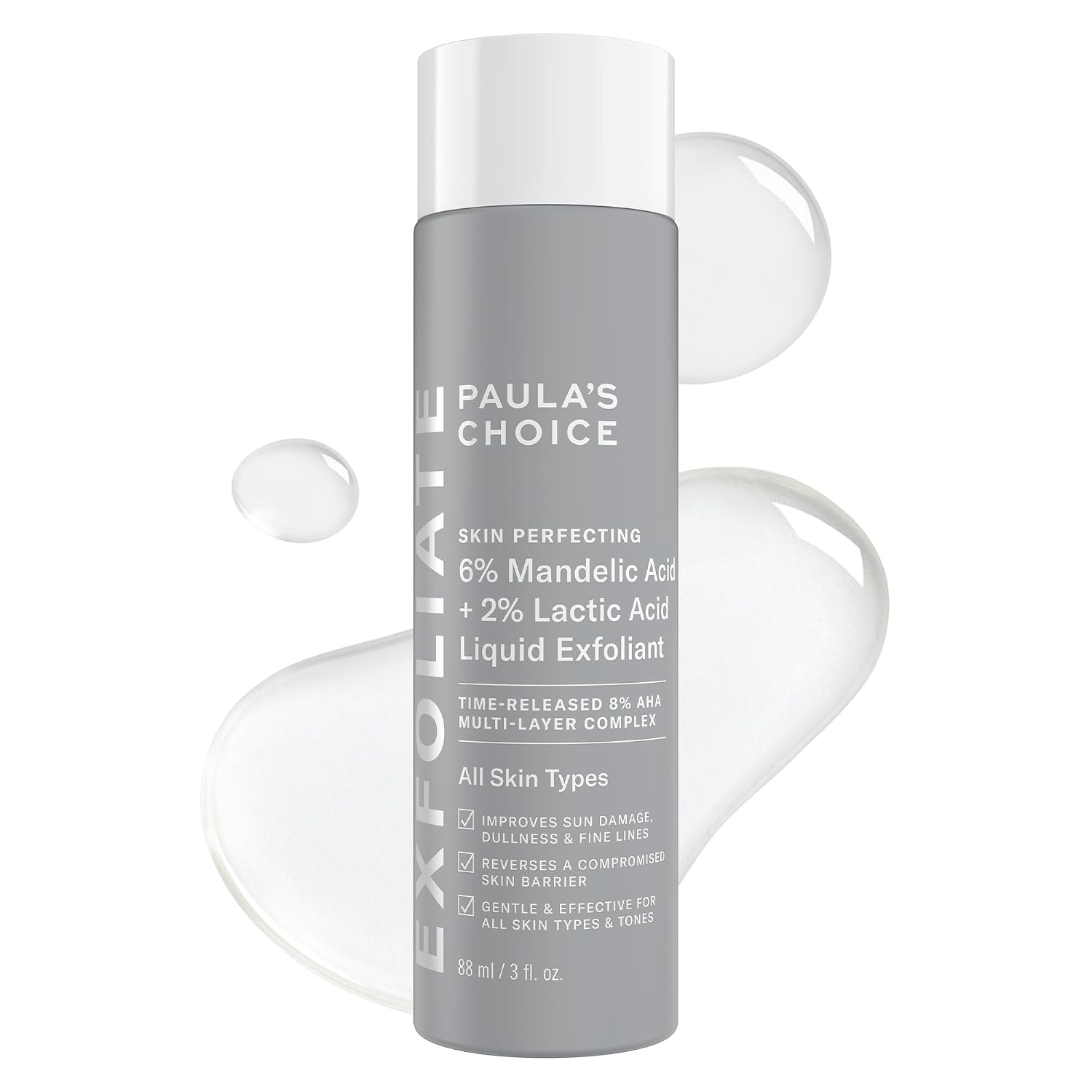
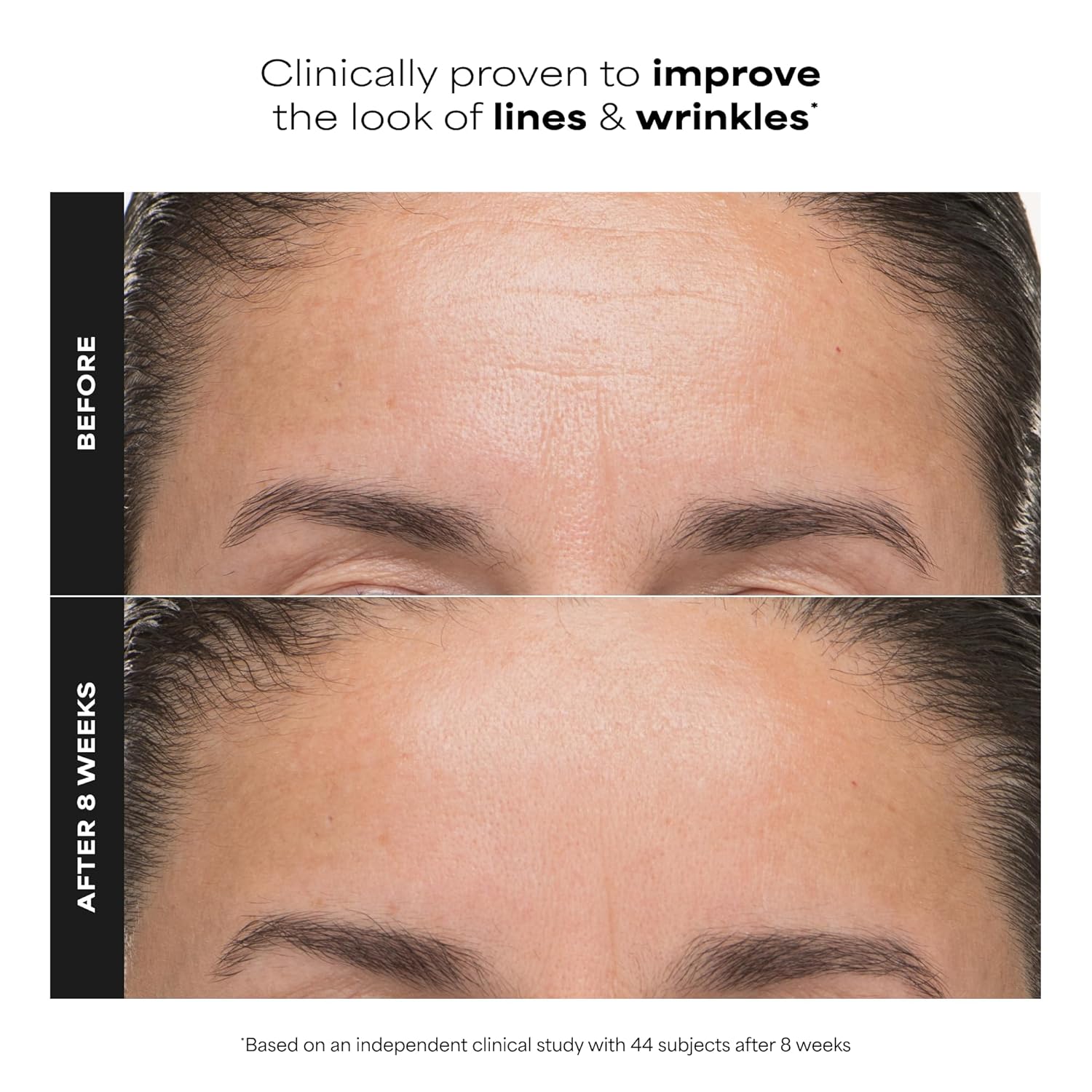
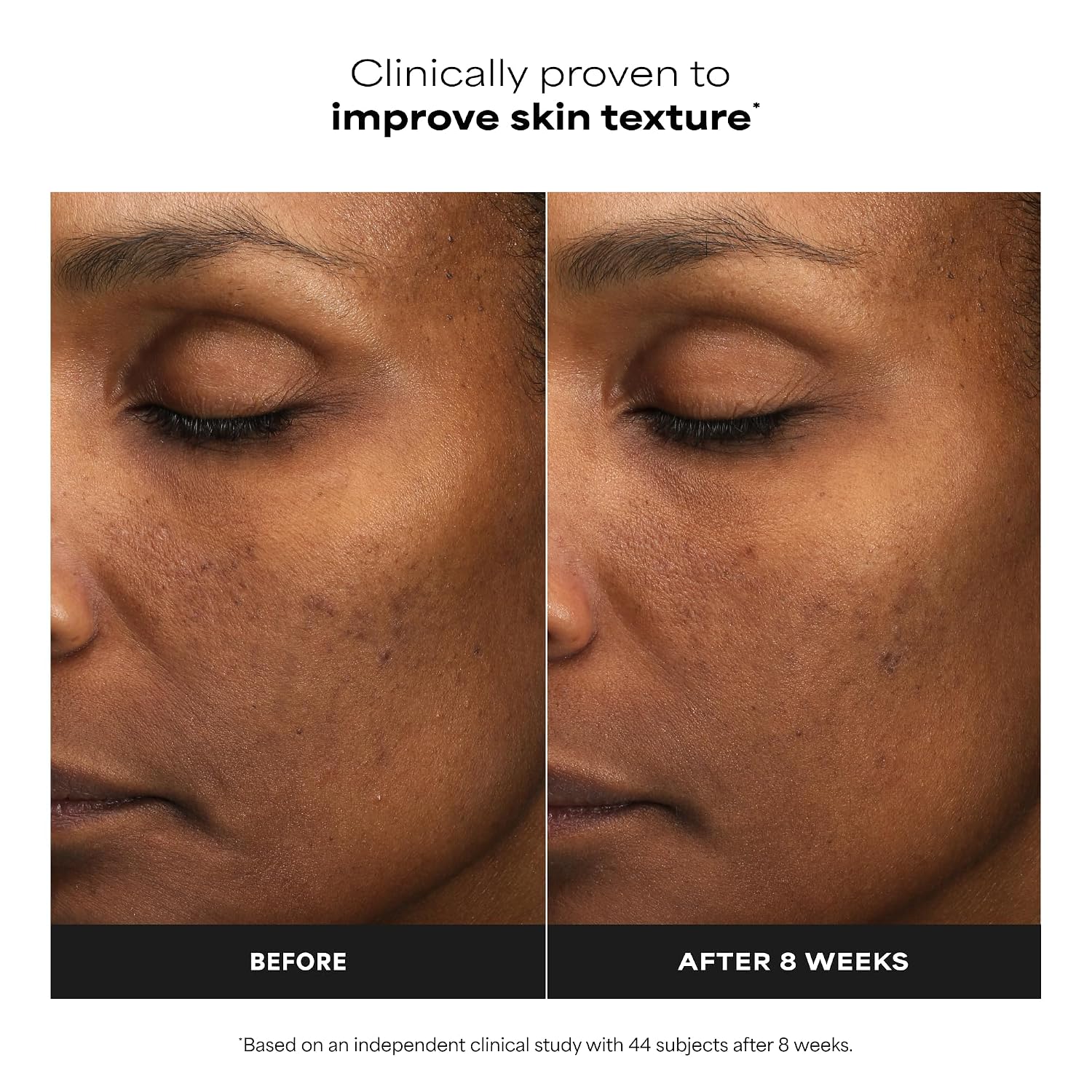
No buyer photographs were rendered for this ASIN; the review-media gallery did not load and no rendered review carried an image tile.
Method and confidence
provenance| Channel | Status | What it yielded |
|---|---|---|
| Amazon listing | Collected | Full page at a US address, 16 specifications, 5 bullets, 3 images, 4.5/5 from 1,108 ratings, 8 aspects, buy box $35.15 |
| Review text | Not available | No review block rendered on desktop, mobile or the alternate context page after three retries |
| Buyer photos | Not available | No review-media gallery rendered; the zero is an observed absence |
| camelcamelcamel | Collected | Product details plus four published price values with dates; Amazon and Used types are empty |
| Price trend chart | Collected | 365-day series read from a chart and calibrated to its printed legend |
| COSDNA | Collected | 23 rows, entry dated 2024-08-01, most recent of four duplicates |
| Skinsort | Collected | 23 rows, 12 badges, 11 benefits, 2 concerns - full agreement with COSDNA |
| Element | Confidence | Basis |
|---|---|---|
| Title, brand, category path, specifications | High | Read from the page's own labelled nodes |
| Rating, count, star distribution | High | All five buckets present, weighted check reproduces 4.5 |
| Buy box price | High | Single unambiguous USD amount in a US context |
| Ingredient rows | High | Two independent databases, 23/23 identical and in the same order |
| Claim audit | High | Every badge checked against a row, not against marketing copy |
| Price history values | High | Transcribed verbatim with dates |
| Price trend shape | Medium | Chart-derived, calibrated; monthly aggregation, ten-cent tolerance |
| Buy box vs tracker gap | Low as to cause | Two candidate explanations, not separable from these sources |
| Review text and buyer photos | Not available | Not rendered; nothing reconstructed |
- No pH. Neither the label, the listing nor either database prints one, so the free-acid fraction - the number that actually predicts exfoliation strength - cannot be derived here.
- No review text. The sentiment layer is Amazon's aspect derivation, not quoted buyer language.
- The tracker's current price is 73 days old and disagrees with the buy box by $5.55. Both are reported, neither is treated as authoritative.
- One tracker price type. No first-party Amazon series exists, so no channel comparison is possible beyond the single-day observation.
- Clinical claim not audited. The 44-subject 8-week study behind the before-and-after plates is cited only as a footnote; the protocol, the vehicle and the endpoints are not published on the listing.
- Community databases. COSDNA and Skinsort are aggregators, not regulators. Agreement between them proves the label was transcribed consistently, not that the ratings are authoritative.