Thirty-three materials that three independent channels agree on, order for order. Five ceramides with their precursors, one silicone nobody mentions, and a five-year price record.
Product information
A 150 ml bottle with a flip-top cap and a pale printed band, on sale since January 2021. The name does the positioning work: creamy toner, two words that describe a format most buyers do not have a slot for. Amazon's own specification fields agree with the second word over the first — the category is Toners & Astringents while item form is recorded as “Lotion”. That contradiction is not a metadata error. The formula settles it in section 3: this is a light oil-in-water emulsion, and a light oil-in-water emulsion is a lotion whatever shelf it is merchandised on.
The claim set is short and unusually disciplined. Six bullets, of which five are formula claims and the sixth is a patch-test instruction. There is no clinical panel, no percentage and no before-and-after anywhere on the page — the A+ module returns nothing but a navigation stub. That absence is itself a data point when the same category routinely prints four-digit percentages.
The five claims are ordered by importance as the brand sees it: the ceramide complex first, the creamy texture second, panthenol and hyaluronic acid third, soothing fourth, sensitive-skin suitability fifth. That order turns out to be a fair description of the formula, which is rare enough to be worth checking line by line in section 3.5.
| Claim type | The assertion as printed | Verifiable? |
|---|---|---|
| Count | “5-Ceramide Complex” | Yes — exactly 5 |
| Texture | Creamy toner, milky texture, no stickiness | Yes — it is an emulsion |
| Ingredient | Panthenol & hyaluronic acid as the power pair | Yes — at 7 and 20 |
| Effect | Soothes dry, tight-feeling skin | Partly — no data published |
| Positioning | “Hypoallergenic, safe for sensitive skin” | No — undefined term |
| Instruction | Patch test before use | Not a claim |
Three of six are counts or material names that an ingredient list can settle, and all three settle correctly. The one word that cannot be verified — hypoallergenic — is the word the sensitive-skin positioning rests on.
Rating and reception
Five and a half years of selling produces a settled rating rather than a launch spike, and the distribution shows it: 82% five-star, an 11% four-star shoulder, and a 3% tail at one and two stars. That four-star shoulder is the informative part. On a mature product it represents buyers who got most of what they expected and marked it down one notch — mild disappointment rather than rejection, and a much better signal than a wall of fives.
At three percent, the negative tail is roughly 38 buyers out of 1,273. That is small in proportion and large in absolute terms for a product whose whole proposition is gentleness — and the aspect table in section 2.2 is where those 38 show up.
329 aspect mentions across eight buckets is the richest review signal in this batch by a wide margin, and it is strong enough to say something specific instead of merely tabulating.
Two aspects are unanimous. Absorption drew 24 mentions and not one negative; non-greasy drew 16 and not one negative. Together those 40 mentions are the product's actual competitive advantage, because the standard failure mode of a creamy toner is a residue that sits on the skin, and forty independent mentions say this one does not.
One aspect is the problem. Skin compatibility scores 78% on 54 mentions — twelve negatives, the highest negative count of any aspect and the lowest percentage of any substantial one. For a product aimed at sensitive skin and described as hypoallergenic, that is the number that matters, and it is the one the marketing does not address.
Value for money scores lower still at 71%, but on only 17 mentions. At $4.40 per fluid ounce on a 150 ml bottle that is a coherent complaint, and an independent database reaches the same conclusion with its own “pricey” flag.
Ingredients
This is the best-documented formula in the batch and the agreement is worth stating before anything else is said about it. The Amazon listing publishes an INCI block of 33 materials. The Skinsort record carries 33 materials in the same order. COSDNA's November 2025 upload carries 31 of those 33 in the same order, with two rows lost to an upload defect. Three independently produced sources, no additions, no omissions, no reordering.
That matters because the same run produced a product with no INCI block on the listing at all. Where the channels agree, the report can make positive statements about the formula; where they do not, it has to hedge. This one earns the positive statements.
Twelve tags: nine positive, three negative. Six of the nine positives are formula-verifiable and correct — no alcohol, no fragrance, no paraben, no sulfate, no EU allergen, and no pore clogger. The three negatives are all true as well, and all three trace to the same design decision.
The failure set is coherent rather than arbitrary. Macadamia oil, glyceryl stearate and sorbitan isostearate are the three materials that make a toner feel creamy; remove them and the product's name stops being true. The silicone is different — phenyl trimethicone contributes slip and a dry-touch finish and its removal would cost the formula almost nothing. It is the one negative on this list that is a choice rather than a consequence, and the listing never mentions it.
Five ceramides is the claim. The system is eight materials, and the difference is the most technically interesting thing about this product.
| # | Material | Role in the system |
|---|---|---|
| 25 | Phytosphingosine | Precursor. The sphingoid base ceramides are assembled from. Its position immediately ahead of the ceramide block is the signature of a formula designed around sphingolipid assembly rather than one with ceramides added for the label |
| 26 | Ceramide NP | Ceramide, declared first of the five |
| 29-31 | Ceramide NS, AS, AP | Ceramides, three consecutive positions |
| 32 | Cholesterol | Co-factor. The sterol that co-assembles with ceramides in the lamellar phase. Five ceramides without cholesterol is a materially different product |
| 33 | Ceramide EOP | Ceramide, closing the block |
| 14 | Phytosteryl/Octyldodecyl Lauroyl Glutamate | Feedstock. A phytosteryl ester that supports the same lipid structure from further up the declaration |
| 18 | Hydrogenated Lecithin | Phase support. The phospholipid that lets ceramides sit in a lamellar arrangement instead of dispersing |
The ordering carries the signal. The ceramides are the last five positions in the formula, but they arrive as a block with their precursor immediately in front and their co-factor immediately behind. That is not how a claim-padding formula is built — padding puts ceramide NP at position 26 and stops. This one spends eight positions, several of them low-concentration, on making the ceramides actually assemble. It is the strongest technical case any product in this batch makes for itself.
Hydrating at 17 and barrier repair at 14 dominate, and the tail is genuinely thin: brightening and dark spots rest on one material each. This is the profile of a focused product, not a breadth-stacked one — the opposite of the multi-benefit toners that populate the category. The trade is real: it does fewer things, and the things it does are supported by more of the formula.
One caution on the anti-aging figure of eight. There is no retinoid, no vitamin C and no niacinamide in the 33 rows. The anti-aging count is being generated by ceramide and panthenol barrier work, which is a legitimate long-term mechanism but is not what a shopper means by the phrase.
| No | Material class | Count | Members |
|---|---|---|---|
| 01 | Water and solvents | 3 | Water, 1,2-hexanediol, 2,3-butanediol |
| 02 | Humectants | 5 | Two glycols, glycereth-26, panthenol, one hyaluronate |
| 03 | Barrier lipids and ceramides | 8 | Five ceramides plus sphingosine, cholesterol and a phytosteryl ester |
| 04 | Emollients and occlusives | 5 | Ester, macadamia oil, triglyceride, glyceryl stearate, one silicone |
| 05 | Emulsifiers and rheology | 5 | Copolymers, crosspolymer, lecithin, sorbitan ester |
| 06 | Preservatives | 2 | Ethylhexylglycerin and sorbic acid only |
| 07 | Soothing | 1 | Allantoin |
| 08 | Antioxidant | 1 | Tocopherol |
| 09 | Peptide | 1 | One heptasodium dipeptide |
| 10 | pH and chelation | 2 | Tromethamine and disodium EDTA |
Two numbers stand out. The barrier block is eight materials of thirty-three, a quarter of the formula, and it is the largest class. And there are exactly two preservatives — sorbic acid at 23 and ethylhexylglycerin at 13, no phenoxyethanol, no paraben, no formaldehyde releaser, no MIT/CMIT. For a water-based product sold to sensitive skin, that is a conservative choice and it is the second real technical argument the formula makes.
| No | Claim | What the panel shows | Verdict |
|---|---|---|---|
| 1 | 5-Ceramide Complex | Ceramides NP 26, NS 29, AS 30, AP 31, EOP 33 — plus phytosphingosine, cholesterol and a phytosteryl ester | Holds, and is understated |
| 2 | Panthenol & hyaluronic acid | Panthenol 7, sodium hyaluronate 20 | Holds |
| 3 | Creamy, milky texture | Macadamia oil 9, caprylic/capric triglyceride 10, lecithin 18, sorbitan isostearate 21, glyceryl stearate 24 | Holds — it is an emulsion |
| 4 | No sticky finish | No silicone gum; one phenyl trimethicone at 12 | Consistent with 40 unanimous mentions |
| 5 | Soothes dry, tight skin | Panthenol 7, allantoin 15, tocopherol 28 | Plausible, unpublished |
| 6 | Hypoallergenic, sensitive-skin safe | No fragrance or alcohol — but sorbic acid at 23 | Partly supported, term undefined |
All 33 rows in declared order. Materials in rose carry a negative claim; tinted rows carry a comedogenic or irritancy flag.
| Pos | Material | Function | Com | Irr |
|---|---|---|---|---|
| 01 | Water | Skin conditioning, solvent | – | – |
| 02 | Dipropylene Glycol | Humectant, masking, solvent | – | – |
| 03 | Glycerin | Humectant, skin protecting | 0 | 0 |
| 04 | Glycereth-26 | Humectant | 0 | 0 |
| 05 | 1,2-Hexanediol | Skin conditioning, solvent | – | – |
| 06 | Dipentaerythrityl Hexa C5-9 Acid Esters | Skin conditioning | – | – |
| 07 | Panthenol | Skin conditioning | 0 | 0 |
| 08 | Hydroxyethyl Acrylate/Sodium Acryloyldimethyl Taurate Copolymer | Emulsion stabilising | – | – |
| 09 | Macadamia Integrifolia Seed Oil | Skin conditioning | – | – |
| 10 | Caprylic/Capric Triglyceride | Masking, skin conditioning | – | – |
| 11 | Styrene/VP Copolymer | Film forming | – | – |
| 12 | Phenyl Trimethicone | Skin conditioning | – | – |
| 13 | Ethylhexylglycerin | Skin conditioning | – | – |
| 14 | Phytosteryl/Octyldodecyl Lauroyl Glutamate | Skin conditioning | – | – |
| 15 | Allantoin | Soothing, skin protecting | 0 | 0 |
| 16 | Acrylates/C10-30 Alkyl Acrylate Crosspolymer | Emulsion stabilising | – | – |
| 17 | Tromethamine | Buffering, masking | – | – |
| 18 | Hydrogenated Lecithin | Emulsifying, skin conditioning | – | – |
| 19 | Disodium EDTA | Chelating | – | – |
| 20 | Sodium Hyaluronate | Humectant | 0 | 0 |
| 21 | Sorbitan Isostearate | Emulsifying | 1–2 | 0 |
| 22 | Heptasodium Hexacarboxymethyl Dipeptide-12 | Skin conditioning | – | – |
| 23 | Sorbic Acid | Preservative | – | – |
| 24 | Glyceryl Stearate | Emollient, emulsifying | 1 | 0 |
| 25 | Phytosphingosine | Skin conditioning | – | – |
| 26 | Ceramide NP | Skin conditioning | – | – |
| 27 | 2,3-Butanediol | Humectant, solvent | – | – |
| 28 | Tocopherol | Antioxidant | 0–3 | 0–3 |
| 29 | Ceramide NS | Skin conditioning | – | – |
| 30 | Ceramide AS | Skin conditioning | – | – |
| 31 | Ceramide AP | Skin conditioning | – | – |
| 32 | Cholesterol | Emollient, emulsifying | 0 | 0 |
| 33 | Ceramide EOP | Skin conditioning | – | – |
Nineteen of the thirty-three rows carry no numeric rating on the consumer record. The scores that do exist cluster at zero — glycerin, glycereth-26, panthenol, allantoin, sodium hyaluronate and cholesterol are all 0/0 — and only three materials rise to 1 or above: sorbitan isostearate at 1-2, glyceryl stearate at 1, and tocopherol at 0-3. No formula-level safety score is therefore reported, because an aggregate over fourteen scored rows out of thirty-three would describe the scoring coverage rather than the product.
Price
This product has a real list price, five years of tracked history, and one of the widest observed ranges in the category. That combination makes its price section the most informative in the batch — not because the current price is remarkable, but because there is enough record to say what is and is not a normal price for it.
The list price is corroborated independently: the price tracker records the same $24.00, so the 7% markdown is measured against a reference the market actually recognises rather than a number invented for the badge. That is not always true in this category.
One channel carries the whole record: third-party new. Amazon has never been recorded as the seller, and there is no used market. All four statistics exist for the one live channel — a lowest, a highest, a current and an average — which is unusual and is what makes the comparison in figure 05 possible.
The lowest and the highest both fall inside a seven-week window in autumn 2025 — $26.99 on 2 September, $14.30 on 30 October. A product does not normally print its all-time high and its all-time low eight weeks apart in the fifth year of a six-year record. That is a stock-out followed by a clearance: the September price is what the last units cost when supply ran out, the October price is what the remainder went for. Neither is a trading level.
Behind the four summary numbers sits a clear movement: a $22-24 band through the winter and spring, a step down to $19-20 from June 2026, and a partial recovery to $20.88 in the first week of November. The step down is the meaningful event — it is sustained across five months and it is where the product has actually been trading.
One caveat has to travel with this chart. The charting service that produced the monthly series prints its own last value as $20.05, while the tracker's summary table gives $22.29 for the same product on the same day. The two describe different price channels — lowest new offer versus tracked third-party price — so they are not interchangeable. Read the monthly line as trend and the four summary numbers as the price of record. Mixing them produces a figure that looks precise and is not.
$22.29 is 55.9% above this product's own floor and 10.8% above its six-year average. On a record this long, that is not a launch artefact or a one-month anomaly: a buyer at $22.29 is paying more than the average price this product has sold for since 2021. Against the list price of $24.00 the 7% saving is real but measured against a reference the market has rarely paid — the lifetime average sits $3.89 below list.
The practical conclusion is specific. Subscribe and Save at $20.06 is within eleven cents of the product's lifetime average and inside the $19-20 band it has traded in since June, which makes the subscription rate the competitive number on this listing rather than a 16% add-on. And the recent trend runs opposite to the last tracked price: the tracker's last observation is 2026-09-08, two months stale, so the $22.29 should be re-verified before any transaction even though the all-time figures are solid.
Images
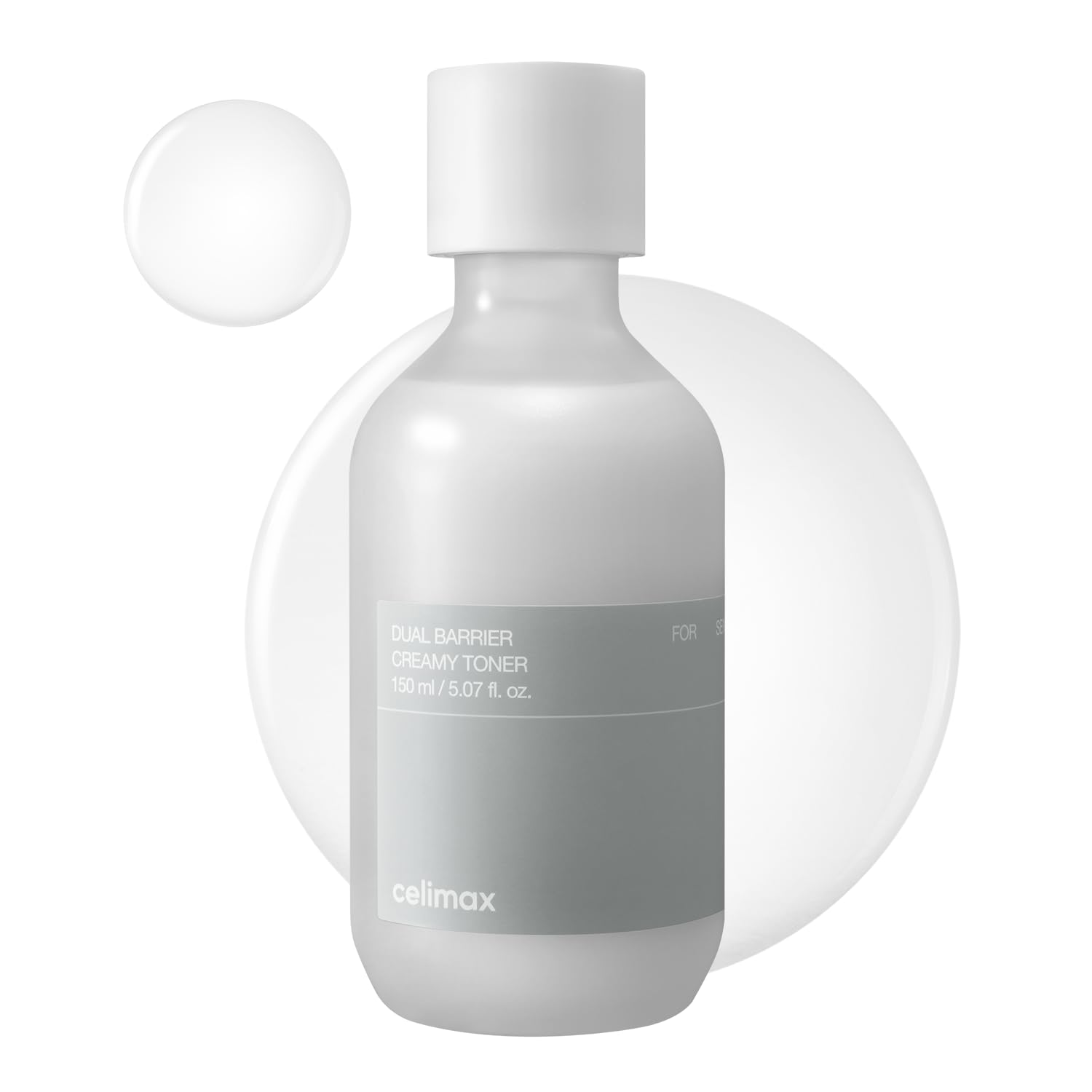
Fig. 1 · pack shot, 150 ml
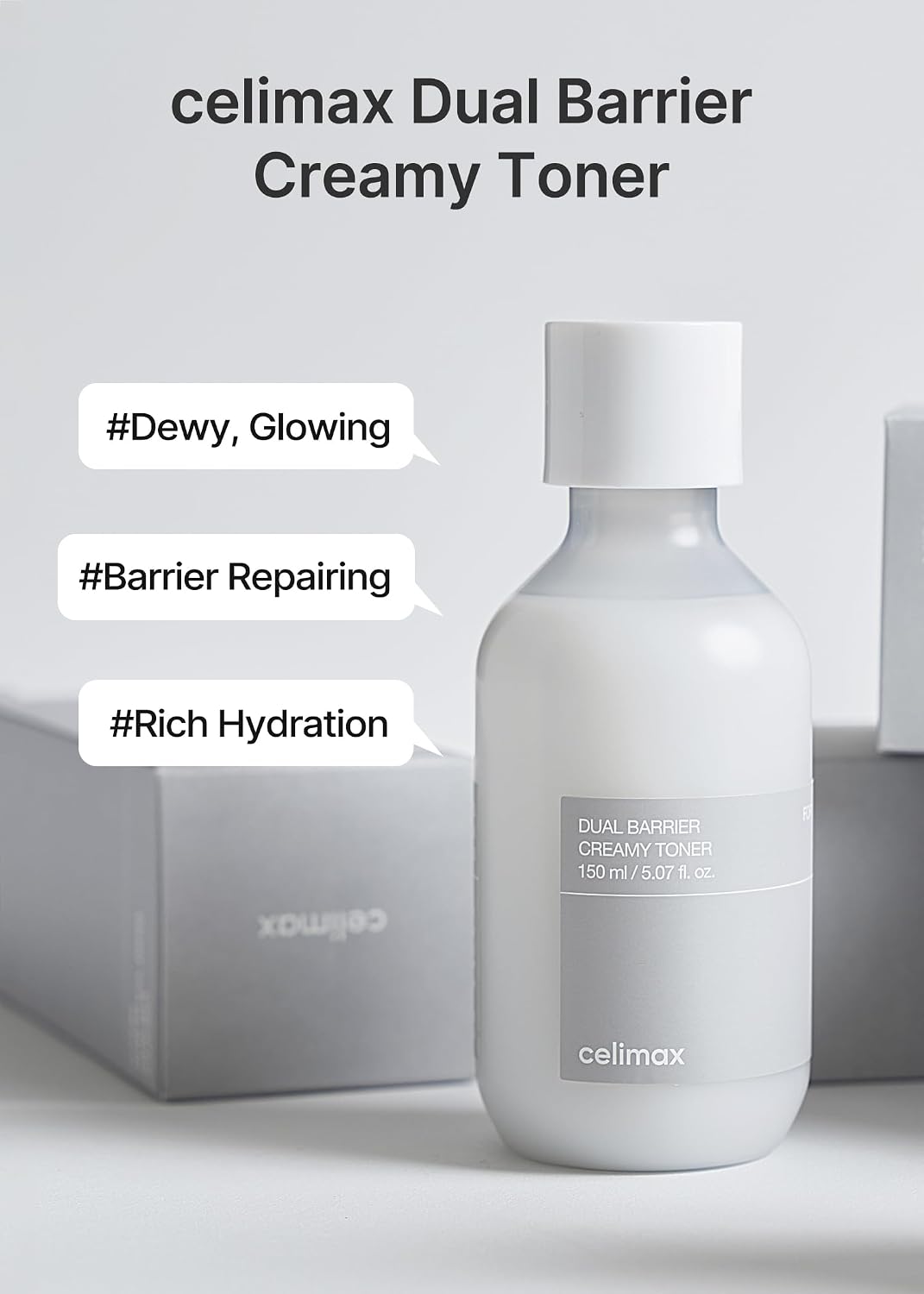
Fig. 2 · texture swatch
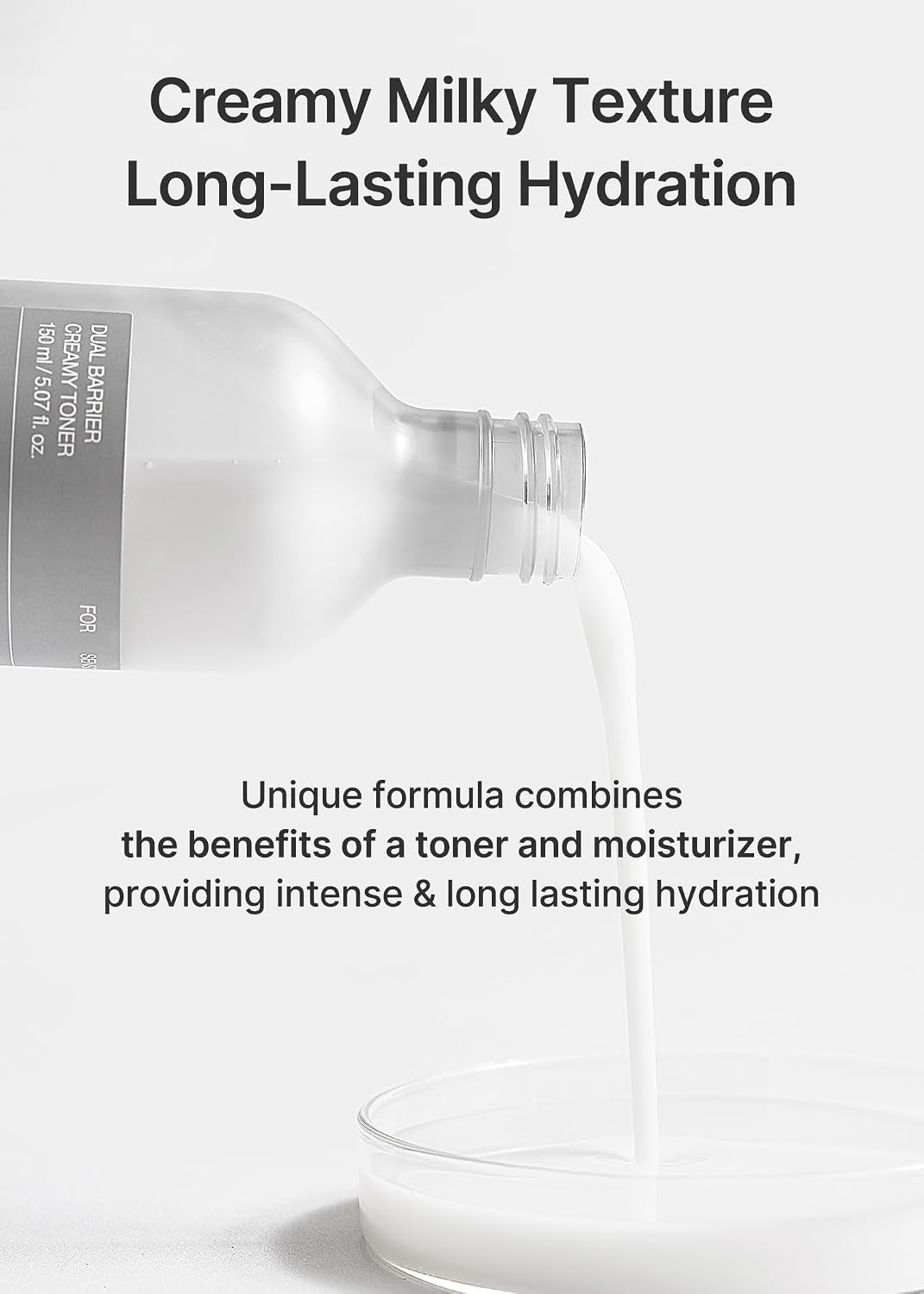
Fig. 3 · benefit panel
Plate one is the plain pack shot: a tall slim white bottle with a flip-top cap and a pale printed band, the celimax wordmark low on the body, 150 ml / 5.07 fl oz set small. Plate two is the one that matters, because it shows the fluid: an opaque, creamy white, not clear, not watery. That single image corroborates the emulsion reading of the formula and explains the “Lotion” item-form field better than any of the copy does.
Plate three is a benefit panel for the barrier claim set. None of the three carries an ingredient list, which is why the formula in section 3 came entirely from the text fields rather than from the packaging.
Method and limits
| No | Question | Answer |
|---|---|---|
| 1 | Scope | One ASIN on amazon.com, delivery set to a US ZIP so prices are native USD. No conversion. |
| 2 | Capture date | 2026-11-08, Beijing time. Rank, price and rating are a snapshot. |
| 3 | Ingredient channels | Three: the listing's own INCI block (33), Skinsort (33, same order), COSDNA November 2025 upload (31 of 33, same order). The strongest agreement in this batch. |
| 4 | Generation risk | COSDNA also holds a June 2026 upload that describes a different, older formula. It was rejected on composition. Upload recency is not formula recency. |
| 5 | Missing data | No US review bodies, no buyer photos. Both stated where they occur rather than filled. |
| 6 | Arithmetic | Per-ounce, per-100 ml and percentage figures are derivations and labelled as such. Monthly medians are read from a rendered chart with a stated tolerance. |
| 7 | Excluded | No concentration, pH, clinical percentage or efficacy claim is asserted, because none is published. |
Two limits deserve a sentence each. The monthly price series and the summary statistics come from different channels and are presented as two different things; treating the line as if it were the same measurement as the table would be a methodological error. And the review layer rests on Amazon's aspect extraction rather than on review text, because no review bodies rendered — a thin layer on a thick rating count.
Reviewer names, handles, profile links, avatars and identifiers are dropped at parse time; nothing here identifies an individual buyer. The report names no collection URLs and no source-file descriptions.
Prepared as an independent product analysis. Not affiliated with the brand, the manufacturer or Amazon. Ingredient positions are declaration order, not concentrations. Consumer database flags are class-level warnings, not dermatological predictions.