01 November 2026
A tinted Korean eye cream that behaves less like a treatment and more like a light concealer with actives in it — and the numbers agree with that reading: 3.9 from 2,138 ratings with a 13% one-star floor, coverage and value both splitting at 44%, and a price that has fallen 64.6% since the day tracking began.
What is in the jar
15 g of tinted cream in a squat glass jar with a magenta lid — small enough that the 0.52 oz size is the first thing buyers notice at the price.
| Brand | Dr.Melaxin |
| Manufacturer | COSMECCA KOREA |
| Model | DMX48167 |
| Format | Tinted cream, 15 g / 0.52 oz jar |
| Dimensions | 2 × 2 × 2 in; 3.21 oz shipped |
| Skin type | All |
| Declared scent | Unscented |
| Stated benefit | Dark spot correction |
| Hero material | REBORNIC skin calcium, 10,000 ppm |
| Rank | #3 in Eye Treatment Creams; #508 in Beauty & Personal Care |
| Sold by | Dr.Melaxin_Official (brand account) |
The brand's mechanism, stated plainly
The listing's first bullet is the whole thesis: skin calcium, combined with vitamin D, is claimed to be absorbed more readily in ionised form and to help "securely retain collagen and elastin within the under-eye bone structure." That is a structural claim rather than a surface one — it is about holding the tissue up, not about moisturising it — and it is why the product is positioned against sagging as much as against dark circles.
The second bullet is about dosage: one layer is enough, and the cream "closely absorbs and tightly adheres" to keep the skin looking smooth. The third is sensory: a soft cream that is not sticky. The fourth is the routine — last step of skincare, tapped in two to four times.
What the images claim, and what they do not
The three listing images are pack shots and one claim card. The claim card says "Smooth skin expression" and "saggy under-eye area care and dark spot tone improvement with regular use" — a hedged, cumulative promise. There is no before-and-after, no percentage figure, no clinical study cited anywhere on the page, and no stated concentration for niacinamide or adenosine. The only number in the entire listing is the 10,000 ppm on the calcium material.
That absence is worth weighing. A brand confident in a measured result usually publishes one; this listing argues from mechanism and texture instead.
3.9, and a floor that is not a rounding error
59% of buyers put it at five stars. One in eight puts it at one. Both numbers are large, and the gap between them is the story.
Five buckets as published. The one-star bar is nearly double the two-star bar — the shape of a product that fails abruptly rather than gradually.
The shape
78% of buyers are at four stars or above; 20% are at two stars or below. On a base of 2,138 ratings, that 20% is roughly 430 people — not a rounding tail and not a small handful of outliers. It is a fifth of the market.
The 13% one-star share exceeding the 7% two-star share is diagnostic. Products that disappoint mildly cluster at three stars; products that fail outright collect ones. Here the ones are nearly double the threes-plus-twos, which means a meaningful share of buyers found the product not merely mediocre but unusable.
The most likely reason
A tinted product has a failure mode a plain cream does not: shade. Titanium dioxide plus two iron oxides produce one beige tone, and that tone is either close to a buyer's under-eye skin or it is visibly wrong — too light, too pink, too grey. When it is wrong there is no way to use the product at all, and the review is a one-star review.
That is an inference from the formula and the distribution together, not a finding either source states. It is offered as the most economical explanation, not as fact.
What buyers actually report, in aggregate
Amazon's synthesis begins with the positive: customers find the cream versatile, comparing it favourably with other under-eye products and with concealers — 83% positive across 41 mentions, the highest share in the set. That single line tells you what the product is: something people use instead of a concealer.
Everything after it splits. Brightening at 60% across 183 mentions is the largest sample; coverage at 44% across 78 is the one that matters for a "cover" cream and it leans negative. Value for money at 44% across 86, absorption at exactly 50%, and texture at 60% with buyers split between silky and disappointing. The synthesis also records that some say it does not crease while others say it dries the under-eye.
Share of positive mentions per aspect, mention counts beside each label. Versatility is the outlier at 83%; coverage and value are the two that lean negative, and both are core to what the product promises.
Eight claims hold, four fail, and the four are the interesting ones
Thirty-six ingredients, three of them pigments, three of them silicones, and a patented calcium material that no independent index can corroborate.
- Alcohol-free
- EU-allergen-free
- Fragrance-free
- Oil-free
- Paraben-free
- Sulfate-free
- Cruelty-free
- Reef-safe
- Silicone-free
- Fungal-acne-safe
- Pore-clogger-free
- Vegan
Why the silicone failure is by design
Cyclopentasiloxane is the second ingredient in the formula. Cyclohexasiloxane is eighth. Dimethiconol is twelfth. Those three, with isohexadecane and a polyacrylate gel, are the chassis of a Korean "cushion" cream: volatile silicones that spread and then evaporate, leaving a dry-touch film on skin.
That is precisely the texture the listing promises — "softly applied without being sticky". The product fails the silicone-free claim because it is built to feel the way it feels. A buyer who avoids silicones should read this as a hard no, not as a technicality.
Fragrance-free, and credible
The list carries no Parfum, no essential oils, no limonene and no linalool, and the database states outright that no fragrance ingredients were found. The listing's own field agrees: Scent: Unscented.
Two independent channels, one conclusion. In a category where "unscented" and "fragrance-free" are routinely conflated, this is the cleanest reading available — and it is the one claim of the twelve that a buyer can bank on without qualification.
Ingredient levels, counted
Grades run 0–5 on both axes, low is safer, and a blank means unrated — missing data, never zero risk.
Six of thirty-six rows carry a grade. On the comedogenic axis that is four at 0, one at 1 and one at 3; on irritancy every graded row is 0.
| Level | Comedogenic | Irritancy | Members |
|---|---|---|---|
| 0 | 4 | 6 | Titanium dioxide, glycerin, polysorbate 80, allantoin |
| 1 | 1 | 0 | Butylene glycol |
| 3 | 1 | 0 | Sorbitan oleate — the only material above zero in the formula |
| Unrated | 30 | 30 | Everything else, including niacinamide, adenosine and calcium gluconate |
What the thirty-six rows are made of
Counted by each ingredient's primary indexed function. Skin conditioning dominates because the botanical and protein extracts at the tail are all indexed that way.
The base. Water, then the silicone trio, then a polyacrylate gel system (sodium acrylate copolymer at 9, sodium polyacrylate at 15) with isohexadecane as the slip agent and aluminum hydroxide plus triethoxycaprylylsilane at 17 and 19 to coat the pigments. This is a stabilised, pigment-ready emulsion — the infrastructure a tinted cream needs before any active goes in.
The pigments. Titanium dioxide (3), CI 77492 yellow iron oxide (14), CI 77491 red iron oxide (21). One beige tone, physically. No other shade exists in this SKU, which is the structural constraint behind the rating distribution discussed earlier.
The actives. Niacinamide at 6, adenosine at 22, allantoin at 18, calcium gluconate at 31. Niacinamide is early enough to matter; adenosine at 22 is mid-to-late and is a soothing, barrier-supporting agent rather than a brightener; calcium gluconate at 31 is late in a 36-row formula.
The tail. From 26 to 36 the list turns botanical and protein: bark extract, sweet almond fruit extract, tremella, collagen extract, chondrus crispus, hydrolysed elastin. At those positions these are label materials. Their presence explains the long ingredient count; it does not add mechanisms.
Benefits, credited — and the inversion
| Benefit | Ingredients | Reading |
|---|---|---|
| Hydrating | 9 | Top of the list by a wide margin — the formula's real strength |
| Barrier repair | 5 | Consistent with allantoin and the humectant load |
| Redness reducing | 4 | Allantoin, niacinamide, the licorice-family extracts |
| Anti-aging | 3 | Adenosine carries most of this row |
| Reduces irritation | 3 | Same three materials as above |
| Scar healing | 3 | Adjacent claim, not what an eye cream is bought for |
| Brightening | 1 | The product's headline claim, credited to one ingredient |
| Dark spots | 1 | The other headline claim, credited to one ingredient |
| Acne fighting | 1 | On an under-eye cream |
| Good for oily skin | 1 | On an under-eye cream |
| Reduces large pores | 1 | On an under-eye cream |
| Skin texture | 1 | Single-ingredient claim |
The two claims the product is sold on rank eighth and eleventh of twelve. Hydration, barrier support and soothing rank first, second and third. The database reads this as a comfortable, well-tolerated cream with modest pigmentation support — which is a different product from the one the name promises.
Product images
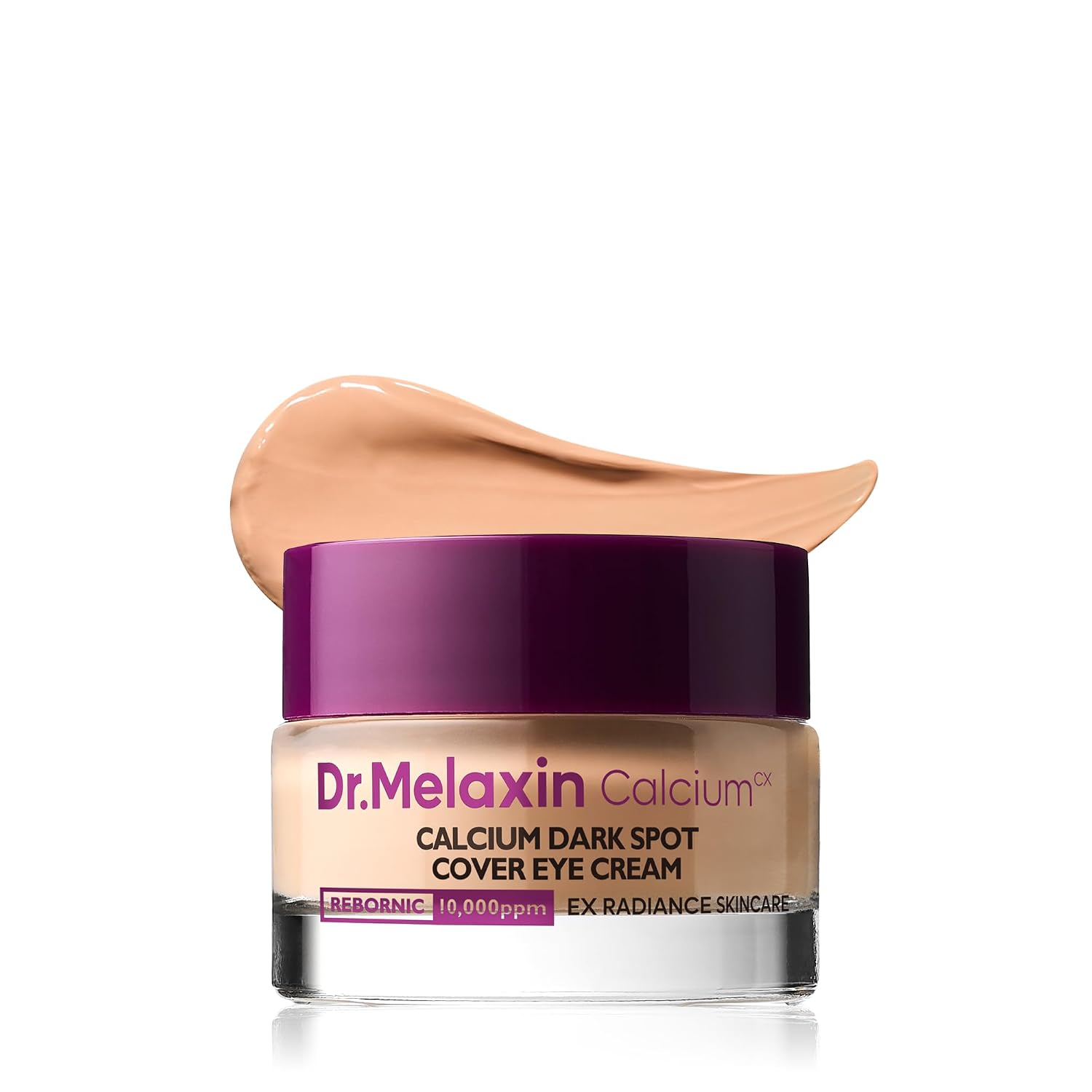
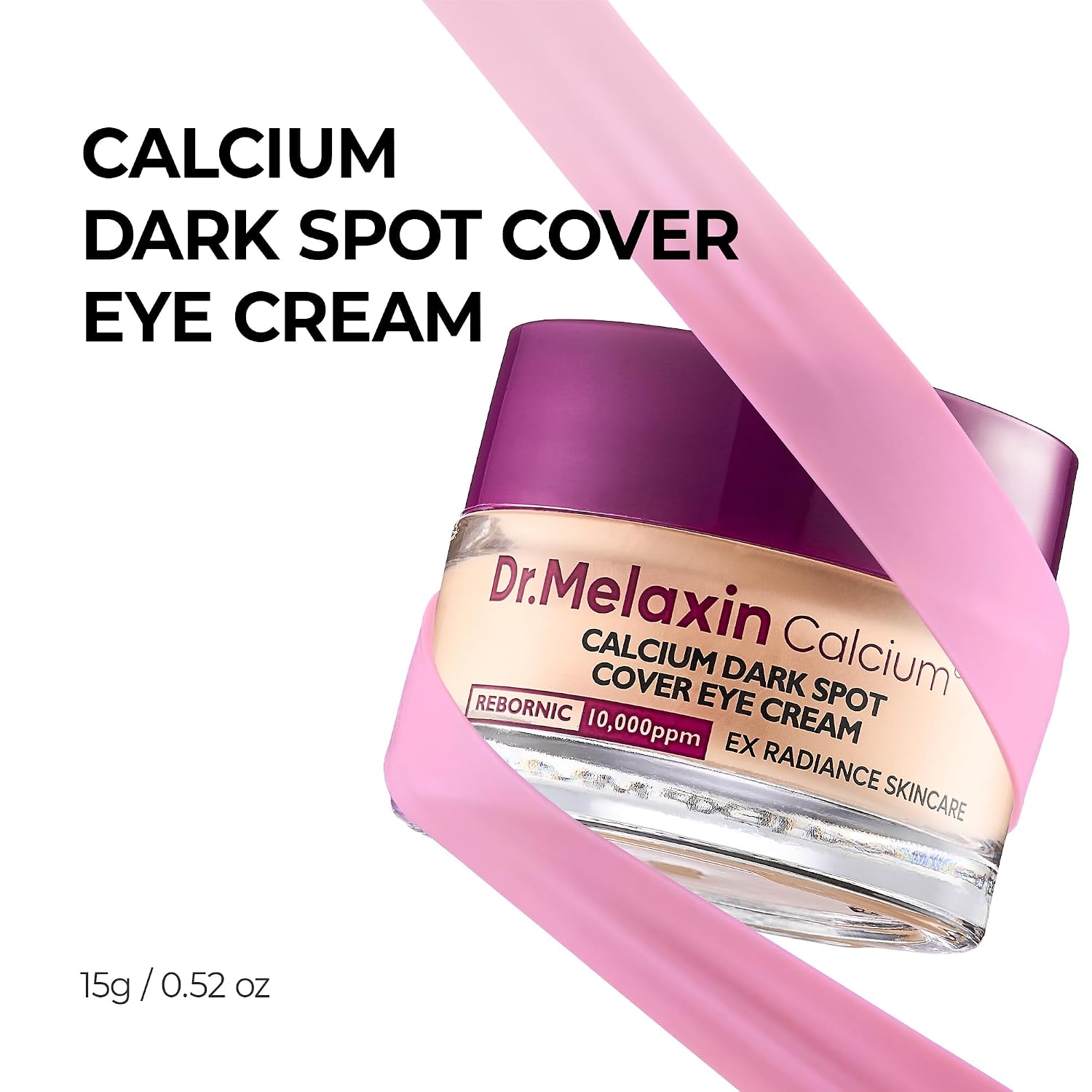
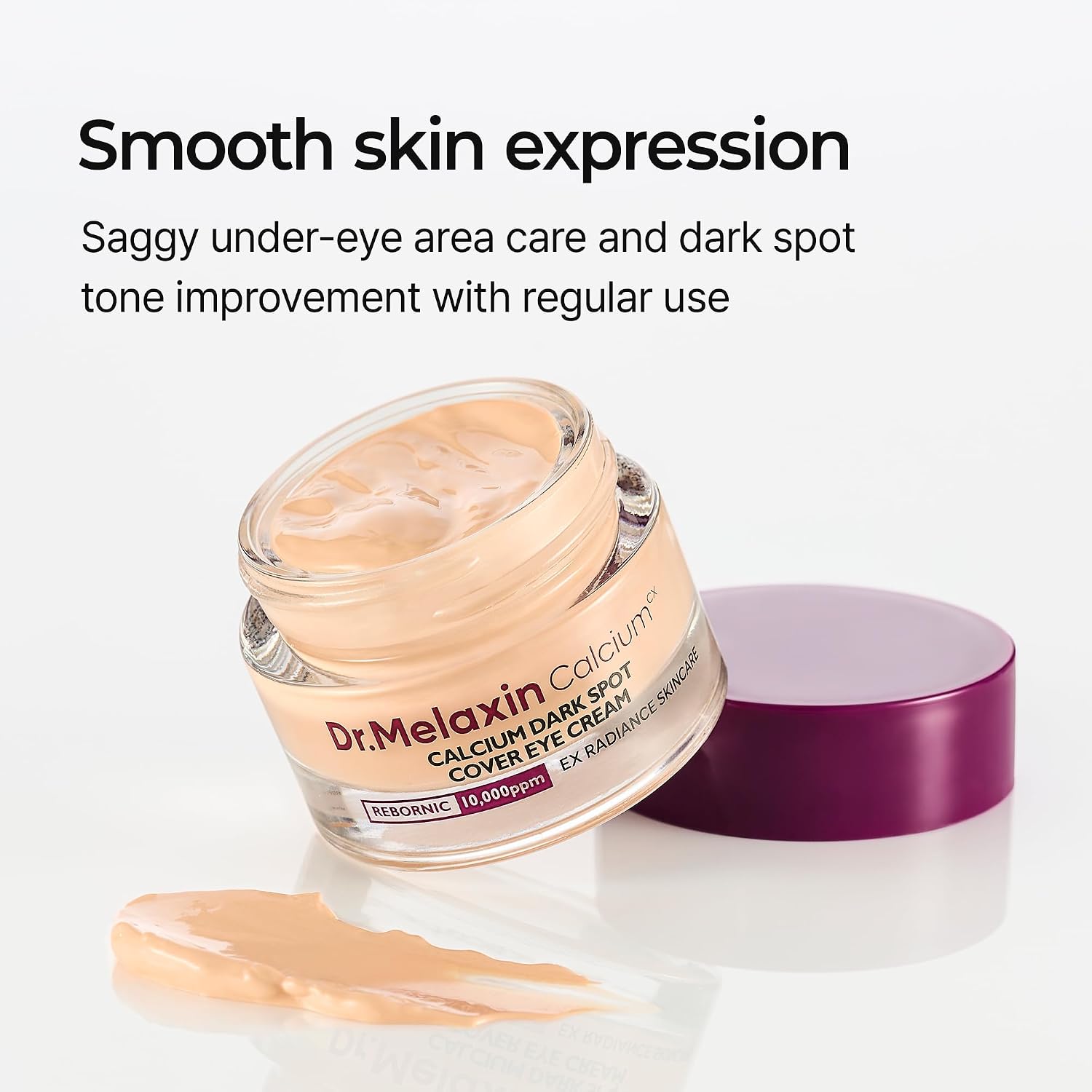
Three listing images, all marketing. No buyer-uploaded photograph rendered, and no image of the ingredient panel — so the "regular use" claim on the third card cannot be checked against anything the listing shows.
A price that fell two thirds and stopped at the floor
$43.53 on the first day of tracking, $15.40 today. The highest value the record holds is the launch price; the lowest is the current one. That is not a discount cycle — it is a repricing.
| Price type | Lowest ever | Highest ever | Current | Average |
|---|---|---|---|---|
| Amazon | — | — | — | — |
| 3rd Party New | $15.40 Oct 28, 2026 | $43.53 May 10, 2024 | $15.40 Oct 28, 2026 | $20.90 |
| 3rd Party Used | $18.81 Jul 28, 2026 | $19.86 Aug 17, 2026 | — | $19.24 |
Every value in the table, side by side. The new-marketplace spread is $28.13 — 182.7% of its floor, the widest in this batch — and both endpoints are the record's own edges rather than oscillations.
The two dated extremes, on a time axis
Only the dated extremes are observed; nothing between them is known. The line shows direction, not path — the descent may have been gradual or stepped, and this source cannot say which.
What the drop means
A highest-ever price recorded on the first day of monitoring is almost always a launch price: a new import listing opens high, sells little, and drifts. Here that drift has been 64.6% over 29 months, ending at the floor four days before collection.
The average of $20.90 is therefore not a normal price — it is an artefact of a descent. Stripping the 2024 launch period out, the product has been trading in the high teens for most of its tracked life, and the current $15.40 is the bottom of that range rather than an anomaly.
The list-price problem
The tracker publishes no list price for this ASIN. The listing shows a typical price of $20.00, which Amazon defines as the 90-day median paid — a different concept from list price, and a better one, because it reflects real transactions.
Against $20.00 the current price is 23.0% down. That is the figure used throughout this dossier, labelled as coming from the listing. Anyone quoting a list-price discount for this product is quoting a number neither source publishes.
Position against benchmarks
Current $15.40 against four reference points. Zero against the floor, −64.6% against the launch high, −26.3% against the all-time average, −23.0% against the typical price.
Three readings, with their confidence
The launch price was never a market price. A high set on day one and never revisited is a test that failed. Confidence: high on the dates and values, medium on the interpretation — this is the standard pattern, not a proven account of what the seller did.
The current price is a genuine floor, not a promotion. $15.40 is the all-time low and it is also the ordinary state four days ago, with no coupon and no event behind it. A promotional price would show as a spike inside a higher series; this is the end of a trend. Confidence: medium-high.
Per gram, this is expensive for what it is. 15 g at $15.40 is roughly $1.03 per gram — a drugstore eye cream is typically a third of that. Confidence: high on the arithmetic, and it explains the 44% value-for-money score in the reviews better than any other single factor.
What holds, what is thin, what is missing
| Element | Level | Basis |
|---|---|---|
| Price, typical price, subscription rate | High | Listing read with US context confirmed |
| Current price freshness | High | Tracker observation 4 days old; scan flags agree |
| Rating and star distribution | High | 2,138 ratings; buckets as published, rounded |
| Aspect sentiment | High | Published synthesis with mention counts |
| Individual review quotations | None | Zero review bodies across every page variant and retry |
| Ingredient list | Medium | Complete against one source; no manufacturer INCI exists on the listing |
| Ingredient grades | Very thin | 6 of 36 rows graded; one above zero |
| Claim matrix | High | Twelve badges with polarity intact; four failures recorded |
| Fragrance status | High | Database and listing independently agree |
| Price history extremes | High | Transcribed verbatim, read once, values internally consistent |
| List price | Not published | The tracker has none; the $20.00 benchmark is a typical price from the listing |
| Channel coverage | One live channel | No Amazon series; used market has no current offer |
| Buyer photographs | None | Listing exposed zero customer image tiles |
Snapshot. Listing, rating, rank and price observations captured 01 November 2026 with a US delivery address in ZIP 10001; all currency USD, none converted. Price history values are the tracker's all-time record as of that date. Ratings, rank and buy-box price move between captures and should be re-read before any purchase.
Anonymity. No reviewer name, handle, profile link or identifier appears anywhere in this dossier, and no individual review is quoted.