goPure Instant Lift Eye Gel
MaxLift3 Biotech, 0.34 fl oz / 10 ml
The same silicate trick as the batch's prestige product, at a lower price, with a longer ingredient list and a worse reception. Also the only one of the three that has never been on sale.
Product information
What the listing declares, and where it declares it badly
Rating and review evidence
A bimodal distribution, and why the mean describes nobody
What the reviews say, in aggregate
That paragraph is Amazon's own machine-written summary of the review corpus, reproduced as published. It is not a quotation from a reviewer and it carries no reviewer identity, because none was collected.
Colour mapping across the five buckets: five star #D81B60, four star #FF7043, three star #F2B705, two star #2D6CDF, one star #6A2C91.
| Theme | Mentions | Positive | Negative | Positive share |
|---|---|---|---|---|
| skin tightening | 112 | 91 | 21 | 81% |
| eye care | 230 | 147 | 83 | 64% |
| effectiveness | 903 | 497 | 406 | 55% |
| moisturizing | 128 | 64 | 64 | 50% |
| value for money | 284 | 90 | 194 | 32% |
| longevity | 121 | 32 | 89 | 26% |
| residue | 396 | 81 | 315 | 20% |
| skin irritation | 135 | 16 | 119 | 12% |
Ingredients
Twenty-four rows, two channels in exact agreement, and a listed active the panel does not contain
Two of three channels delivered, and they delivered the same 24 rows in the same order. That makes this the cleanest declaration in the batch to read — and it makes the contradiction with the listing's own active-ingredient field harder to excuse, because the declaration needed to check it was on the page all along.
Six equal bands of four rows, which is what a 24-row declaration looks like when it is sliced evenly. The useful detail is not the size of the bands but what sits in the first two: the silicate pair occupies positions 4 and 5, above every active in the formula.
Functional classification, assigned by role rather than by the source's single-word function field. Four materials are dual-role and are counted once, under the role that explains why they are present: 1,2-Hexanediol is both a humectant and a preservative booster and is counted as a humectant, and caprylyl glycol is counted with the preservative system rather than with the emollients.
| Functional class | Count | Members |
|---|---|---|
| Humectant | 4 | 1,2-Hexanediol, Glycerin, Sucrose, Sodium Hyaluronate |
| Preservative system | 4 | Glyceryl Caprylate, Phenethyl Alcohol, Leuconostoc/Radish Root Ferment Filtrate, Caprylyl Glycol |
| Solvent | 2 | Water, Propanediol |
| Botanical extract | 2 | Camellia Sinensis Leaf Water, Castanea Sativa Seed Extract |
| Silicate film-former | 2 | Magnesium Aluminum Silicate, Sodium Silicate |
| Ferment | 2 | Bacillus Ferment Extract Filtrate, Bacillus Ferment |
| Rheology modifier | 2 | Cellulose Gum, Xanthan Gum |
| Mineral water | 1 | Maris Aqua |
| Peptide | 1 | Heptapeptide-6 |
| Hydrocolloid film-former | 1 | Hydrolyzed Algin |
| Masking agent | 1 | Triethyl Citrate |
| Buffer / pH | 1 | Sodium Citrate |
| Colourant | 1 | CI 77491 |
Reading the declaration
The mechanism is the same family as the batch's prestige product and it is visible in the same place. Magnesium aluminum silicate and sodium silicate sit at positions 4 and 5, above every active, so the film is the formula's structural backbone rather than a finishing touch. Two silicates instead of three, and one of them is the same magnesium aluminum silicate that carries a comedogenic rating of 0 in the source.
The algae claim resolves partly. The bullets name Arctic Microalgae as the elasticity ingredient, and no ingredient in the panel carries that name; what the panel has is Hydrolyzed Algin at position 13, an algal polysaccharide. Whether that is the material the bullet means is not stated, and the panel cannot confirm a trademark. The chestnut claim does resolve cleanly: Castanea Sativa Seed Extract is at position 11, in the active block, which is where a claim ingredient should be.
The peptide is singular and it is Heptapeptide-6 at position 9. The bullets credit MaxLift3 Biotech, a trade name, with the lift; the panel shows one peptide and two silicates, and the tightening reviews describe is what silicates do. The trade name is doing work the declaration does not support.
The preservation system is the most interesting design choice. Four agents — glyceryl caprylate, phenethyl alcohol, a Leuconostoc radish-root ferment filtrate and caprylyl glycol — plus 1,2-Hexanediol at position 3 as a booster. There is no phenoxyethanol, no paraben, no formaldehyde releaser and no chlorhexidine. That is a hurdle system where no single material carries the whole load, and it is the main formulation difference between this product and the prestige gel that costs more.
The listing's declared active, vitamin C, is absent from all 24 rows. This is not a subtle formulation question: a formula with no ascorbic acid and no ascorbate salt contains no vitamin C, and the field says it does. Separately, the panel's humectant load is thin for a product marketed on moisture: glycerin at position 6 is the only conventional humectant in the top ten, with 1,2-Hexanediol at position 3 acting as a solvent and preservative booster rather than a hydration ingredient, and sodium hyaluronate not arriving until position 14. That is consistent with a gel built to set quickly rather than to hydrate, and consistent with the moisturizing aspect sitting at exactly 50%.
Skinsort's screening is more favourable here: no potential pore cloggers, no silicone, no sulfate, no oil, no alcohol, no paraben, cruelty-free certified through PETA. Two badges do not hold. Fragrance-free fails because green tea leaf water is classified as a fragrance material, which is a definitional flag rather than an added scent. Fungal-acne-safe fails on two ferments that the source itself grades as unlikely to feed Malassezia.
The full declaration, in order
The full 24-row declaration in source order, coloured by functional class.
- 01Water
- 02Camellia Sinensis Leaf Water
- 031,2-Hexanediol
- 04Magnesium Aluminum Silicate
- 05Sodium Silicate
- 06Glycerin
- 07Maris Aqua
- 08Bacillus Ferment Extract Filtrate
- 09Heptapeptide-6
- 10Bacillus Ferment
- 11Castanea Sativa Seed Extract
- 12Sucrose
- 13Hydrolyzed Algin
- 14Sodium Hyaluronate
- 15Propanediol
- 16Triethyl Citrate
- 17Cellulose Gum
- 18Xanthan Gum
- 19Glyceryl Caprylate
- 20Phenethyl Alcohol
- 21Leuconostoc/Radish Root Ferment Filtrate
- 22Sodium Citrate
- 23Caprylyl Glycol
- 24CI 77491
What the listing promises, and where the record disagrees
The promises are specific and time-bound, which makes them checkable: MaxLift3 Biotech is said to visibly depuff, tighten, lift and diminish fine lines around the eyes and forehead in as little as five minutes; Arctic Microalgae is said to improve the look of elasticity; Chestnut Seed Extract to reduce the appearance of undereye bags; and the formula is described as clinically tested and ophthalmologist-approved.
The five-minute figure is the most falsifiable claim on the page, and the review corpus answers it in an unexpected way: the skin tightening theme is the strongest aspect in the table at 81% positive, so the lift does arrive, and the longevity theme sits at 26%, so it does not stay. The AI summary states the effect does not last more than 45 minutes. A product promising five minutes and delivering under forty-five is not contradicting itself, but it is selling a moment rather than a day, and the gap between the claim and the experience is where the 28% one-star bucket comes from.
The ophthalmologist-approved line is worth separating from the clinical-test line. Approval by an ophthalmologist and testing in a clinical setting are different assurances, and the page states both without naming who approved it, what was tested or how many subjects. Neither is falsifiable from the listing.
Skinsort's cruelty-free badge is the one marketing claim in this batch with third-party backing: the record cites GoPure's PETA Beauty Without Bunnies listing. That is a claim a buyer can verify independently, and verifiable claims are rare enough on these listings to be worth naming when they appear.
The usage protocol is not in the listing text, where the Directions field carries one sentence about a grain-of-rice amount and five expressionless minutes. It is in the second listing image, as a five-step panel: start on clean and completely dry skin, squeeze a grain-of-rice amount onto a finger, pat a thin even layer under each eye until absorbed, stay expressionless for five minutes while the gel fully dries, then pat on moisturiser or makeup without rubbing. The image also carries an AM and PM badge, which the one-sentence text field does not.
That protocol pre-empts the residue complaints the same way the prestige product's seven numbered steps do: pat rather than rub, keep the layer thin, do not touch it while it sets, and do not drag makeup across it afterwards. Two of the three products in this batch need that warning and both of them give it, one in text and one in an image. The patch product, which has no film to set, is the only one that gives none.
Price
The highest cost per millilitre in the batch, on the product with the lowest headline price of the two gels
The price history record
| Price type | Lowest ever | Highest ever | Current | Average |
|---|---|---|---|---|
| Amazon | no data | no data | no data | no data |
| 3rd Party New | $20.90 (Aug 28, 2026) | $37.50 (Jul 19, 2026) | $29.90 (Oct 21, 2026) | $28.07 |
| 3rd Party Used | no data | no data | no data | no data |
All-time summary as published. The table holds five values per price type and no observation-level history. Monitoring began 2026-04-26; last scan 2026-10-21; last tracked 2026-09-01.
The listing shows no list price and no unit price, so the only way to place $29.90 is against the tube's own 0.34 fluid ounces. That yields $87.94 per fluid ounce, which is the highest unit cost of the three products in this batch — 78% above the Peter Thomas Roth gel's $49.48 per fluid ounce, on a product that costs less at the register.
That inversion is the most useful thing the price section can say. Headline prices rank the three products $20.00, $29.90, $33.15. Unit costs rank them $0.33 per patch, $87.94 and $49.48 per fluid ounce. Depending on which number a buyer reads, this product is either the middle option or the most expensive one per millilitre of product delivered.
No discount is available beyond the 15% Subscribe & Save rate, and the price record confirms the absence of promotions rather than merely failing to show one: the current price sits above the product's own all-time average.
FREE delivery Friday, November 6 on orders over $35; Prime same-day window quoted at capture
Product images
Three per row, listing imagery only
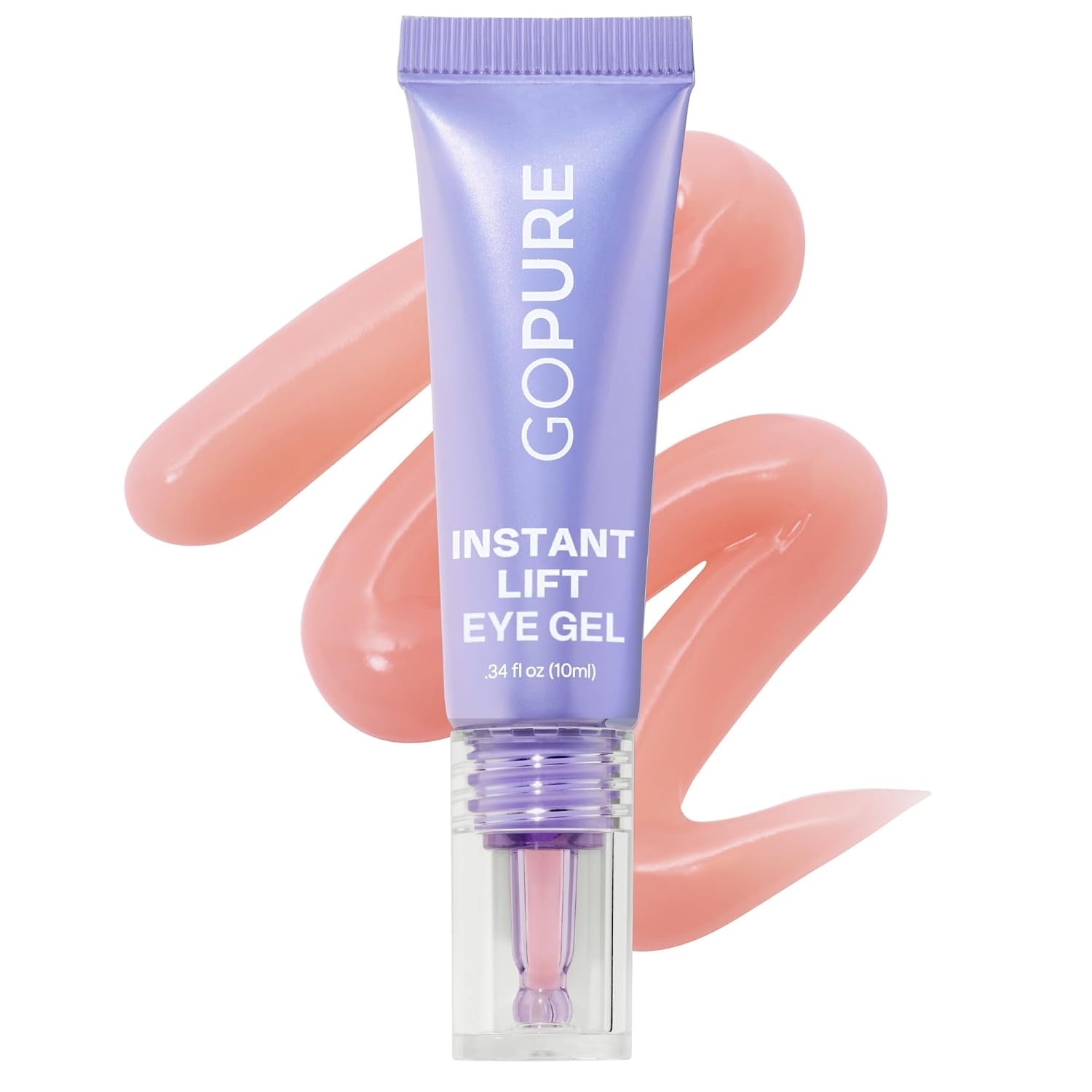
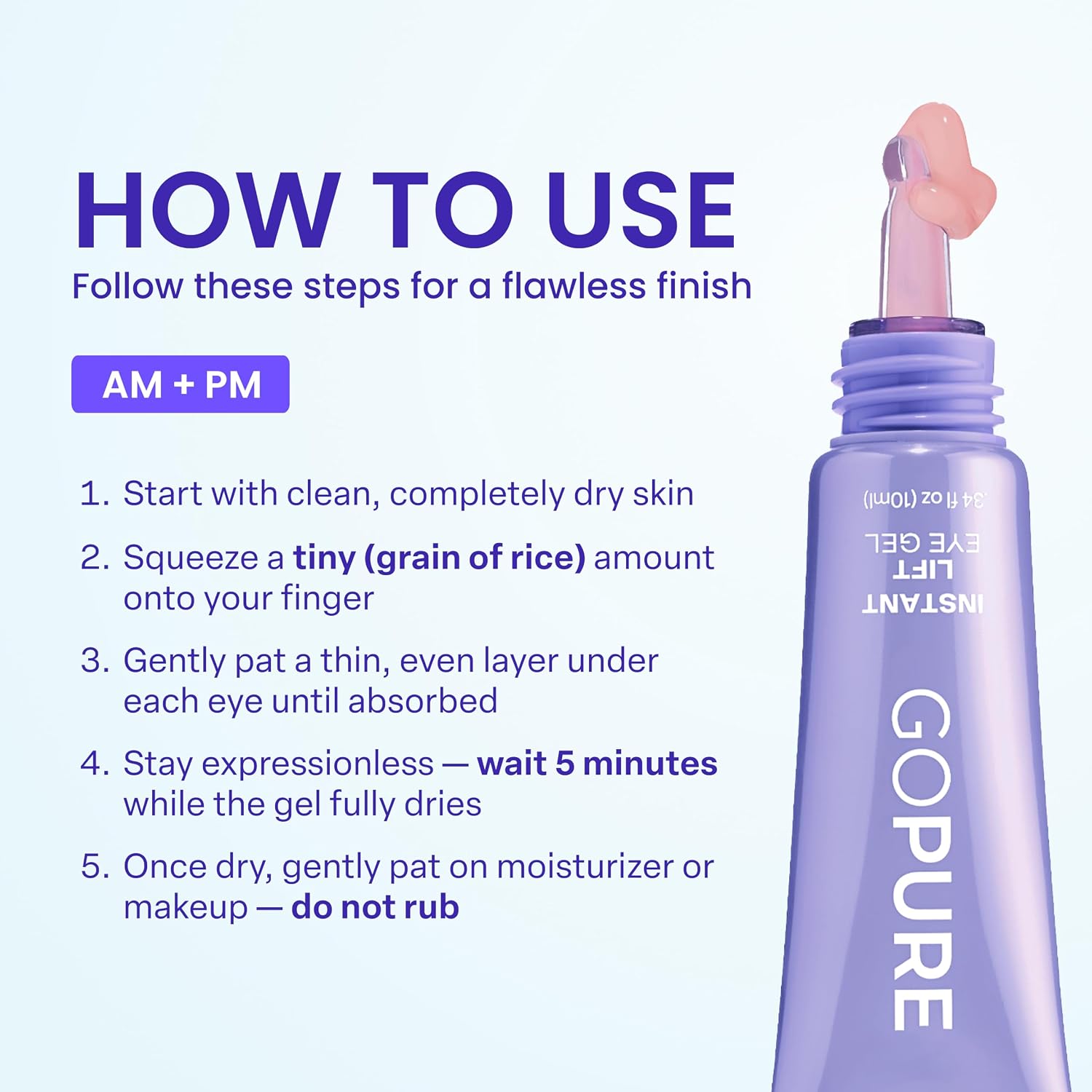
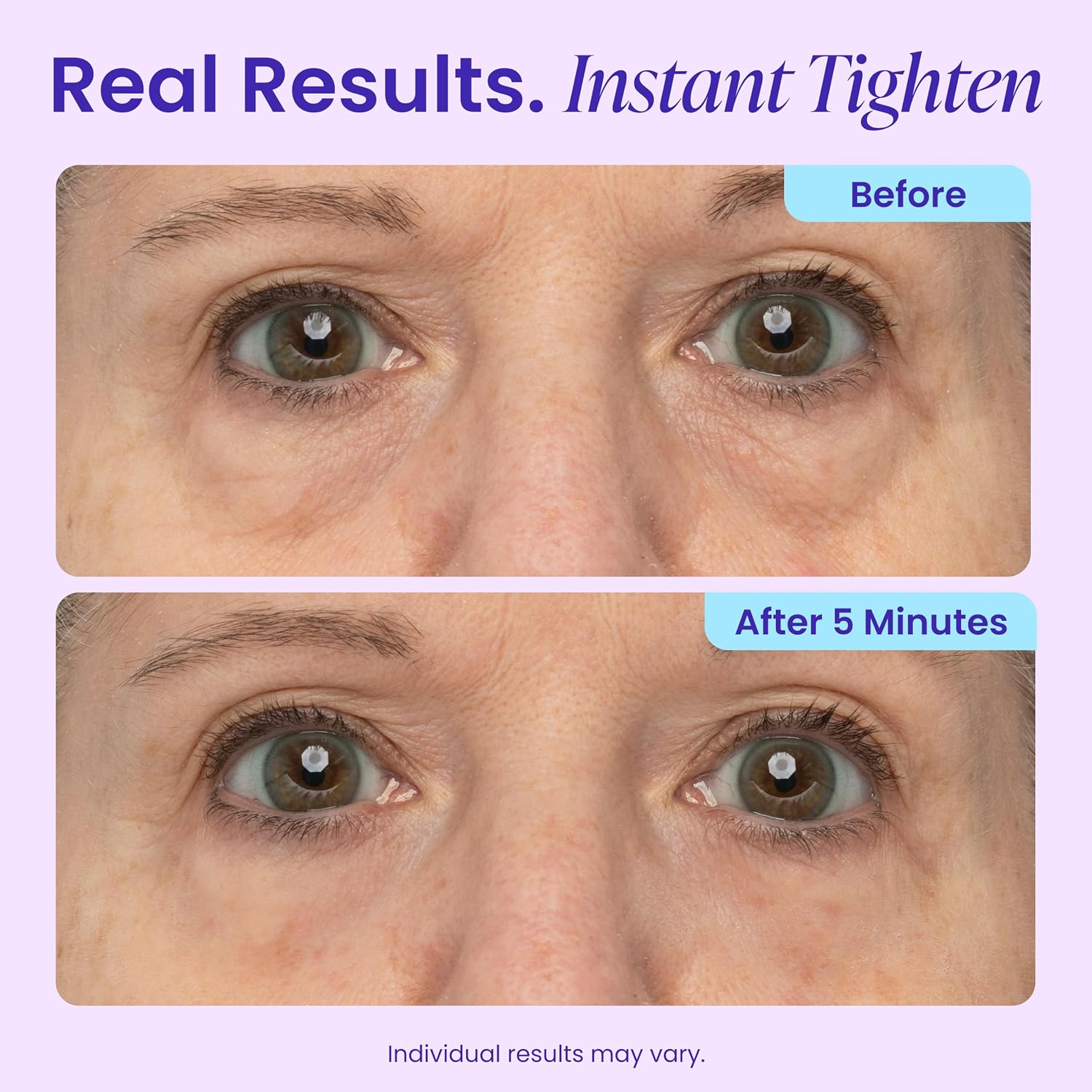
Three listing images were captured and are shown in carousel order. No buyer photographs rendered for this ASIN on any page variant, so the gallery is listing imagery only and is not presented as customer evidence. Note that the second image, not the listing text, carries the full usage protocol, and that the third image states the effect at five minutes rather than at the end of a wear period.
Methodology and limits
What was measured, what was not, and how far each figure can be trusted
- MarketplaceAmazon US, delivery context New York 10001, native USD only
- Capture date2026-11-01
- Product dataProduct detail page parsed into a structured record; every figure in sections 01 and 02 traces to that record
- Price recordThird-party Amazon price tracker, all-time summary; one price type only, record roughly six months old
- Ingredient channelsAmazon listing declaration and Skinsort product record; COSDNA attempted and blocked
- Ingredient agreement24 rows in both available channels, identical order, no discrepancy
- Rating and aspectsAmazon aggregate rating, histogram and machine-extracted aspect table
- Review textNot obtained. No page variant returned review bodies or buyer photographs. Nothing is quoted and no review is paraphrased
- AnonymisationNo reviewer name, handle, profile link or identifier appears anywhere in this report, because no reviewer-level data was collected
Confidence by element
| Element | Confidence | Basis |
|---|---|---|
| Price at capture | High | Read from the buy box with a US delivery context; matches the tracker's current observation exactly |
| All-time price extremes | High | Transcribed verbatim, each with its own date |
| Ingredient declaration | High | Two independent transcriptions agree on all 24 rows; Skinsort's own buy link points at this ASIN |
| Absence of vitamin C from the panel | High | 24 rows read in full; no ascorbic acid or ascorbate salt present |
| Identity of the Skinsort record | High | The record links to B0GL3BB3V5 directly |
| Functional classification | Medium | Assigned by this analysis from ingredient identity, not published by either source |
| Rating and histogram | High | Published aggregate; percentages are rounded shares of 3,017 |
| Aspect sentiment | Medium | Machine-extracted themes; small mention counts on several rows |
| Customer experience as described | Low | No review bodies were obtained; the qualitative layer is the aspect table and the AI summary only |
| Buyer photographs | None | Zero rendered on any page variant |
Limitations
- No review bodies were obtained on this run, from three page variants including a mobile fetch and a retry loop. Claims about what reviewers said are drawn from Amazon's aspect table and its AI summary, not from any review text.
- No buyer photographs rendered. The three images shown are listing imagery and are labelled as such.
- The listing's declared active ingredient, vitamin C, is absent from the declaration. The report flags the contradiction and does not attempt to explain it.
- The price record covers roughly six months and one channel. No channel comparison and no list-price comparison are possible, and no period-specific statistics can be derived.
- COSDNA was blocked at the network edge. Its absence is a channel failure, not evidence that the product is unindexed there.
- Functional classification of the 24 ingredients is this report's judgement. Skinsort's single-word function field is not a classification, and four rows are dual-role.
- The listing image captions were written from direct inspection of the three files, not from the listing's alt text, and the five-step protocol quoted from the second image is a transcription rather than a paraphrase.