Eye Masks · Hydrogel Patch · 01 November 2026
Six pairs of pink hydrogel patches built around four separate pigmentation mechanisms, screening clean on twelve out of twelve consumer claims, rated 4.5 by 4,454 buyers, and priced at exactly the brand's list with almost no movement in three years. What follows separates the part of that story the data supports from the part that is marketing.
- Format
- 6 pairs / 12 single-use crescent patches
- Actives
- Niacinamide, tranexamic acid, kojic acid, arbutin, alpha-arbutin, glutathione
- Session
- 15 minutes, 2–3 times a week
- Claim on pack
- Brightening & clearing, depuffs
- ASIN
- B0C3SB2P5G
- Category
- Skin Care › Eyes › Masks
- Snapshot
- 01 Nov 2026 · ZIP 10001 · USD
What you are buying
A boxed set of six pairs, not six patches. The carton says "6 Pairs / Paires" and the listing says "Set of 6"; the unit price Amazon prints, $3.67 per count, is therefore $3.67 per pair, or per two-patch session.
Specification sheet
| Brand | Topicals |
| Item form | Sheet (hydrogel patch) |
| Unit count | 6 count (6 pairs / 12 patches) |
| Item volume | 3.38 fl oz |
| Package size | 6.18 × 4.84 × 0.87 in; 1.41 oz |
| Model | FDE001 |
| UPC | 860008016546 |
| Scent | Unscented (declared) |
| Material free from | Nonylphenol ethoxylate, parabens |
| Stated benefits | Brightens, hydrates, depuffs, cools |
| Sold by | Topicals Rx (brand account) |
How it is meant to be used
- Cleanse and dry the under-eye area.
- Smooth one crescent patch under each eye.
- Leave for fifteen minutes, then remove.
- Repeat two to three times a week.
- Chill the sachets first for extra cooling.
- Patch test before the first use, per the brand.
The brand's own A+ copy draws a line that most eye products avoid: these patches address darkness caused by discoloration. If the darkness comes from hollowness or is genetic, Topicals tells the buyer to consult a dermatologist instead. That is an unusually honest scope statement, and it is the single most useful sentence on the listing.
Positioning, in the brand's words and in plain terms
The listing leads with speed — "visible results in just 15 minutes with our cooling hydrogel" — and treats the fifteen minutes as the product. Everything else follows from that: a patch is a delivery format for a short, intense contact, not a leave-on treatment, which is why the actives are water-phase acids and niacinamide rather than occlusives.
The second claim is pigment. Niacinamide, caffeine and kojic acid are named in the bullets; the formula adds tranexamic acid, arbutin, alpha-arbutin and glutathione. The third claim is tolerance: no synthetic fragrance, no dyes, no animal testing, patch test advised. Read together, the three claims describe a brightening patch for sensitive skin, which is a coherent position rather than a list of unrelated benefits.
What the listing does not state: the concentration of any active. Niacinamide and tranexamic acid are the two names in the product's own description, and neither carries a percentage. For a formula with four pigmentation mechanisms, the missing percentages are the difference between a credible clinical stack and a marketing one, and this listing does not close that gap.
How 4,454 buyers rated it
4.5 out of 5, with 78% of ratings at five stars — the most concentrated distribution of the eye products reviewed in this batch. The interesting number is not the average but the 7% tail.
Five buckets as published, rounded to whole percentages. The five-star bar is more than eight times the four-star bar; this is not a bell curve but a spike with a long thin tail.
What the distribution means
78 / 9 / 6 / 3 / 4 is the shape of a product that either works for you or does not: four in five buyers put it at the ceiling, and the disagreement lives in a 7% minority. With 4,454 ratings, that minority is a few hundred people — small as a share, real as a group.
The 4% one-star bucket being larger than the 3% two-star bucket is the familiar pattern for a patch: people who react badly do not grade it down gradually, they stop at the bottom. A product that provokes a reaction tends to produce a bimodal distribution, and this one does, mildly.
Buckets are rounded whole percentages, so they sum to 100 without being exact counts. A 0% bucket would not prove zero ratings; here every bucket is non-zero.
What the reviews agree on
Amazon's synthesis is unusually specific and unusually favourable on the physical behaviour of the patch. Buyers report that the patches stay in place without sliding down — 73% positive across 158 mentions — and that the under-eye area looks brighter and more refreshed afterwards. Moisturising and refreshing both score in the mid-70s to low 80s.
Two aspects break the pattern. Value for money is 51% positive, effectively a coin flip, with buyers split between "worth it" and "overpriced" — which is what a $3.67-per-session consumable will always produce. And skin irritation is 45% positive, the only aspect leaning negative, with some buyers reporting burning.
Share of positive mentions per aspect, mention counts alongside. Appearance (91% across 56 mentions) is the highest and the smallest sample; irritation (45% across 49) is the lowest and the one that matters clinically.
Twelve claims, all twelve holding
This is the only product in the batch that passes every consumer-claim check. No fragrance, no alcohol, no silicone, no sulfate, no paraben, no pore-clogger flag, fungal-acne-safe, vegan, cruelty-free and reef-safe.
- Alcohol-free
- EU-allergen-free
- Fragrance-free
- Oil-free
- Paraben-free
- Silicone-free
- Sulfate-free
- Cruelty-free
- Fungal-acne-safe
- Pore-clogger-free
- Reef-safe
- Vegan
Why fragrance-free is credible here
Two independent channels agree, which is rare. The ingredient list contains no Parfum, no Fragrance, no limonene and no linalool; and the listing's own specification table declares Scent: Unscented. The brand also states it avoids synthetic fragrances and dyes.
That matters more than it sounds. In this category, a "fragrance-free" verdict usually rests on the absence of a declared perfume — which is exactly the kind of claim that collapses when the actual list carries a flower water or a botanical extract doing fragrance duty. Here the list carries neither.
What "no concerns" does not mean
The database has no Concerns block for this formula, and that absence was confirmed rather than inferred. It means no ingredient class was flagged, not that the product cannot irritate.
The reviews record a genuine split on irritation, with one group reporting burning. Both statements are true at once: a formula can screen clean on every database axis and still provoke a reaction in a minority of users. The brand's patch-test instruction is the correct precaution, and it is there for a reason.
Four pigment mechanisms, one product
The most useful thing this formula does is stack mechanisms rather than repeat one. Counted by the function each ingredient is indexed under:
Grouped by indexed function. Antioxidants are the largest single cluster, which is the pigmentation work: kojic acid, arbutin, alpha-arbutin and hydroxyacetophenone.
| Mechanism | Ingredient (position) | What it does |
|---|---|---|
| Melanin transfer | Niacinamide (6) | Interferes with the movement of melanin into surface cells |
| Inflammatory pathway | Tranexamic acid (8) | Aimed at the stubborn, inflammation-linked discoloration niacinamide alone does not reach |
| Tyrosinase inhibition | Kojic acid (9), arbutin (10), alpha-arbutin (11) | Three agents on the same enzyme, at three strengths and three tolerability profiles |
| Reduction | Glutathione (14) | Shifts pigment precursors toward the lighter form |
| Vascular / depuffing | Caffeine (12), dipotassium glycyrrhizate (13) | Supports the "depuffs" half of the pack claim |
Five mechanisms across positions 6 to 14, i.e. the whole active block sits before the preservative tail. This is a designed stack, not a formula that happens to contain a brightener.
Ingredient levels — and the honest limit of them
Of twenty-four rows, exactly two carry any grade — glycerin and cellulose gum, both 0 on both axes. The other twenty-two are unrated.
What the table is actually made of
The gel matrix. Polyacrylic acid at 4, neutralised into a polyacrylate; sodium polyacrylate at 7 as the absorbent that holds the water; agar at 5 and xanthan gum at 19 for body; cellulose gum at 18 for film strength; aluminium glycinate at 22 as the crosslinker. That specific combination is why the patch holds its shape for fifteen minutes without sliding — the behaviour the reviews praise most consistently.
The water phase. Water, glycerin, dipropylene glycol and dipotassium glycyrrhizate. A hydrogel is mostly water by design: the cooling is evaporation, and the fifteen-minute window is the time it takes to give that water back to the skin.
The tail. Hydroxyacetophenone and caprylyl glycol as the preservative pair — no phenoxyethanol, which is consistent with the clean-claim set. Disodium EDTA chelates, tartaric acid at 21 holds pH, caprylyl/capryl glucoside at 24 is a mild surfactant left over from the emulsion.
One note for acid-sensitive readers. Tartaric acid appears at position 21, after the preservatives. At that position it is a buffer, not an exfoliant, and it is not a plausible explanation for the burning some buyers report. The more likely candidates are the kojic acid and the tranexamic acid, both of which are known to sting on compromised skin — but that is inference, and it is flagged as such.
Headline benefits, credited
| Benefit | Ingredients | Reading |
|---|---|---|
| Brightening | 6 | The product's actual promise, and the largest credit in the table |
| Dark spots | 6 | Same six ingredients; the two rows are the same claim in two words |
| Reduces irritation | 5 | Supported by dipotassium glycyrrhizate and the humectant load |
| Scar healing | 5 | Adjacent claim, not what a patch is bought for |
| Redness reducing | 4 | Consistent with the licorice-derived salt at 13 |
| Anti-aging | 3 | Adenosine carries most of this row |
| Hydrating | 3 | Glycerin, dipropylene glycol, dipotassium glycyrrhizate |
| Barrier repair | 2 | Thin evidence on a rinse-off format |
| Acne fighting | 1 | Single-ingredient claim |
| Good for oily skin | 1 | Single-ingredient claim |
| Reduces large pores | 1 | Single-ingredient claim |
| Skin texture | 1 | Single-ingredient claim |
Unlike a retinol cream, the ranking here matches the marketing: the two top rows are the two claims on the box. Rows with a single credited ingredient are weak evidence by the collector's own rule and are not treated as findings.
Product images
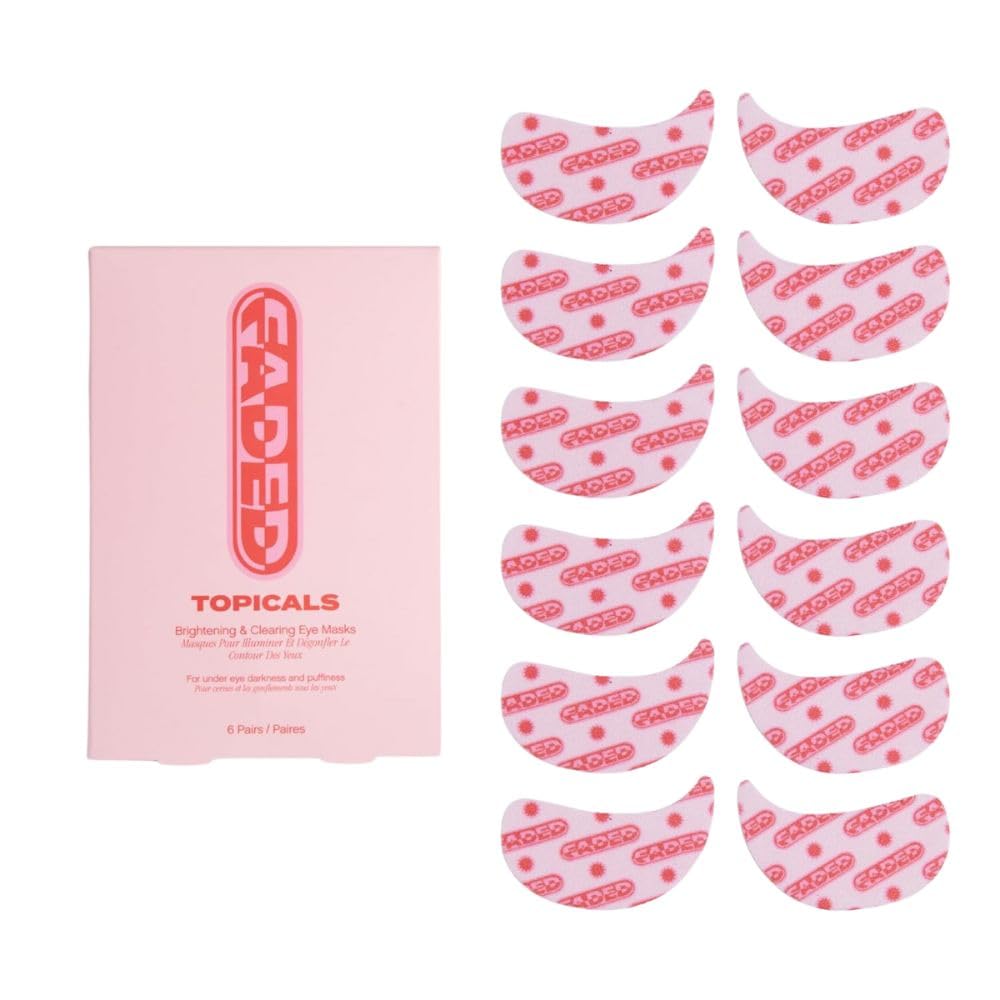
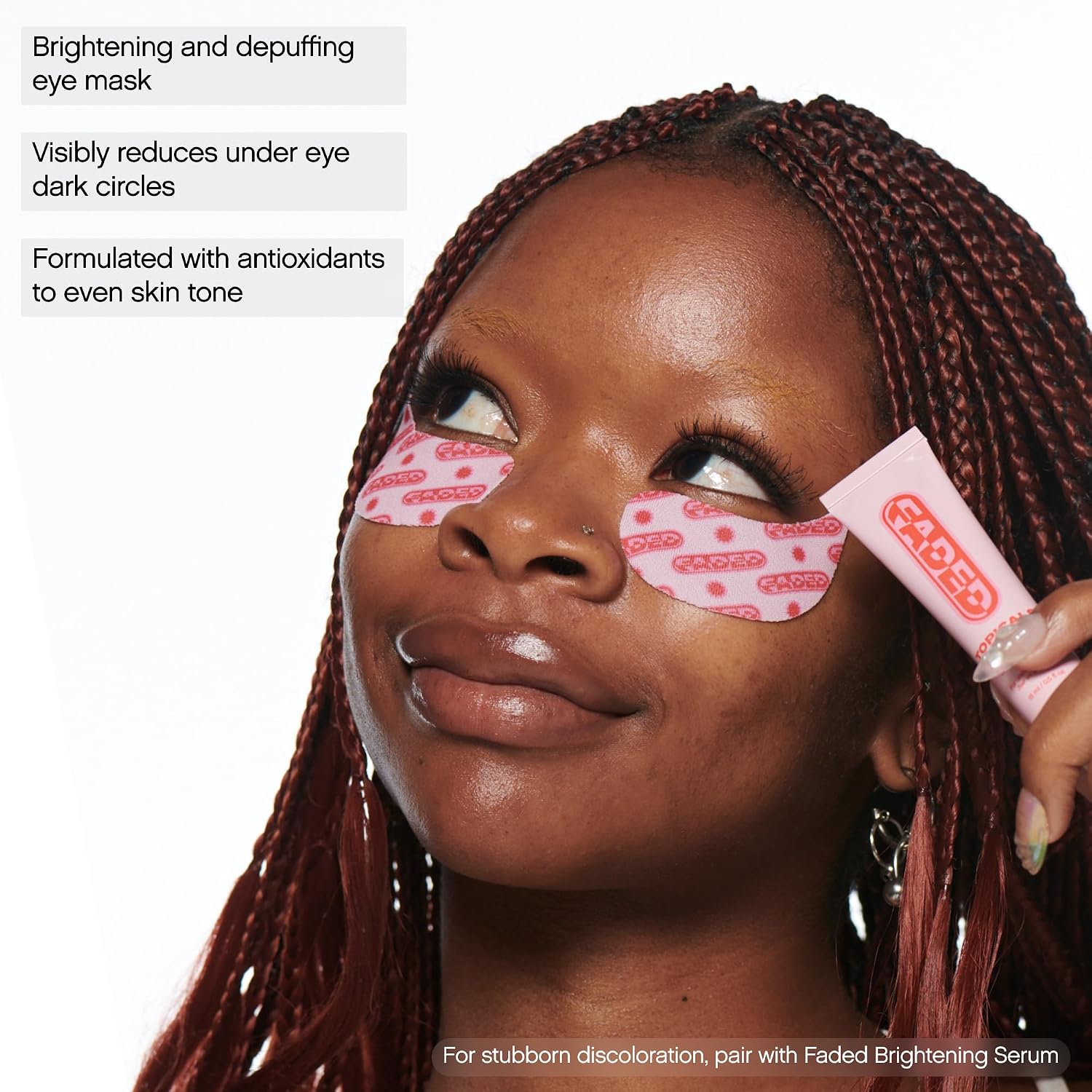
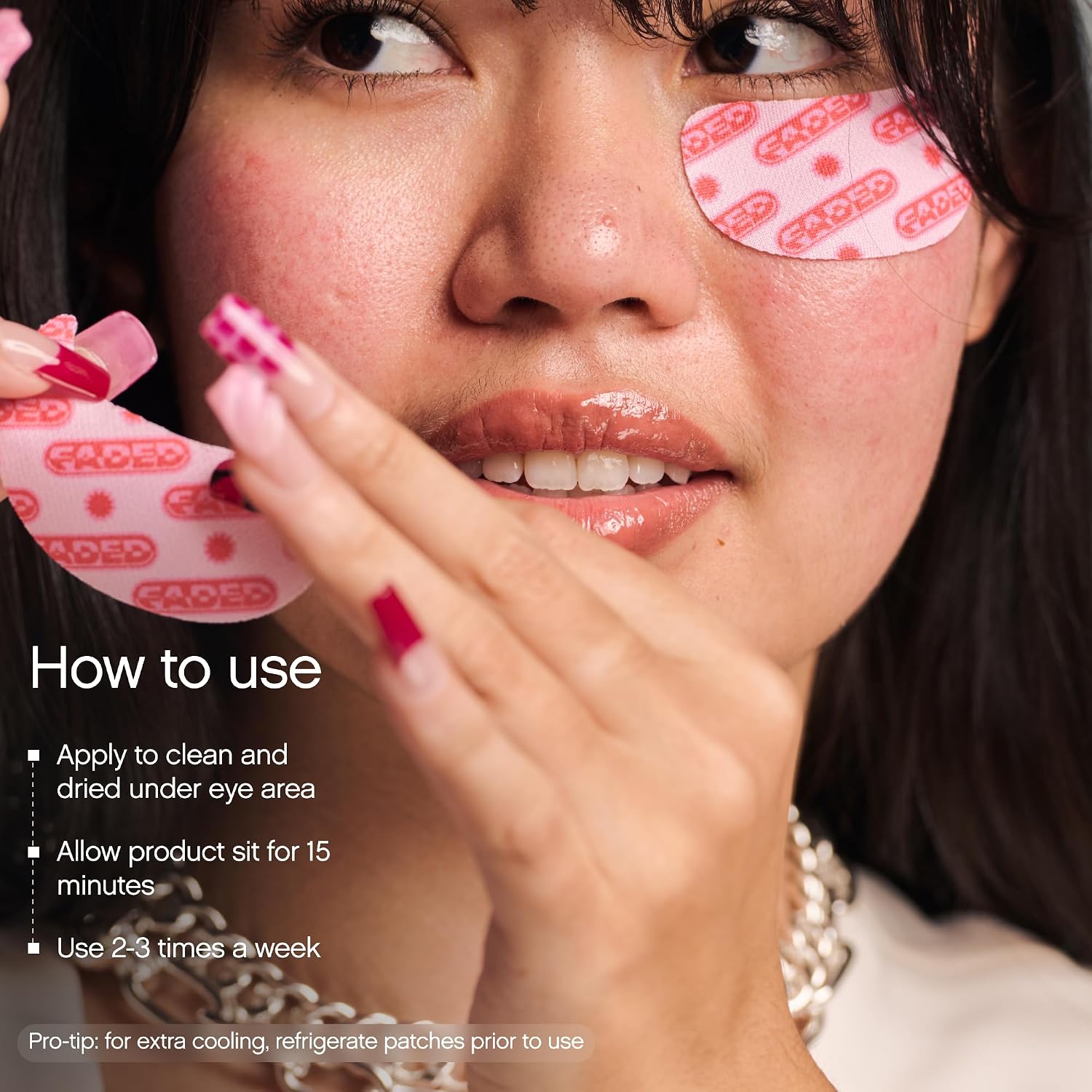
Three images rendered, all three marketing assets. No buyer-uploaded photograph and no image of the ingredient panel was present on the listing.
$22.00 — list price, and that is the whole story
Three years of tracking, one populated channel, and a single four-day dip. This is a brand-administered price, not a competitive one, and the record says so plainly.
| Price type | Lowest ever | Highest ever | Current | Average |
|---|---|---|---|---|
| Amazon | — | — | — | — |
| 3rd Party New | $16.50 Jun 23, 2026 | $22.00 Mar 20, 2024 | $22.00 Jun 27, 2026 | $20.15 |
| 3rd Party Used | — | — | — | — |
The only populated channel, four values side by side. The gap between the $16.50 floor and the $22.00 ceiling is $5.50 — and the floor lasted four days.
Position against benchmarks
Current $22.00 measured against four reference points, Amazon channel. At the all-time high and at list simultaneously, because in this record they are the same number.
A single-channel record, and why
Amazon has no row. That is structural, not a monitoring gap: the buy box is held by the brand's own seller account, so Amazon Retail never sells the product and the tracker's "Amazon" series stays empty for the listing's entire life. There is no Amazon price to benchmark the marketplace against.
The used channel is empty too, and the tracker says outright that it has no data for that price type. An eye patch is single-use and skin-contact; a second-hand market would be both impractical and unsanitary, so the absence is expected rather than surprising.
What the four-day dip says
$16.50 appears once, on 23 June 2026, and is gone by 27 June. A price that lasts four days is a promotion or a coupon-stacked checkout price, not a repricing. It is also exactly the subscribe-and-save rate on offer today, which makes the June episode look like a promotional match of the subscription price rather than a genuine cut.
The rest of the record is flat: list price at the March 2024 high, list price at the current observation, and an average of $20.15 that exists only because of that one dip. Strip the four days out and the average equals list.
Three readings, with their confidence
The price is administered, not competitive. One seller, one price, three years, one four-day exception. When a brand holds its own buy box, the price moves when the brand decides, and no amount of waiting produces a competitor-driven discount. Confidence: high — the channel structure is visible in the data.
There is no discount to wait for. At list, with the all-time high also at list, the only way to pay less than $22.00 is the subscription rate of $16.50 — a 25% saving that is available today and was briefly available to everyone in June. Confidence: high on the arithmetic, medium on the forecast, because a brand can always run a promotion.
The $3.67 per session is the number that matters. Comparing a six-pair box at $22.00 with a 30-pair box at $18.00 is a comparison of unit economics, not of price tags, and this listing only makes sense read that way. Confidence: high — the unit figure is published.
What is solid, what is thin, what is missing
| Element | Level | Basis |
|---|---|---|
| Price, unit price, subscription rate | High | Single rendered listing with US context confirmed |
| Rating and star distribution | High | 4,454 ratings; buckets as published, rounded |
| Aspect sentiment percentages | High | Published synthesis with mention counts |
| Individual review quotations | None | No review body rendered across three variants and three retries |
| Claim matrix | High | Twelve badges, all passing; fragrance corroborated by the listing's own scent field |
| Ingredient list | Medium | Complete against a single source's total; no manufacturer INCI available |
| Ingredient grades | Very thin | 2 of 24 rows rated, both bulking agents |
| Concerns block | High | Absence confirmed with a dedicated check, not inferred |
| Price history values | High | Transcribed verbatim from one rendered table |
| Price history freshness | Low | Current observation 127 days old; scan itself a month old |
| Channel coverage | One of three | No Amazon series and no used market exist for this listing |
| Rank | Medium | Live quantity; a snapshot, not a stable fact |
| Buyer photographs | None | Listing exposed zero customer image tiles |
Snapshot. Listing, rating, rank and price observations captured 01 November 2026 with a US delivery address in ZIP 10001; all figures in USD, none converted. Price-history values are the tracker's all-time record as of that date and carry their own observation dates. Rank, ratings and buy-box price move between captures.
Anonymity. No reviewer name, handle, profile link or identifier appears in this dossier, and no individual review is quoted.