Product information
What the listing publishes about The Ordinary Volufiline 92% + Pal-Isoleucine 1% Plumping Anhydrous Serum: positioning, specification sheet, headline claims and the photography used on the detail page. Everything below is a snapshot of the Amazon US detail page taken on 2026-10-31, with prices read against a US delivery address.
Specification sheet
| Field | Published value |
|---|---|
| Skin Type | All |
| Product Benefits | Volufiline* 92% + Pal-Isoleucine 1% is formulated to visibly target loss of volume and improve skin density with a water-free, oil-like base. See more |
| Use for | Cheek, Eye, Face |
| Scent | Fragrance Free |
| Special Ingredients | Alcohol Free, Fragrance Free, Gluten Free, Silicone Free, Vegan |
| Item Weight | 0.05 kg |
| Item Volume | 0.51 fluid ounces |
| Product Dimensions | 1.15 x 1.15 x 3.94 inches; 1.76 ounces |
| Item model number | 769915236460 |
| UPC | 769915236460 |
| Manufacturer | DECIEM |
| ASIN | B0FYJ4WQ5J |
| Best Sellers Rank | #1,663 in Beauty & Personal Care; #49 in Facial Serums |
What the brand claims
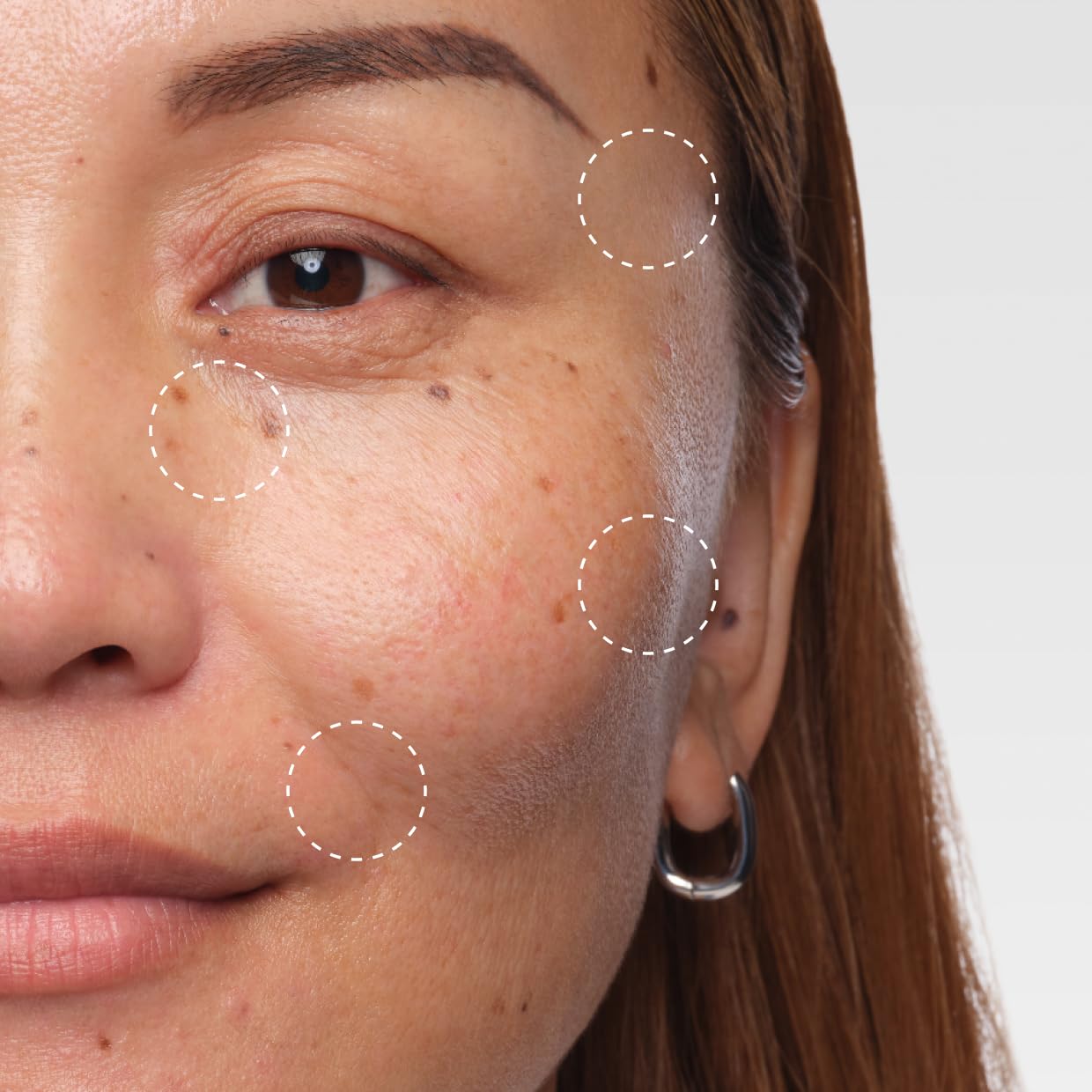
PLUMPING FACIAL SERUM: Volufiline* 92% + Pal-Isoleucine 1% is formulated to visibly target loss of volume and improve skin density with a water-free, oil-like base.
TARGETS VOLUME LOSS: Volufiline* 92% is known technology to plump the appearance of areas prone to showing loss of volume, such as under the eyes, and around the cheeks and smile lines.
SUPPORTS ELASTICITY: Palmitoyl Isoleucine 1% is a supporting lipoamino acid that helps to impart volume by supporting skin structures responsible for a naturally plump look, helping to improve the appearance of wrinkles while supporting skin collagen and elasticity for a visibly lifted effect.
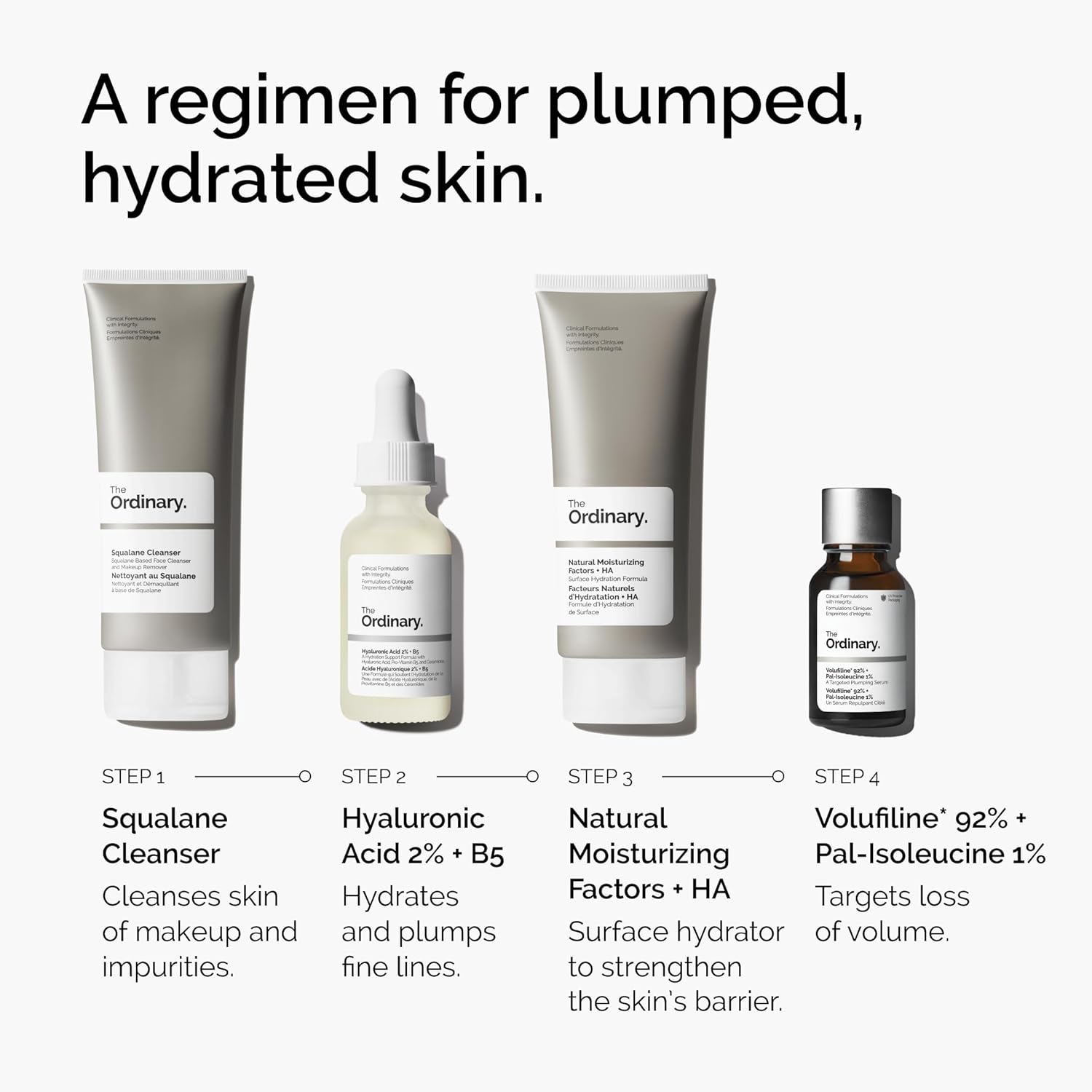
APPLICATION INSTRUCTIONS: Shake well and apply after moisturizer in the morning and evening to targeted areas that appear sunken or hollow for visible plumping and smoothing. A slight tingling sensation may occur.
NO CONFLICTS, NO FUSS: Volufiline* 92% + Pal-Isoleucine 1% can be combined with every product in our portfolio. Use it regularly to help support visible results.
Product images
Three listing frames per row, exactly as published on the Amazon detail page.
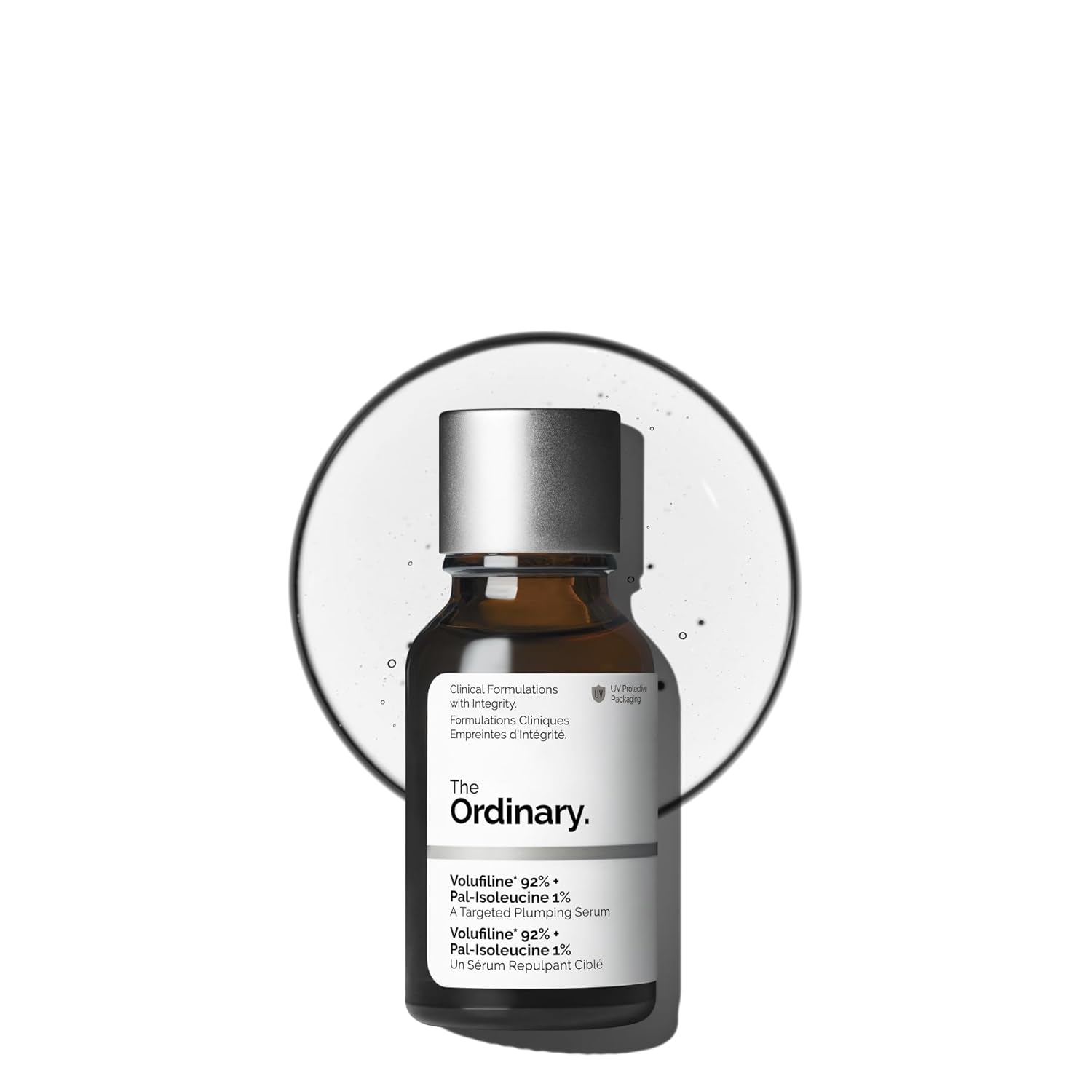
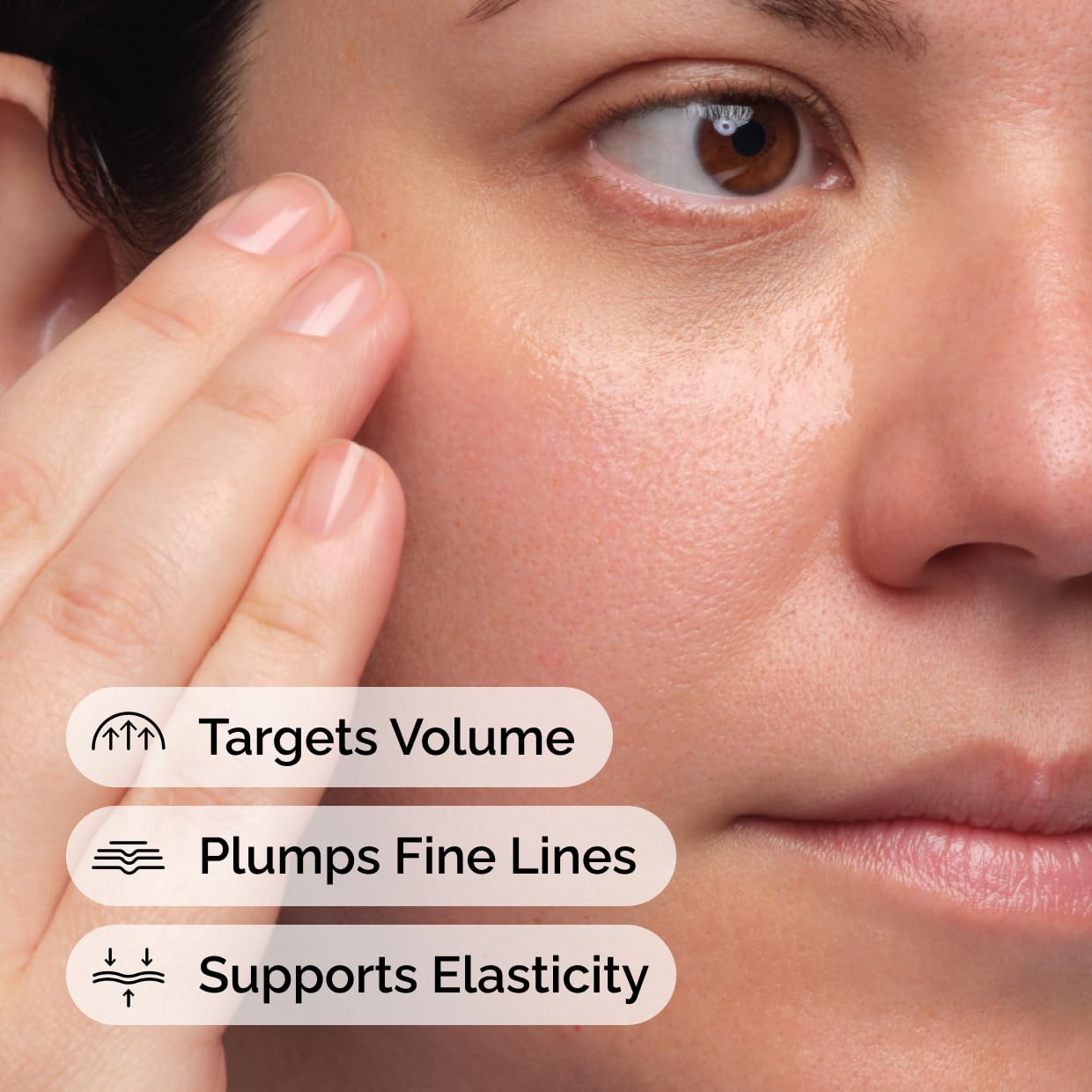
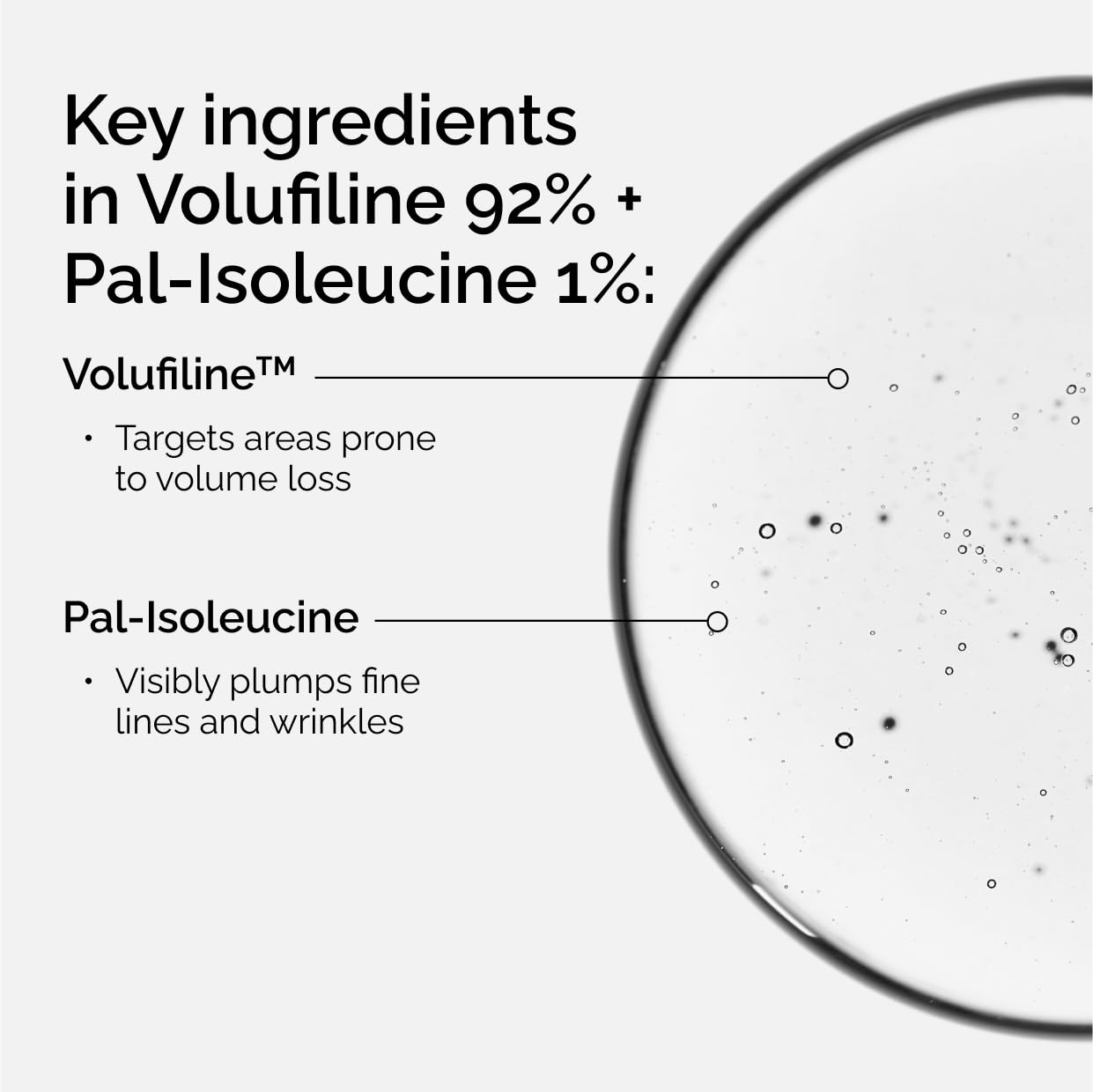
Real product photos
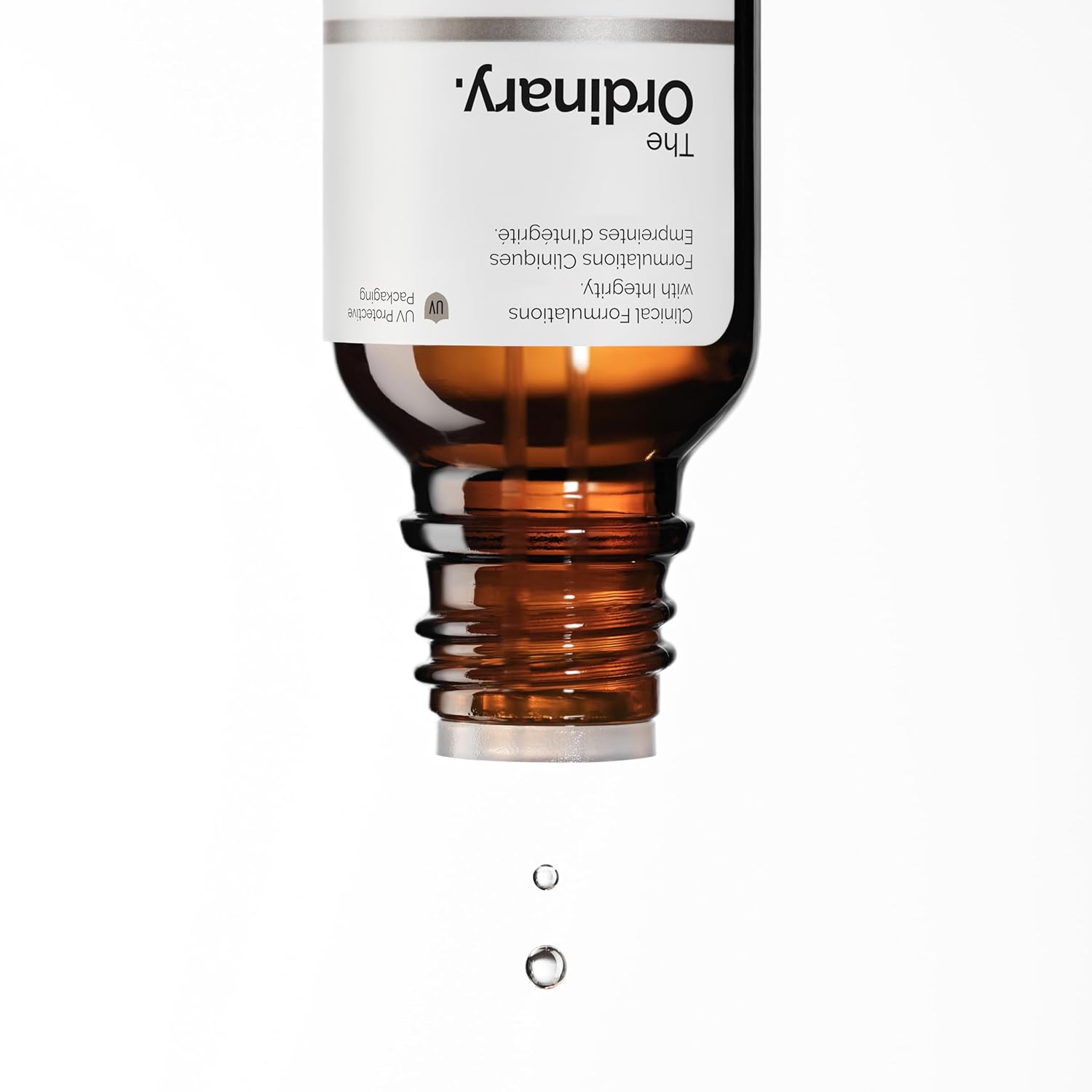
The listing rendered no buyer-uploaded photo tiles at capture time; the frames below are additional Amazon listing photography rather than customer uploads.
Rating & review signal
The score and its distribution, then the themes buyers actually write about. Review content is aggregated only: no reviewer name, handle, avatar or profile link is reproduced anywhere in this analysis.
Rating distribution
What buyers talk about
| Aspect | Mentions | Positive | Negative | Positive share |
|---|---|---|---|---|
| Effectiveness | 186 | 119 | 67 | 64% |
| Quality | 154 | 124 | 30 | 81% |
| Moisturizing | 112 | 83 | 29 | 74% |
| Value For Money | 72 | 54 | 18 | 75% |
| Skin Irritation | 72 | 34 | 38 | 47% |
| Texture | 67 | 39 | 28 | 58% |
| Plumping | 61 | 46 | 15 | 75% |
| Absorption | 23 | 14 | 9 | 61% |
Customers say
Customers find the serum effective and appreciate its moisturizing properties, with one noting it softens lines within 24 hours. The product receives positive feedback for its value, plumping effect on lips, and overall quality. Customers disagree on the texture, with some finding it bouncy while others describe it as oily, and there are mixed experiences with absorption and skin irritation.
Reading the signal
The distribution is top-heavy: 69% of ratings sit at five stars and a further 12% at four, which is the shape of a product that satisfies most first-time buyers. The tail is not noise, though — 6% at one star is a visible minority, and the aspect table shows where the disagreement concentrates: skin irritation is the weakest theme at 47% positive across 72 mentions, while quality reaches 81%. Price is not the sticking point here; the weaker reading sits on skin irritation, which is where a buyer deciding on this SKU should look before anything else.
Confidence: high for the aggregate score and histogram (published directly); medium for the aspect split, which is a model-generated summary rather than a vote count and does not sum to the rating total.
Ingredients & formula
Two independent ingredient databases were merged into a single table: COSDNA supplies acne risk, irritant and safety grades, Skinsort supplies position order, function and comedogenic / irritancy ratings. Where both index the same ingredient the rows are fused; where only one does, the gap is shown rather than filled.
Matching outcome: 7 ingredients agreed exactly across both databases, 0 appear only in COSDNA and 0 only in Skinsort. Skinsort's own community read on this formula is 3.0 from 5 reviews at a $$$$ price band — a small sample, useful as a second opinion only.
Ingredient level classification
Every ingredient carrying a COSDNA safety grade is bucketed by it. The scale is inverted: 1 is the safest reading and higher numbers mean more caution is warranted, so the two left-hand bands are the clean ones. Not rated means the database holds no entry, not that the ingredient is harmless.
| Safety band | Ingredients | Share |
|---|---|---|
| Low (1) | 7 | 100.0% |
| Mild (1-2) | 0 | 0.0% |
| Moderate (2-3) | 0 | 0.0% |
| Elevated (>3) | 0 | 0.0% |
| Not rated | 0 | 0.0% |
Function profile
The profile is a classic emulsion serum: a water and solvent base, a small silicone and emollient load for slip, one humectant cluster and a short preservative tail. The actives concentrate in three names — niacinamide, the patented Melasyl molecule (2-mercaptonicotinoyl glycine) and a retinyl ester — which matches the marketing claim rather than contradicting it.
Flagged ingredients
Rows below appear because at least one published grade reaches 3 or higher on acne, irritancy, safety or comedogenicity. A 3-plus safety grade on a fragrance or a preservative is a class-level flag, not a prediction about this formula.
| Ingredient | Function | Acne | Irritant | Safety | Comedo. | Irritancy |
|---|---|---|---|---|---|---|
| Tocopherol | Antioxidant | 2-3 | 2 | 1 | 0-3 | 0-3 |
What's inside: claim matrix
Free-from claims are printed exactly as the aggregator grades them. A "NO" is a failing claim, not a neutral reading — the fragrance line in particular is worth reading twice.
Flagged concerns
No concern block was published for this formula.
Key ingredient groups
Benefits the formula supports
Bar length is the number of ingredients the aggregator credits for each benefit; a one-ingredient claim is a weak signal, not a promise.
Complete ingredient table
7 rows in published order. Columns 4 to 6 come from COSDNA, columns 7 and 8 from Skinsort. Blank cells are rendered as not rated.
| # | Ingredient (INCI) | Function | Acne | Irritant | Safety | Comedo. | Irritancy | Source |
|---|---|---|---|---|---|---|---|---|
| 1 | Hydrogenated Polyisobutene | Viscosity Control, Emollient | not rated | 1 | 1 | 1 | 2 | both |
| 2 | Caprylyl Glycol | Moisturizer, Emollient | not rated | not rated | 1 | not rated | not rated | both |
| 3 | Polyglyceryl-3 Stearate | Emulsifier | not rated | not rated | 1 | not rated | not rated | both |
| 4 | Palmitoyl Isoleucine | Skin Protecting | not rated | not rated | 1 | not rated | not rated | both |
| 5 | Anemarrhena Asphodeloides Root Extract | Skin conditioning, Plant extract | not rated | not rated | 1 | not rated | not rated | both |
| 6 | Rhus Succedanea Fruit Wax | Viscosity Control, Emollient | not rated | not rated | 1 | not rated | not rated | both |
| 7 | Tocopherol | Antioxidant | 2-3 | 2 | 1 | 0-3 | 0-3 | both |
Reading notes. Acne risk and irritancy are read low-is-safer. Safety is an inverse grade where 1 is the least concerning. Where a source prints a range such as 1-9 the upper bound is used for banding, so an ingredient is never quietly upgraded. This short table prints a single grade on five rows and no grade at all on one, so a lone number is recorded as the safety grade. Hydrogenated Polyisobutene printed two of three grades; following the last-number-is-safety rule its two values are recorded as irritant and safety, with acne risk left unrated - that single row is alignment-inferred.
Price analysis
The current ask, the surrounding history, and how the price behaves against its own floor, its average and the list price. All figures are USD as rendered for a US delivery address; nothing here is converted from another currency or estimated.
Price history by channel
| Price type | Lowest ever | Low date | Highest ever | High date | Current | Current date | Average |
|---|---|---|---|---|---|---|---|
| Amazon | $17.12 | 2026-08-02 | $21.40 | 2026-05-01 | $21.40 | 2026-10-02 | $19.86 |
| 3rd Party New | — | — | — | — | $21.40 | 2026-10-02 | — |
| 3rd Party Used | — | — | — | — | — | — | — |
The tracker's summary block is all-time by construction: changing the chart window re-scales the line but never re-computes these five values, so no period-specific low or high can be read from it. The last observation in this record is dated 2026-10-02, 29 days before the collection date, and the tracker reports its last scan as “28 days ago”. Treat the live figure as up to 29 days old rather than as a today quote.
Channel comparison
Four bars per price type — the historic floor, the average, the live price and the historic ceiling. Where a channel has no data the bars collapse to zero and the table above reads as a dash.
Price trend from dated observations
The tracker publishes only the dated extremes and the last observation, not a full observation series, so the line below connects the actual dated points rather than inventing intermediate values. Read it as the shape of the record, not as a daily series.
Derived position
| Metric | Value | Percent | Reading |
|---|---|---|---|
| All-time range, Amazon channel | $4.28 | 25.0% | Highest ever minus lowest ever, as a share of the floor |
| Current vs all-time low (Amazon) | +25.0% | — | How far the live price sits above the floor |
| Current vs all-time average (Amazon) | +7.8% | — | Above average means the price is in the upper half of its own history |
| Current vs list price | -50.0% | — | List price is the brand's reference, not a promotional anchor |
| Marketplace premium (3P new average minus Amazon average) | not computable | — | Positive means third-party sellers average above Amazon itself |
What the price record says
The live price of $21.40 sits +7.8% against its own all-time average of $19.86, and +25.0% above the historic floor of $17.12 first touched on 2026-08-02. That distance is the real promotional room: a campaign that does not approach the floor is cosmetic discounting, not a structural price move.
Third-party new averages — against Amazon's $19.86, a gap of not computable. The premium is the marketplace's own read on availability — while the buy box is stable the gap compresses, so a widening spread is an early warning that supply is thinning.
Confidence: high for the transcribed prices and dates, medium for the interpretive paragraphs, which reason from five values per channel rather than from an observation log.
Methodology, scope and confidence
One market (Amazon US), one SKU, one capture per source on 2026-10-31. Prices read with a US delivery address active and quoted in native USD. Ratings and review themes are the platform's own aggregates, not a re-scored sample.
7 COSDNA rows and 7 Skinsort rows were normalised and joined on ingredient name: 7 matched, 0 COSDNA-only, 0 Skinsort-only. Position order follows Skinsort where it exists.
Both ingredient sources are community databases, not regulatory filings; their grades are class-level references. The price record holds five values per channel, so period-specific extremes cannot be derived from it.
No reviewer name, handle, avatar, identifier or profile link is reproduced. Review content appears only as aggregated aspects and themes.