Brand: COSRX | Format: 3.52 oz / 100 g jar | Category: Face Moisturizers | Marketplace: Amazon US | Snapshot date: 27 October 2026
This is a single-product teardown built from four independent capture channels: the Amazon US listing itself, a ten-year price-tracking record, and two separate cosmetic ingredient databases. Where the channels disagree, the disagreement is reported rather than resolved. Everything below is a snapshot - price, rank, and review counts move daily.
1. Product Information
1.1 Product imagery
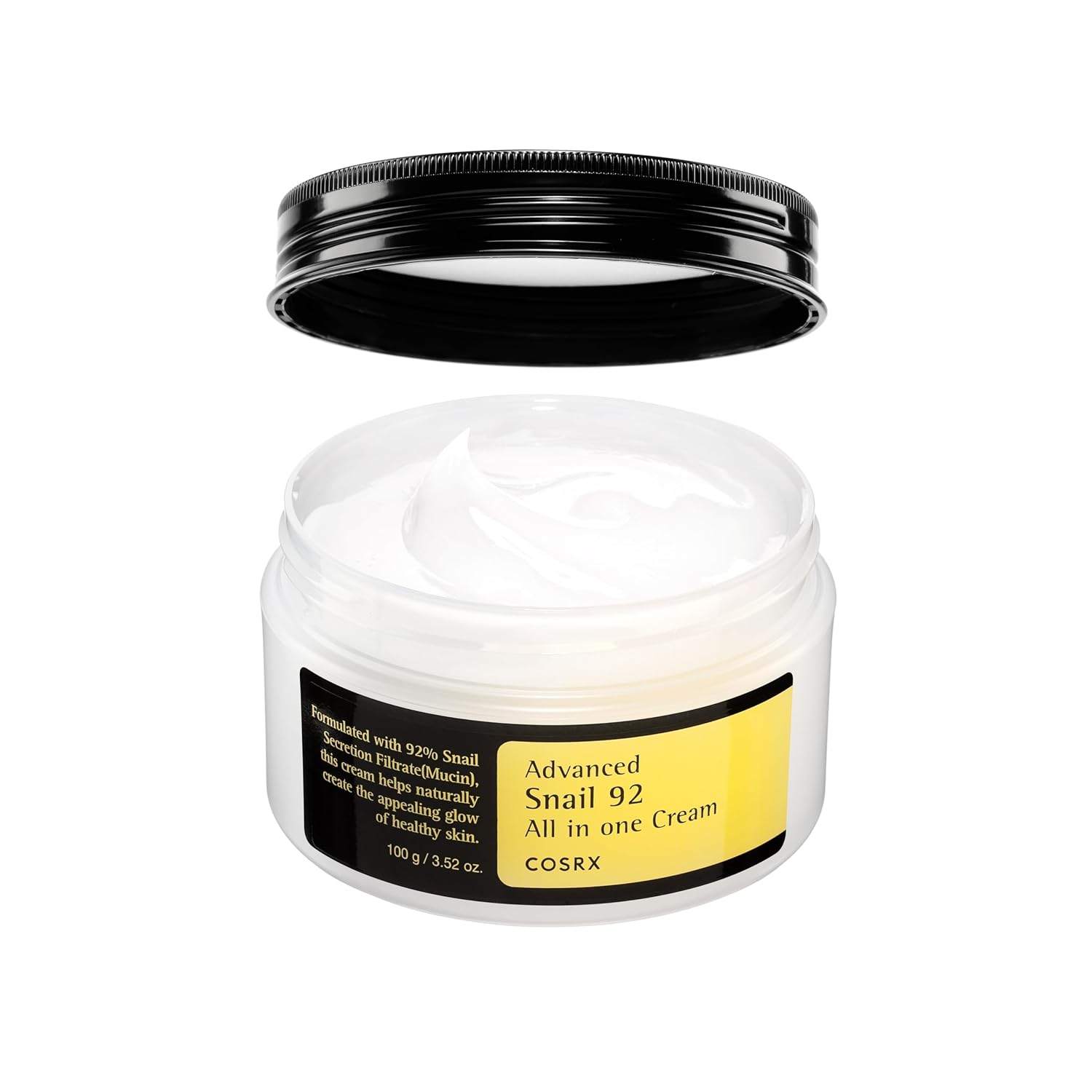 Source: Amazon - the 3.52 oz jar, lid off, showing the cream surface and the full side label. |
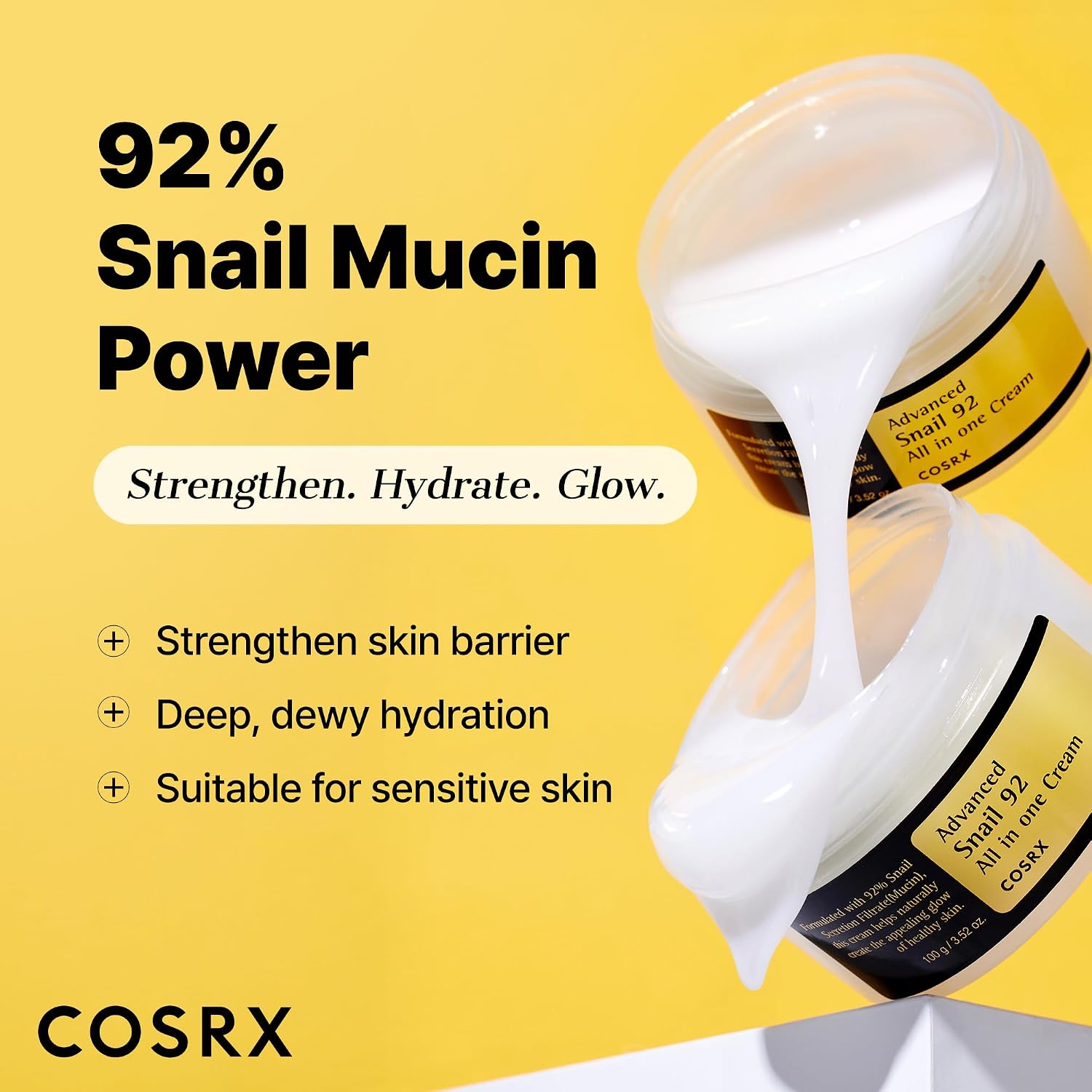 Source: Amazon - the brand's headline graphic: 92% Snail Mucin Power, with three benefit bullets and cream pouring between jars. |
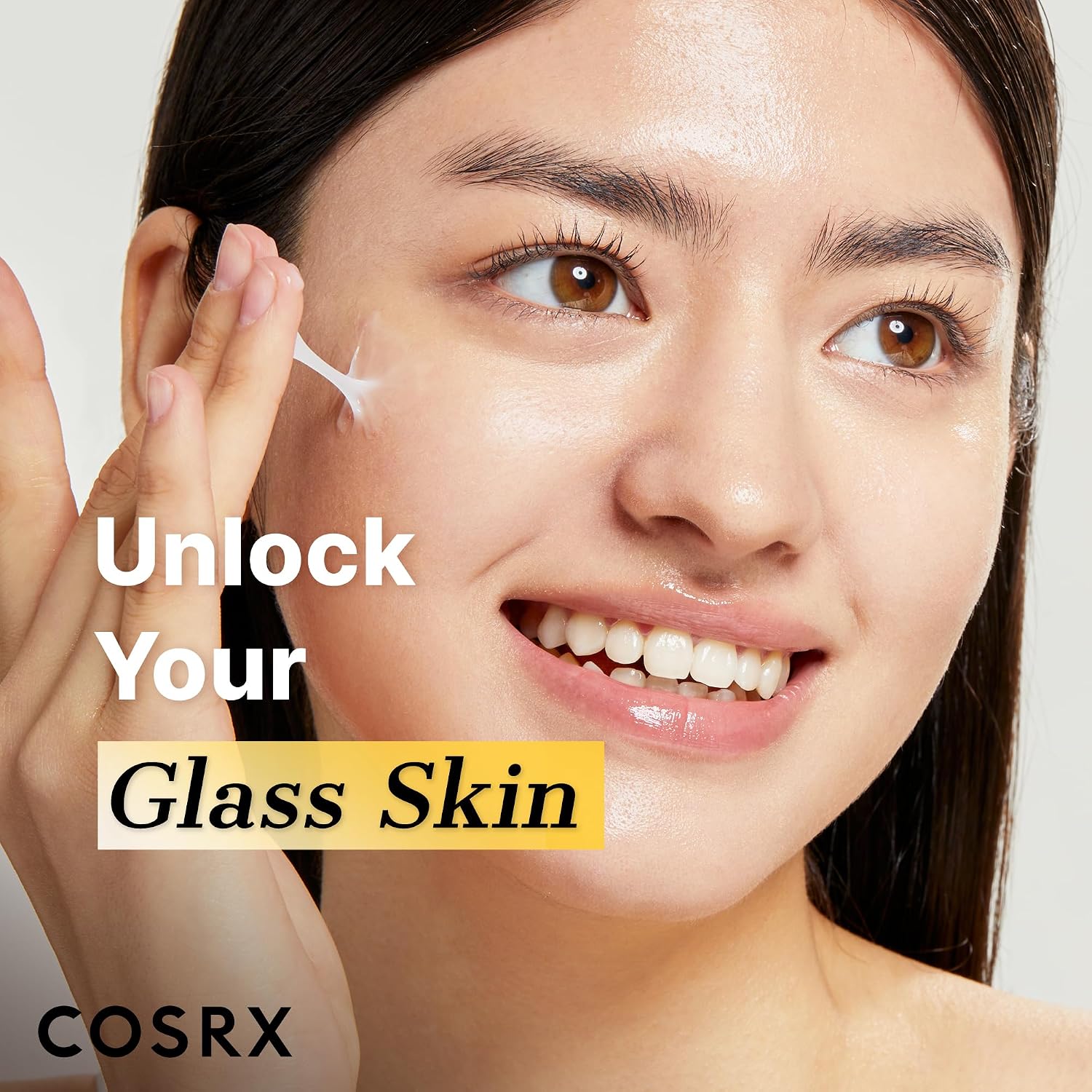 Source: Amazon - a model pressing the cream into her cheek, overlaid with Unlock Your Glass Skin. |
1.2 At a glance
| Field | Value |
|---|---|
| Full listing title | COSRX Snail Mucin 92% Face Moisturizer for Soft & Glowy Skin, 3.52 oz. |
| Brand | COSRX |
| Sold by | COSRX (brand-direct, first-party seller) |
| Category path | Beauty & Personal Care › Skin Care › Face › Creams & Moisturizers › Face Moisturizers |
| Best Sellers Rank | #816 in Beauty & Personal Care; #27 in Face Moisturizers |
| Size | 3.52 oz / 100 g |
| Unit price | $5.68 per ounce |
| Availability | In Stock - delivery quoted to a New York 10001 address |
| Current price | $19.99 (list $26.00, 23% off) |
| Rating | 4.5 out of 5, from 64,289 ratings |
| Hero claim | 92% Snail Secretion Filtrate |
1.3 Specification table
| Specification | Value |
|---|---|
| Brand | COSRX |
| Item Volume | 0.1 kg |
| Unit Count | 3.52 Ounce |
| Item Weight | 100 g |
| Item dimensions L x W x H | 2.75 x 2.75 x 1.75 inches |
| Product Dimensions | 2.75 x 2.75 x 1.75 inches; 3.53 ounces |
| Age Range (Description) | Adult |
| Department | Unisex |
| Special Feature | Paraben-Free |
| Item model number | cosS02-C |
| Manufacturer | Cosrx |
| ASIN | B01LEJ5MSK |
1.4 How the brand positions it
Five bullet points carry the listing's argument, in the listing's own order:
- Daily Repairing Cream. Infused with 92% of Snail Mucin (Snail Secretion Filtrate), this cream builds a moisture barrier to plump, hydrate, and soothe skin. The brand calls it an everyday multi-solution cream that glides on and revives radiance "without leaving a sticky residue".
- Supercharged Repairing Moisturizer. A light-weight, gel-type cream for irritated or sensitised skin after breakouts. Powered by Snail Mucin, Hyaluronic Acid, and Betaine to replenish moisture and strengthen the barrier.
- Key Ingredients. Snail Secretion Filtrate contains "Mucin", which the listing frames as effective for moisturisation and gentle exfoliation, usable on all skin types including sensitive. The brand names mucin's key components as Collagen, Elastin, Glycolic Acid, and Allantoin.
- No Snails are Harmed. The mucin is described as obtained in a safe, environmentally friendly way and processed as a cosmetic material - 100% natural, hypoallergenic, dermatologist-tested, not tested on animals.
- Patch Test Recommended. The brand instructs a patch test on the body before facial use, a 24-hour wait, and medical advice if irritation occurs. This is the one bullet that reads as a caution rather than a claim, and it is worth noting given the review data in section 2.
1.5 What the brand adds in the extended content
The A+ content is largely institutional rather than technical. It sets out a brand story ("cosmetics should give more than just outward beauty"), a press-mentions block, and a cross-sell grid of six sibling products, of which this cream is the largest at 64,289 ratings. Two questions are answered directly:
| Question | Brand's answer |
|---|---|
| How is snail mucin obtained? | Snails are placed in a dark, quiet environment for 30 minutes and then returned home; the mucin is collected and processed for cosmetic use. The brand states no snails are harmed. |
| Can it be used on sensitive skin? | Yes - citing a Skin Irritation Test on 34 women over 48 hours and a Human Repeat Insult Patch Test on 53 men and women aged 18-59. Note: both cited tests are on the Snail 96 Mucin Essence, not on this cream. |
| How do I know it is authentic? | Authenticity can only be assured when buying from COSRX Inc. directly; it cannot be promised from other sellers. |
1.6 What's Inside - claim matrix
An independent product database audits twelve standard cosmetic claims against the formula. Eight hold and four do not. The four failures are the interesting part, because each one traces to a specific ingredient rather than to a formulation oversight.
| Claim | Verdict | Basis |
|---|---|---|
| Alcohol-free | Holds | No volatile drying alcohol in the formula. Cetearyl Alcohol is a fatty alcohol and an emollient, not a drying alcohol. |
| EU-allergen-free | Holds | None of the 26 EU-declarable fragrance allergens appears. |
| Fragrance-free | Holds | No Parfum or Fragrance INCI entry. See the cross-check note in section 3.7. |
| Oil-free | Holds | No triglyceride or mineral oil declared as an oil; the ester present is not classed as an oil. |
| Paraben-free | Holds | Preservation is phenoxyethanol-based. The listing also states Paraben-Free as a special feature. |
| Sulfate-free | Holds | No SLS, SLES, or other sulfate surfactant. |
| Cruelty-free | Holds - brand claim | The brand asserts it is not tested on animals. This is the brand's own statement, not a third-party certification. |
| Reef-safe | Holds | No oxybenzone, octinoxate, or microplastic beads. |
| Silicone-free | Does not hold | Dimethicone sits at position 12 of 22. |
| Fungal-acne-safe | Does not hold | Multiple C14-C18 fatty acids and esters present, which are the carbon-chain lipids that feed malassezia. |
| Pore-clogger-free | Does not hold | Potential pore cloggers found: Cetearyl Alcohol, Palmitic Acid, Stearic Acid, Myristic Acid. |
| Vegan | Does not hold | 92% of the formula is an animal-derived secretion. Structural, not reformulable. |
2. Product Rating & Reviews
2.1 The two ratings, side by side
This product carries two very different scores from two very different populations, and reading only one of them would be misleading.
| Source | Score | Sample | What the sample represents |
|---|---|---|---|
| Amazon US | 4.5 / 5 | 64,289 ratings | Mass-market buyers, overwhelmingly purchase-driven. Statistically very stable. |
| Independent product database | 3.1 / 5 | 131 reviews | Self-selected users of a skincare-ingredient database. Small, opinionated, ingredient-literate. |
A 1.4-point gap between the two is the single most informative number in this section. It is not a contradiction - it is what happens when you ask a general audience "did this work for you" and a specialist audience "is this a good formula". The Amazon score measures satisfaction with a purchase. The database score measures approval from people who read ingredient lists for a hobby. The first is a commercial verdict; the second is a formulation critique.
2.2 Amazon star distribution
| Stars | Share | Approx. ratings (derived) | Reading |
|---|---|---|---|
| 5 star | 76% | ~48,860 | Dominant verdict |
| 4 star | 12% | ~7,715 | Solid but qualified |
| 3 star | 6% | ~3,857 | Mixed |
| 2 star | 2% | ~1,286 | Disappointed |
| 1 star | 4% | ~2,572 | Rejected |
Four percent at one star sounds small until it is converted: it is roughly 2,500 one-star ratings on a 64,000-rating base. That is far too many to dismiss as noise, and it is the group whose complaints matter most. The two-star bucket at 2% is a rounded share and should not be read as a precise count. Because the base is very large, no single rating can move any bucket - the shape here is settled, not provisional.
88% of all ratings sit at four stars or above. For a mass-market moisturiser this is a strong but not exceptional profile; the notable feature is the shallow middle. Very few people are neutral about this product, which is consistent with a formula that produces a strong reaction in either direction.
2.3 What buyers talk about
The listing publishes an aggregated analysis of what reviewers mention and whether the mention was positive or negative. Eight aspects are tracked. This is derived summary data published by the marketplace, not verbatim buyer testimony.
| Aspect | Mentions | Positive | Negative | Positive share |
|---|---|---|---|---|
| Effectiveness | 3,176 | 2,539 | 637 | 80% |
| Moisturizing | 1,604 | 1,328 | 276 | 83% |
| Texture | 1,185 | 776 | 409 | 65% |
| Skin irritation | 1,054 | 496 | 558 | 47% |
| Skin softness | 813 | 775 | 38 | 95% |
| Value for money | 746 | 571 | 175 | 77% |
| Consistency | 541 | 227 | 314 | 42% |
| Dryness | 531 | 189 | 342 | 36% |
The headline is not the average, it is the spread. Three aspects are unambiguously positive: skin softness at 95% (the strongest result in the set, and one that aligns with what an occlusive cream does mechanically), moisturising at 83%, and effectiveness at 80% across the largest mention volume. Value for money at 77% is respectable given a $19.99 price point.
Three aspects are problems. Skin irritation splits almost exactly down the middle at 47% - 558 negative mentions against 496 positive, over more than a thousand people. That is not a fringe complaint; it is a coin flip. Dryness at 36% positive is the worst-performing aspect in the entire set, and it is the one that most directly contradicts the product's core claim. And consistency at 42%, with texture at 65%, describes the same physical property from two angles: a heavy, tacky, gel-cream texture that a substantial minority find unpleasant or fail to absorb.
The decision-relevant reading. A buyer should not ask "is this well rated" (4.5 says yes) but "which failure mode am I exposed to". The failure modes here are (a) irritation, roughly a coin flip among those who mention it, and (b) a texture that some users experience as sticky or slimy and that leaves a minority drier rather than more hydrated. The successful outcome - soft, comfortable, well-moisturised skin - is the modal experience at 76% five-star.
2.4 What the marketplace summary concludes
The aggregated summary states that customers find the moisturiser effective, particularly for dry skin, and appreciate that it leaves skin feeling soft and smooth. It records texture as genuinely mixed - some describing it as silky, others as sticky, and consistency divided between "amazing" and "slimy". It records skin reactions as mixed, with some reporting no irritation on sensitive skin and others reporting breakouts. It concludes that customers consider the product worth the money.
That summary is a fair reading of the numbers above and it is worth noting how carefully hedged it is: the marketplace, which has every incentive to smooth the edges, still records irritation as mixed rather than positive. That is corroborating evidence for the 47% figure rather than a marketing gloss on it.
2.5 Independent reviewer sentiment
The ingredient database's community votes on individual components lean negative: 10 ingredients disliked against 6 liked, with 6 carrying mixed or no rating. This is a vote on ingredients, not on the product, and it carries no explanatory detail. It is directionally consistent with the 3.1 product score but is a weak signal only - not a safety finding and not evidence of anything specific.
3. Product Ingredients
3.1 The formula in one paragraph
This is a two-tier formula with an unusually clean split. Tier one is a single ingredient at a declared 92%: Snail Secretion Filtrate. It is not an additive here - it is simultaneously the solvent, the humectant, and the active. Tier two is the remaining 8%, and it does exactly three jobs: emulsify a water-rich mucin base, preserve it, and add a thin layer of soothing support. There is no room in the formula for anything else, which is why a product with a 92% hero ingredient has only 22 ingredients in total.
| Functional group | Ingredients | Count |
|---|---|---|
| Active / base | Snail Secretion Filtrate | 1 |
| Humectants | Betaine, Butylene Glycol, Sodium Hyaluronate | 3 |
| Soothing and repairing | Panthenol, Allantoin, Adenosine, Arginine | 4 |
| Emollients and occlusives | Caprylic/Capric Triglyceride, Cetearyl Alcohol, Dimethicone, Palmitic Acid, Stearic Acid, Myristic Acid | 6 |
| Emulsifiers and structurants | Cetearyl Olivate, Sorbitan Olivate, Carbomer, Xanthan Gum, Sodium Polyacrylate | 5 |
| Preservation and solvents | Phenoxyethanol, Ethyl Hexanediol | 2 |
| Carrier | Water | 1 |
3.2 Ingredient risk tiers
Two independent databases were merged for this analysis. Each ingredient was placed in a tier using the highest single reading across the clogging and irritation axes - comedogenic rating and irritancy rating from one database, acne risk and irritant rating from the other - with ranges judged on their upper bound. Safety grades are reported separately in section 3.4 because they measure a different thing.
| Tier | Highest reading | Count | Share of 22 | Ingredients |
|---|---|---|---|---|
| Tier 0 - No known risk | 0 | 3 | 13.6% | Sodium Hyaluronate, Allantoin, Panthenol |
| Tier 1 - Very low | 1 | 4 | 18.2% | Caprylic/Capric Triglyceride, Butylene Glycol, Carbomer, Dimethicone |
| Tier 2 - Moderate | 2 | 2 | 9.1% | Cetearyl Alcohol, Palmitic Acid |
| Tier 3 - Elevated | 3 or higher | 2 | 9.1% | Stearic Acid (2-3), Myristic Acid (3) |
| Unrated | no reading on either axis | 11 | 50.0% | Snail Secretion Filtrate, Betaine, Cetearyl Olivate, Sorbitan Olivate, Ethyl Hexanediol, Phenoxyethanol, Arginine, Sodium Polyacrylate, Xanthan Gum, Adenosine, Water |
Half the formula carries no risk rating at all. That is the most important sentence in this section. Eleven of 22 ingredients, including the one that makes up 92% of the product, have no comedogenic or irritancy rating in either database. An unrated ingredient is missing data, not a clean bill of health - and the single largest gap is the hero ingredient itself.
Of the eleven that are rated, seven sit at tier 1 or below. The four that do not are all fatty alcohols and fatty acids doing structural work: Cetearyl Alcohol and Palmitic Acid at tier 2, Stearic Acid and Myristic Acid at tier 3. This is a rich cream base, and the rating profile says so honestly. None of these is an unusual or avoidable material in a cream of this type.
3.3 Comedogenic rating distribution
Both rating axes read low is safer: 0 means no known risk. Twelve of 22 rows carry no comedogenic rating. Of the ten that do, six are at 1 or below and four sit at 2, 2-3, or 3. Stearic Acid's printed value is a range (2-3) because the database's underlying sources disagree; it is reproduced as printed and judged on the upper bound, because taking the lower number would silently downgrade it.
No average has been computed over these ratings, deliberately. An average over ten rated rows out of twenty-two would be statistically meaningless and would invite a "formula risk score" that the data cannot support. The distribution is the honest presentation.
3.4 Independent safety grades
The ingredient database also publishes an overall safety grade per ingredient on an inverse 1-to-5 scale: 1 is the safest reading and 5 requires the most caution. This scale is routinely read backwards, so it is stated plainly here.
| Safety grade (upper bound) | Count | Share | Reading |
|---|---|---|---|
| 1 | 12 | 66.7% | Best grade |
| 2 | 2 | 11.1% | Low concern |
| 3 | 1 | 5.6% | Moderate concern |
| 4 | 2 | 11.1% | Elevated concern |
| 5 | 1 | 5.6% | Highest grade present |
Sixteen of eighteen rated ingredients sit at grade 2 or better. Three reach grade 3 or above, and all three are functional excipients rather than actives:
| Ingredient | Function | Safety | Why it reads high |
|---|---|---|---|
| Dimethicone | Silicone emollient | 2-5 | Occlusive by design; the highest grade in the formula |
| Phenoxyethanol | Preservative | 2-4 | Standard preservative, EU-restricted to 1% |
| Ethyl Hexanediol | Solvent, preservative booster | 3 | Also carries a "fragrance" function label in the database |
The low-risk reading here is a reading of the 8%, not of the product. That distinction matters: every flag in this formula belongs to a supporting excipient at a small percentage, while the 92% that dominates it is unrated. A reader trying to predict breakout risk from these tables is being given good data about a small part of the product.
3.5 Concerns flagged
| Concern | Description | What it traces to in the formula |
|---|---|---|
| May trigger acne | Can clog pores or trigger breakouts. | Cetearyl Alcohol, Palmitic Acid, Stearic Acid, Myristic Acid - four fatty materials at tiers 2 and 3 |
| May worsen oily skin | May increase shine or excess oil. | Dimethicone plus the same fatty-acid load; an occlusive base layer |
Both concerns point at the same part of the formula, and both are class-level warnings - statements that the formula contains ingredients capable of an effect, not predictions about a given person. Note the asymmetry with the Amazon review data: there the most-mentioned complaint cluster is texture and dryness, not oiliness. The two channels are describing the same physical property - a heavy, tacky, occlusive cream - from different angles.
The absence of a sensitisation concern is not a positive finding. It means the database's checks did not flag one, which is a statement about the checks.
3.6 Complete ingredient table
All 22 ingredients in INCI descending-concentration order, with readings from both databases side by side. Position matters more than any single rating: the ingredient at position 1 is 92% of the product, the one at position 22 is a trace.
| # | INCI name | Function | Comedogenic | Irritancy | Acne risk | Safety | Tier |
|---|---|---|---|---|---|---|---|
| 1 | Snail Secretion Filtrate | Skin conditioning | not rated | not rated | not rated | 1 | Unrated |
| 2 | Betaine | Humectant | not rated | not rated | not rated | 1-4 | Unrated |
| 3 | Caprylic/Capric Triglyceride | Masking, skin conditioning | not rated | not rated | 1 | 1 | Tier 1 |
| 4 | Butylene Glycol | Humectant | 1 | 0 | not rated | - | Tier 1 |
| 5 | Cetearyl Olivate | Emulsifier | not rated | not rated | not rated | 1 | Unrated |
| 6 | Sorbitan Olivate | Emulsifier | not rated | not rated | not rated | 1 | Unrated |
| 7 | Cetearyl Alcohol | Emollient, emulsifier | 2 | 1 | 2 | 1 | Tier 2 |
| 8 | Carbomer | Emulsion stabiliser | 1 | 0 | 1 | 1-2 | Tier 1 |
| 9 | Ethyl Hexanediol | Solvent | not rated | not rated | not rated | 3 | Unrated |
| 10 | Phenoxyethanol | Preservative | not rated | not rated | not rated | 2-4 | Unrated |
| 11 | Arginine | Skin conditioning | not rated | not rated | not rated | 1 | Unrated |
| 12 | Dimethicone | Emollient | 1 | 0 | 1 | 2-5 | Tier 1 |
| 13 | Sodium Polyacrylate | Absorbent | not rated | not rated | not rated | 1-2 | Unrated |
| 14 | Sodium Hyaluronate | Humectant | 0 | 0 | 0 | 1 | Tier 0 |
| 15 | Allantoin | Skin conditioning, anti-inflammatory | 0 | 0 | 0 | 1 | Tier 0 |
| 16 | Palmitic Acid | Emollient | 2 | 0 | not rated | - | Tier 2 |
| 17 | Panthenol | Skin conditioning, anti-inflammatory | 0 | 0 | 0 | 1 | Tier 0 |
| 18 | Xanthan Gum | Emulsifier, viscosity control | not rated | not rated | not rated | 1 | Unrated |
| 19 | Stearic Acid | Cleansing, emulsion structurant | 2-3 | 0 | 2 | 1 | Tier 3 |
| 20 | Adenosine | Skin conditioning | not rated | not rated | not rated | 1 | Unrated |
| 21 | Water | Skin conditioning | not rated | not rated | not rated | - | Unrated |
| 22 | Myristic Acid | Cleansing, emulsion structurant | 3 | 0 | not rated | - | Tier 3 |
Coverage: 22 of 22, complete. Nothing omitted, merged, or reordered. A dash in the Safety column means the ingredient is not present in the second database's 18-row entry, not that it is unrated by that database.
3.7 Where the two databases disagree
The two channels were kept as separate readings rather than merged into one table, because merging would have hidden four real disagreements.
| Measure | Database A | Database B | Effect on the analysis |
|---|---|---|---|
| Row count | 18 | 22 (complete) | Database A's entry predates four ingredients in the current declaration: Butylene Glycol, Palmitic Acid, Water, Myristic Acid. The 22-row table is the current formula; Database A is a 2023 snapshot. |
| Highest comedogenic reading | 2 | 3 (Myristic Acid) | Database B is stricter. Judged on the stricter reading here. |
| Highest irritancy reading | 2 (Cetearyl Alcohol) | 1 (Cetearyl Alcohol) | Both agree this is a low-irritancy formula; they differ by one grade on the same ingredient. |
| Fragrance verdict | Two ingredients carry a "Fragrance" function label | Fragrance-free: Yes | Both are correct at different levels. See below. |
| Per-ingredient safety grade | Published, inverse 1-5 | Not published | Only one channel can answer the "how safe" question at all. |
On the fragrance disagreement. Database B marks the formula Fragrance-free: Yes. Database A tags two of the same ingredients - Caprylic/Capric Triglyceride and Ethyl Hexanediol - with a Fragrance function. There is no Parfum or Fragrance INCI entry in either table, so neither is claiming an added perfume.
The correct reading is that no fragrance material has been added by intent - which is what the Fragrance-free badge measures - while two materials carry a fragrance function in a functional taxonomy, which is a database classification and not a declaration. A buyer avoiding added perfume is served by the Fragrance-free verdict. A buyer avoiding any material filed under a fragrance function should note the two labels. Neither source is overruled here.
3.8 Key ingredient groups
| Group | Mechanism claimed | Ingredients in group | Honest read |
|---|---|---|---|
| Snail Mucin | Deeply hydrates and supports skin repair | 1 | The count of one massively understates it: this is 92% of the formula. The group metric counts distinct ingredients, not share of product. |
| Hyaluronic Acid | Hydrates by attracting and holding water | 1 | Sodium Hyaluronate, a humectant. Genuine but a supporting player at low percentage. |
3.9 Benefit claims and how well they are supported
| Benefit | Ingredients delivering it | Assessment |
|---|---|---|
| Hydrating | 13 | Strongly supported - the only claim in the set with a broad ingredient base |
| Barrier Repair | 7 | Well supported, and consistent with the brand's positioning |
| Reduces Irritation | 5 | Moderate; rests on Panthenol and Allantoin, both tier 0 |
| Scar Healing | 5 | Moderate; the weakest-evidenced of the five-ingredient claims |
| Redness Reducing | 4 | Moderate |
| Anti-Aging | 2 | Thin - carried by Adenosine and little else. Read as a formulated-in possibility, not a demonstrated effect. |
4. Price Analysis
4.1 Current price position
| Field | Value |
|---|---|
| Current price | $19.99 |
| List price | $26.00 |
| Discount off list | 23% ($6.01) |
| Unit price | $5.68 per ounce |
| Subscribe & Save price | $16.99 (35% off list) - a further $3.00 below the one-time price |
| Currency | USD, native. No conversion applied at any point. |
The Subscribe & Save option is priced 15% below the already-discounted one-time price, which is a larger subscription incentive than is typical on this marketplace. For a repurchase product that is the relevant comparison, not the list price.
4.2 Ten-year price history
The product has been tracked since 18 November 2016 - just under ten years. The record covers three price types: Amazon first-party, third-party new, and third-party used. Figures are all-time values, not period statistics.
| Price type | Lowest ever | Highest ever | Current | Average |
|---|---|---|---|---|
| Amazon (first-party) | $10.50 (11 Aug 2020) | $26.00 (06 Feb 2023) | Not published | $20.73 |
| 3rd Party New | $7.50 (16 Jun 2019) | $30.00 (28 Apr 2022) | $19.99 (06 Oct 2026) | $19.98 |
| 3rd Party Used | - | - | - | - |
Two features of this table deserve comment. First, the first-party channel has no current price. That is not a data gap in the capture - the tracker has no live Amazon observation to publish. The product is in stock and sold by COSRX; what is absent is a first-party price point being tracked right now. Second, there is no used market at all: all four cells for third-party used are empty, which means in ten years of tracking no secondary-market offer has been recorded. For a sealed cosmetic that is the expected result, and it is a finding rather than a gap.
4.3 Price comparison across the history table
Grouped by measurement, this chart makes the two channels' shapes directly comparable. The marketplace channel has both the lower floor ($7.50) and the higher ceiling ($30.00); the first-party channel is narrower at both ends ($10.50 to $26.00) but higher on average. The current observation, $19.99, is almost exactly the third-party average and sits between the two channels' averages.
4.4 Where the current price sits in the range
Against the third-party channel's ten-year range, $19.99 sits at the 55.5% position - almost exactly halfway between the all-time floor of $7.50 and the all-time ceiling of $30.00. Measured against the average instead, it is 0.1% above it. This is the definition of an unremarkable price: not a dip, not a premium.
4.5 Dated extremes over time
Read this chart carefully: it plots only the six dated observations that exist, joined for legibility. It is not a continuous price series and the lines between points are not observed prices.
The pattern is clean and runs the opposite way to inflation. Both all-time lows fall early - June 2019 at $7.50 and August 2020 at $10.50. Both all-time highs fall late - April 2022 at $30.00 and February 2023 at $26.00. The most recent observation, October 2026 at $19.99, sits between them. The launch-era prices were low because the product was establishing itself; the 2022-2023 highs coincide with the period when snail mucin went mainstream and the listing was absorbing demand.
4.6 Derived analysis
Every figure below is computed from the transcribed table. None is a source figure.
| Measure | Amazon | 3rd Party New | Derivation |
|---|---|---|---|
| Spread (high - low) | $15.50 | $22.50 | high minus low |
| Spread as share of low | 147.6% | 300.0% | spread / low |
| Average vs list price | -20.3% | -23.2% | (avg - list) / list |
| Current vs lowest ever | n/a | +166.5% | (current - low) / low |
| Current vs highest ever | n/a | -33.4% | (current - high) / high |
| Current vs average | n/a | +0.1% | (current - avg) / avg |
| Current vs list price | n/a | -23.1% | (current - list) / list |
| Position within all-time range | n/a | 55.5% | (current - low) / (high - low) |
Both channels have historically transacted roughly a fifth to a quarter below the $26.00 list price. The list price is not a price anyone has consistently paid - it functions as a reference point against which a permanent discount is displayed. That is worth stating plainly because the 23% "saving" is measured against a number that neither channel has sustained as an actual selling price.
The third-party channel has been about twice as volatile as the first-party channel on a low-to-high basis (300.0% against 147.6%). That is the normal shape for a marketplace channel: third-party sellers list at premiums during stockouts and dump stock during oversupply. The first-party channel, when it is quoting at all, is the price anchor.
4.7 Price verdict
$19.99 is the ordinary market level for this product, not a discount opportunity. It is 0.1% above the third-party ten-year average, 23.1% below a list price that is itself 23.2% above the historical average, and at the 55th percentile of the all-time range. A buyer waiting for a dip is waiting for something that has happened twice in ten years, and the more recent of those two lows was over six years before this snapshot. The only genuinely better entry point on offer is the $16.99 Subscribe & Save price - 15% below the one-time price and the lowest figure in the entire current record.
5. Verdict
5.1 The case for
- A clean, short formula built on one ingredient. 22 ingredients, no fragrance, no drying alcohol, no paraben, no sulfate, no colorant, no essential oil allergen.
- The soothing stack is real. Panthenol, Allantoin, and Adenosine all rate at tier 0 with zero acne and zero irritant readings - they are the best-scored ingredients in the formula.
- Satisfaction is high at scale. 4.5 across 64,289 ratings, 88% at four stars or above, and the strongest single aspect - skin softness - runs at 95% positive.
- Price is stable and predictable. A ten-year record with a tight first-party band and a current price on the historical average means no timing risk.
- Genuine value. $19.99 for 3.52 oz is $5.68 per ounce, and 77% of buyers who mention value rate it positively.
5.2 The case against
- Irritation is a coin flip, not a tail risk. 47% positive across 1,054 mentions, 558 negative against 496 positive. The brand's own patch-test instruction is the right response to this number.
- Dryness is the worst-performing aspect in the entire dataset at 36% positive. For a product whose core claim is hydration, that is a direct contradiction, not a minor complaint.
- It is not non-comedogenic and does not claim to be. Four fatty materials at comedogenic 2 or above, two official concerns about acne and oiliness, and a failed pore-clogger-free badge.
- Texture is polarising. Consistency at 42% and texture at 65% both describe a heavy, tacky cream that a substantial minority find unpleasant.
- The specialist audience rates it 3.1, not 4.5. Ingredient-literate users are markedly less impressed than the mass market.
- Half the formula, including the hero ingredient, has no ingredient-level risk rating at all. The clean safety reading covers the 8%, not the 92%.
5.3 Who it is for
| Skin profile | Assessment | Basis |
|---|---|---|
| Dry, normal, dehydrated | Good fit | Hydrating is the best-supported benefit claim (13 ingredients); moisturising runs 83% positive |
| Sensitive | Fit with caution | No fragrance, no drying alcohol, irritancy ratings all at 1 or below - but irritation splits 47% in real use, and the brand itself says patch test first |
| Acne-prone | Poor fit | Four fatty materials at comedogenic 2+, failed pore-clogger-free badge, official acne concern |
| Oily | Poor fit | Occlusive dimethicone base plus fatty-acid load; official oiliness concern |
| Fungal-acne-prone | Avoid | Failed fungal-acne-safe badge; multiple C14-C18 fatty acids and esters |
| Silicone-averse or vegan | Not suitable | Dimethicone at position 12; 92% animal-derived base |
5.4 Bottom line
This is a competent, honest, single-hero moisturiser that does one thing well and is priced fairly for it. It is not a sophisticated formula and does not pretend to be - 92% of it is one ingredient, and the remaining 8% is commodity excipient work. What it delivers, for the roughly three-quarters of buyers who land in the five-star bucket, is soft, comfortable, well-moisturised skin at a stable five-dollars-sixty-eight an ounce.
What it does not deliver is predictability. The irritation split and the dryness result mean that for a meaningful minority this product does the opposite of what it promises, and the ingredient data cannot tell you in advance which group you are in - because the ingredient that would explain it is the one nobody has rated. The correct behaviour for a first-time buyer is the one the brand itself prints on the listing: patch test, then wait 24 hours.
6. Method, Confidence and Limitations
6.1 What was measured, and how
| Channel | What it supplied | Coverage |
|---|---|---|
| Amazon US listing | Title, breadcrumb, 12 specifications, 5 bullets, extended brand content, 3 main images, price, rating and star distribution, aggregated review-aspect analysis | Complete for everything listed |
| Price tracking record | Product identifiers, list price, ten-year all-time low/high/current/average for three price types | Complete; no observation-level history exists to capture |
| Ingredient database A | 18 ingredients with acne risk, irritant, and an inverse safety grade | 18 of 22 - four ingredients short of the current declaration |
| Ingredient database B | 22 ingredients with comedogenic and irritancy ratings, 6 benefits, 2 concerns, 12 claim badges, community votes, product rating | 22 of 22, 6 of 6, 12 of 12 - complete |
6.2 Stated gaps
Three gaps are disclosed rather than filled:
- Individual review bodies did not render. No verbatim buyer review text is quoted anywhere in this report. Section 2 relies on the marketplace's aggregated aspect analysis, which is derived summary data, not buyer testimony. The 64,289-rating aggregate and the star distribution are complete and unaffected.
- Buyer-uploaded photos were not available. The listing exposed no customer image tiles for this capture, so only the three main listing images appear. Listing imagery has not been substituted for buyer photos.
- The ingredient database entry is a 2023 snapshot, four rows short of the current declaration. The 22-row table is the current formula; the safety grades cover only 18 of those 22 rows.
6.3 Confidence
| Element | Confidence | Basis |
|---|---|---|
| Product identity, specifications, rank | High | Read directly from the listing |
| Current price and discount | High | Native USD at a US delivery address; no conversion |
| Rating and star distribution | High | 64,289 ratings; stable shape |
| Review aspect percentages | High | Marketplace-published aggregate with mention volumes |
| Individual review text | Not available | Did not render; not reconstructed |
| Complete 22-row ingredient list | High | Full coverage, INCI order preserved |
| Per-ingredient risk ratings | Medium | Two databases agree where both rate; 11 of 22 rows unrated on both |
| Safety grades | Medium | Single database, 18 of 22 rows, inverse scale |
| Price history figures | High | Transcribed verbatim; all-time, not period |
| Current price freshness | Medium | The tracked current observation is dated 06 Oct 2026, 21 days before the snapshot; the $19.99 listing price was read directly on the snapshot date |
| Derived percentages | High | Arithmetic on transcribed values, each labelled |
6.4 Limitations
- Snapshot, not a trend. Rank, price, and review counts move daily. Two captures a day apart on the same product can differ.
- Price history is all-time only. The tracking source publishes five values per price type and no period-specific statistics. No "lowest price in the last six months" figure exists in this data and none has been estimated.
- No observation-level price series. Nothing is known about the shape of the price between the dated extremes. The timeline chart in 4.5 joins six points and does not represent a continuous series.
- An unrated ingredient is not a safe ingredient. Eleven of 22 rows, including the 92% hero ingredient, carry no risk rating on either database.
- Ratings are community aggregates, not clinical findings. Neither ingredient database is a regulatory or dermatological authority. Nothing here is a compliance determination.
- Cross-database counts differ by four rows because one entry predates the current formula. A matching count between channels would not have proven correctness, and a mismatch does not disprove it.
- No reviewer identities appear anywhere in this report, by design. No handle, name, profile reference, or reviewer identifier has been reproduced, and no quoted body names a person.
- Ingredient ratings describe ingredients, not this product. A tier-0 ingredient in an occlusive 92% base does not behave the same way as the same ingredient at 0.1%.
6.5 Currency and language
All amounts are US dollars, read natively at a United States delivery address. No currency has been converted, estimated, or presented as a range. This report is entirely in English.