What the listing actually declares
Specification sheet, headline claims and photography, read once from the Amazon US detail page on 2026-11-01 with a US delivery address active. Nothing in this dossier is converted from another currency or inferred from a sibling product.
Specification sheet
| Field | Published value |
|---|---|
| Brand | Neutrogena |
| Item Volume | 1.7 fluid ounces |
| Item dimensions L x W x H | 2.56 x 2.56 x 3.44 inches |
| Age Range (Description) | Adult |
| Special Feature | Lightweight, Non Comedogenic |
| Item Dimensions | 2.56 x 2.56 x 3.44 inches |
| Unit Count | 1.7 Fluid Ounces |
| Item Weight | 11.84 ounces |
| Product Dimensions | 2.56 x 2.56 x 3.44 inches; 11.84 ounces |
| Item model number | 00070501072943 |
| UPC | 070501072943 |
| Manufacturer | Kenvue |
| ASIN | B0CX3CCJWV |
| Best Sellers Rank | #1,601 in Beauty & Personal Care; #49 in Face Moisturizers |
Headline claims
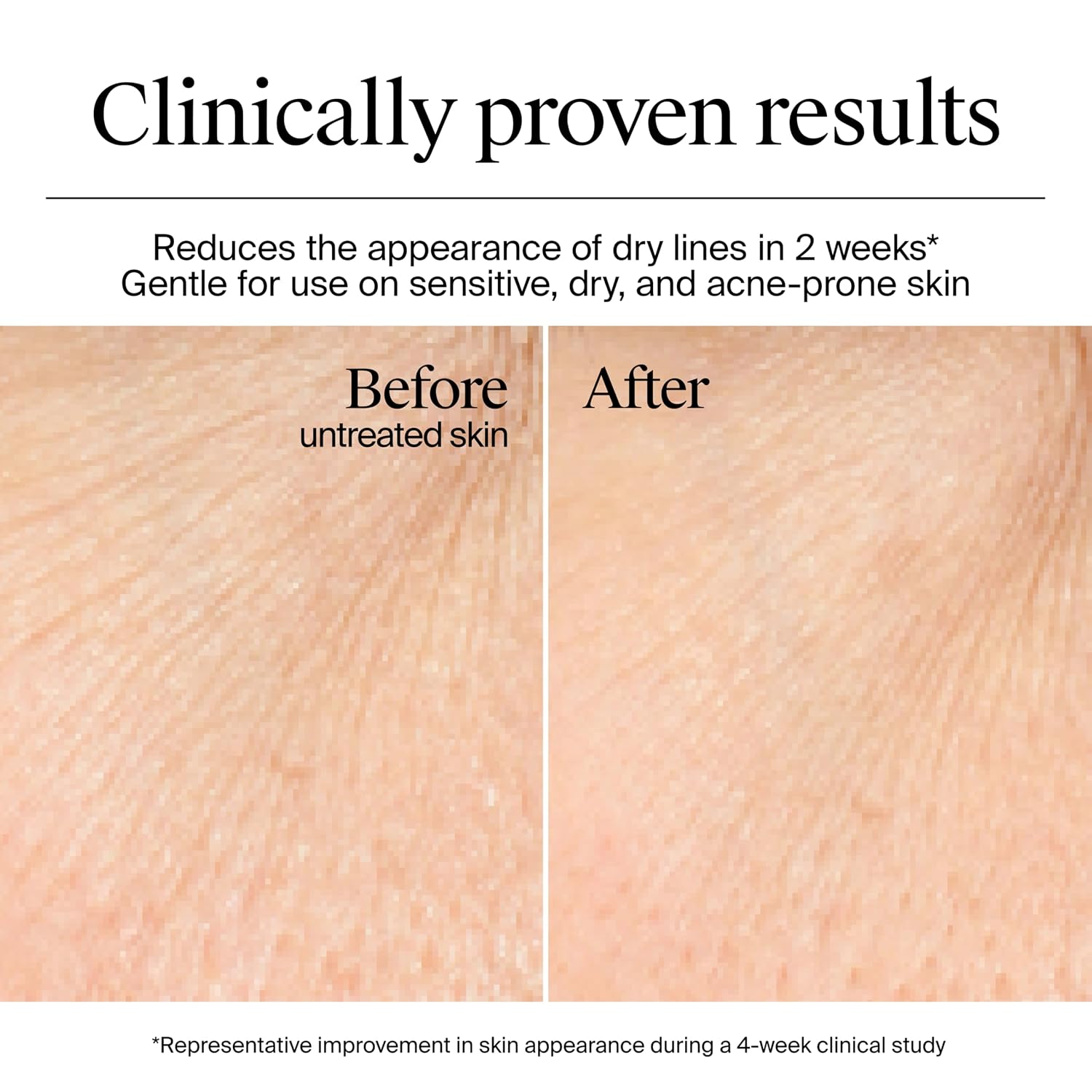
- Gentle and lightweight: Neutrogena Hydro Boost Gel Cream is a water-like face moisturizer designed to nourish skin, providing 48-hour hydration, reducing appearance of dry lines in 2 weeks, and leaving skin juicy-looking
- Results you can feel: Refreshed, hydrated, smoother, more dewy skin that feels soft and more resilient; skin looks healthy and supple
- Designed for sensitive skin: A daily facial moisturizer suitable for different skin types and gently formulated for normal to dry skin, and gentle enough for sensitive and acne-prone skin
- Gently formulated for everyday use: Allergy-tested and free of dyes and fragrance, it locks in moisture for long-lasting, deep hydration for sensitive skin in a gentle, noncomedogenic facial moisturizer
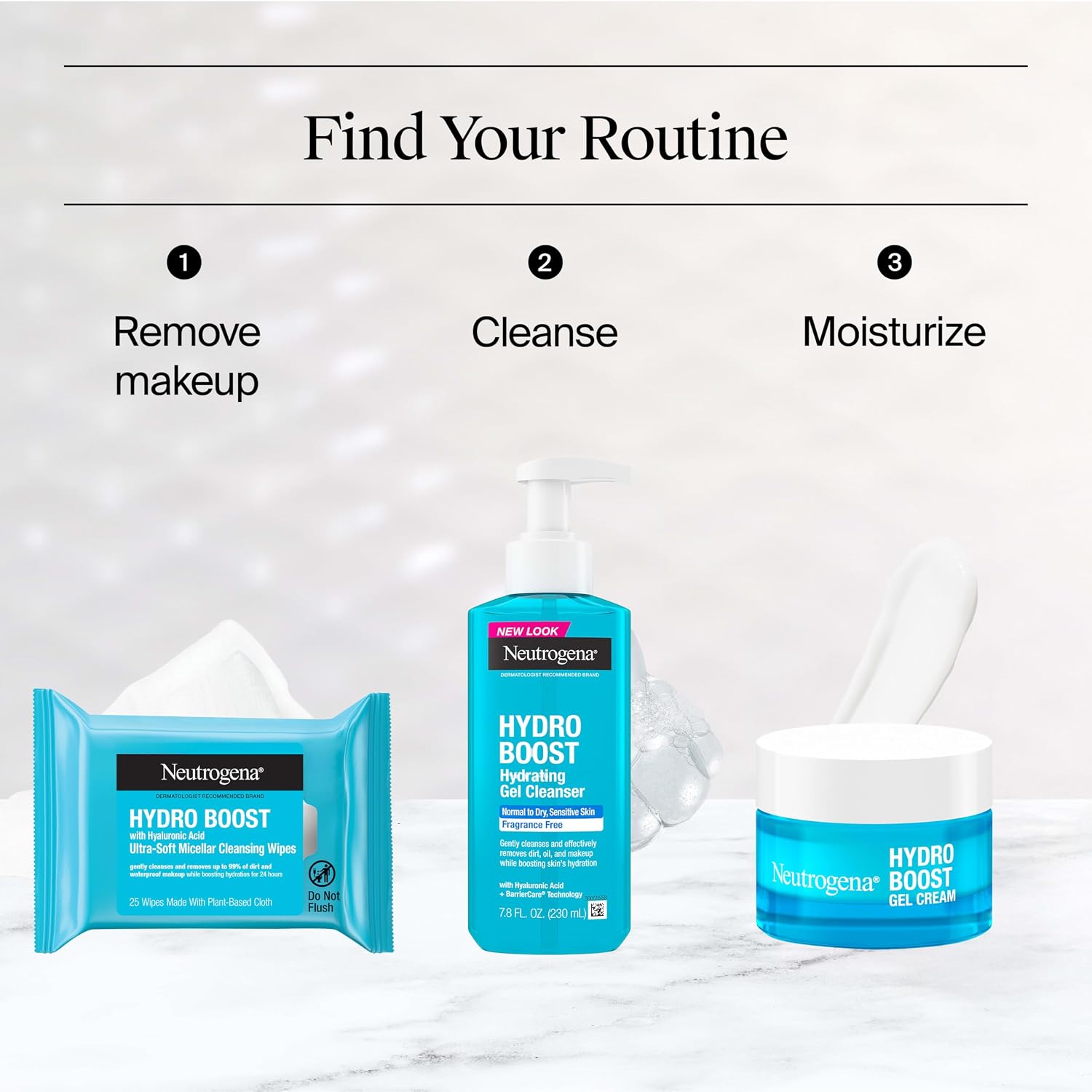
- Dermatologist recommended brand: From the Neutrogena Hydro Boost line, pair with the included travel size Hydrating Gel Cleanser for a complete daily regimen and a hydrated glow
Product images
Three frames per row, in the order the listing publishes them.
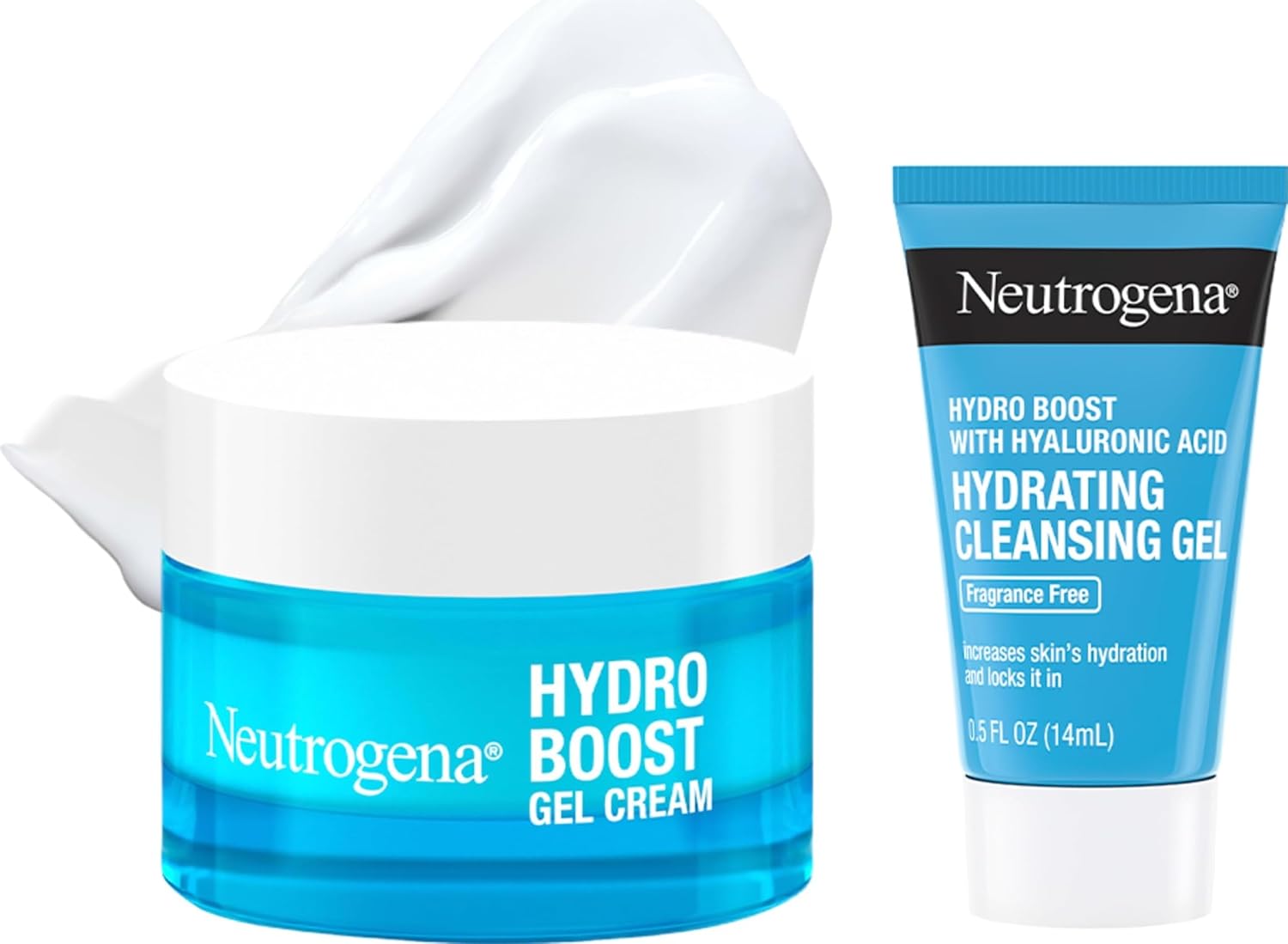
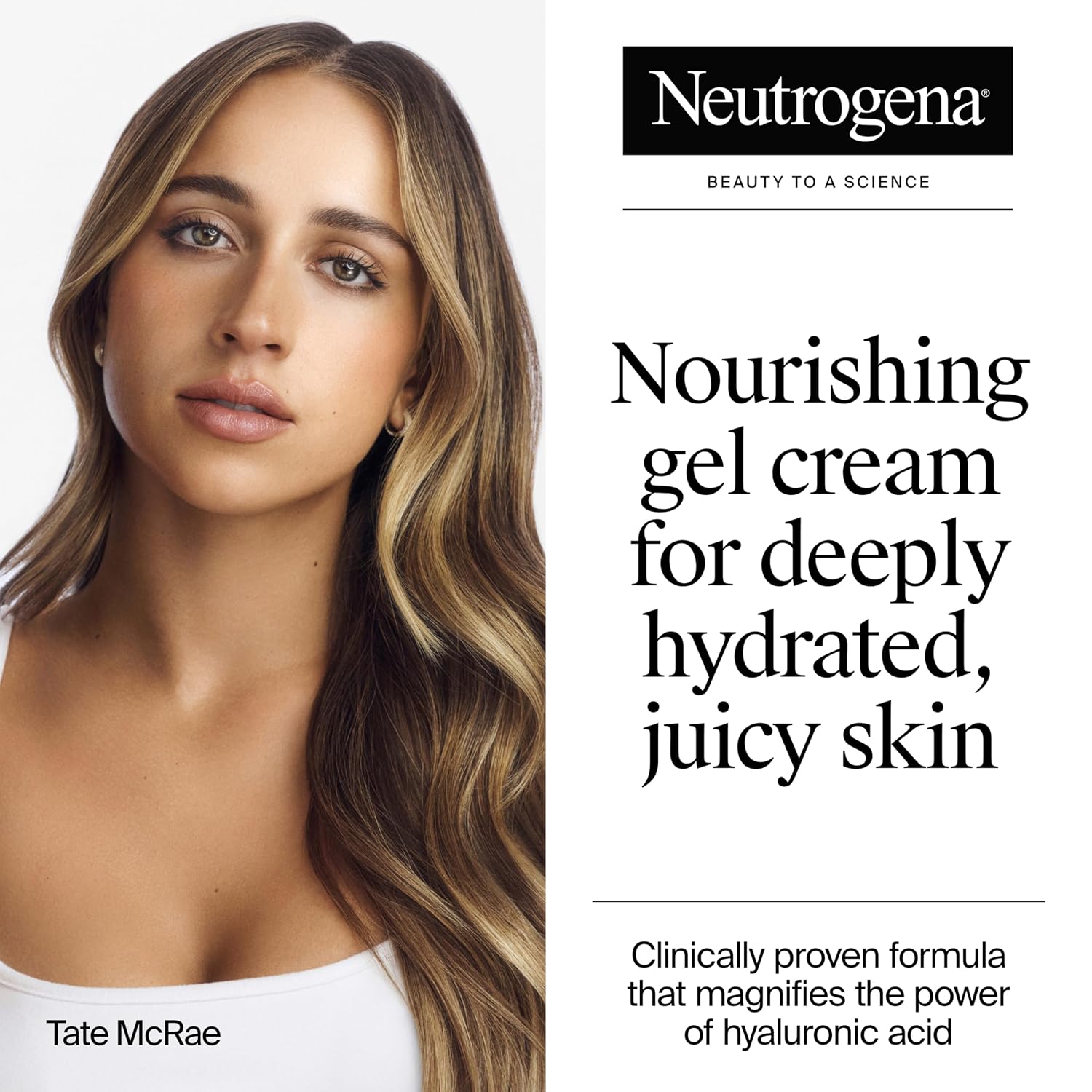
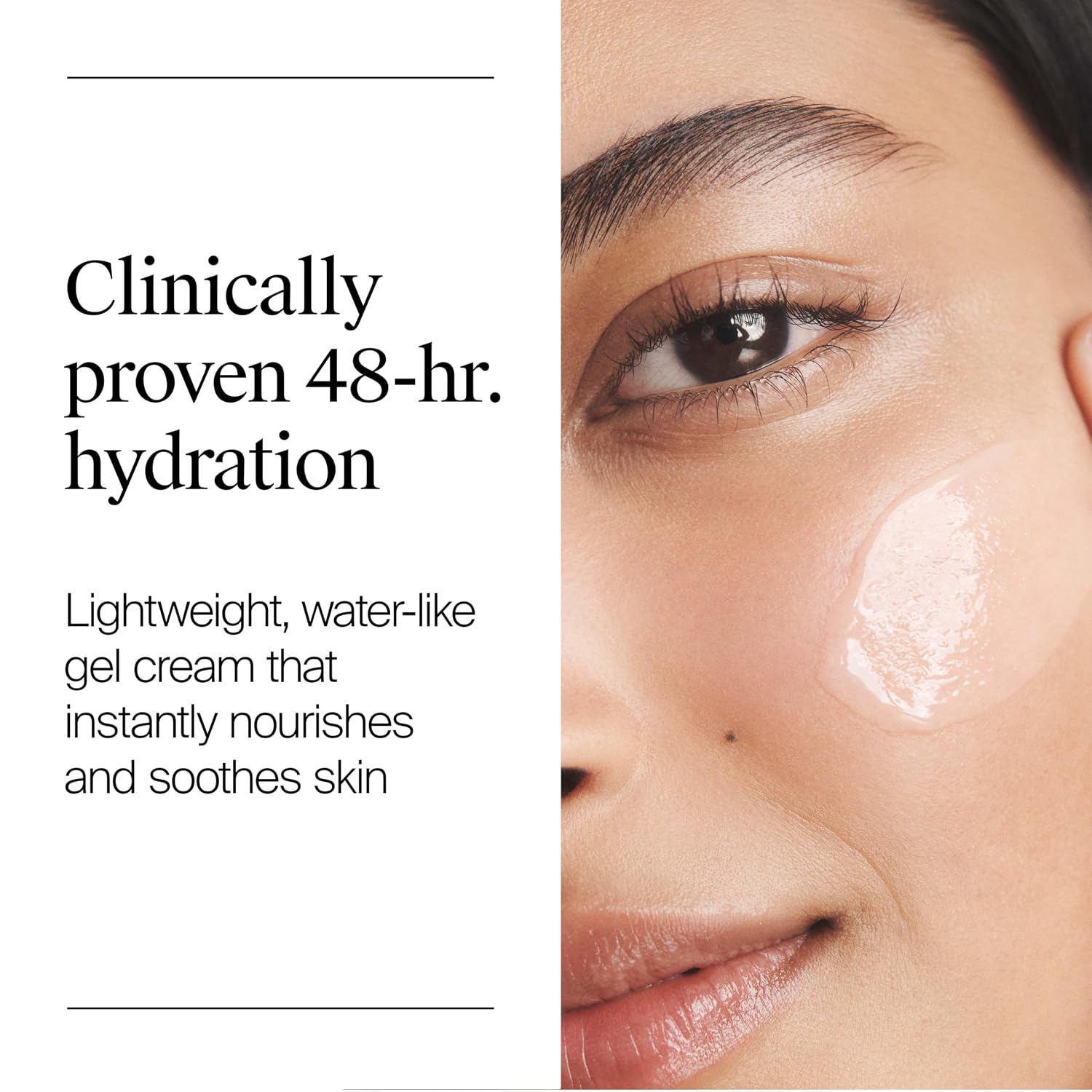
Real product photos
The listing rendered no buyer-upload tiles at capture time, so this strip carries the remaining Amazon listing photography rather than customer uploads.
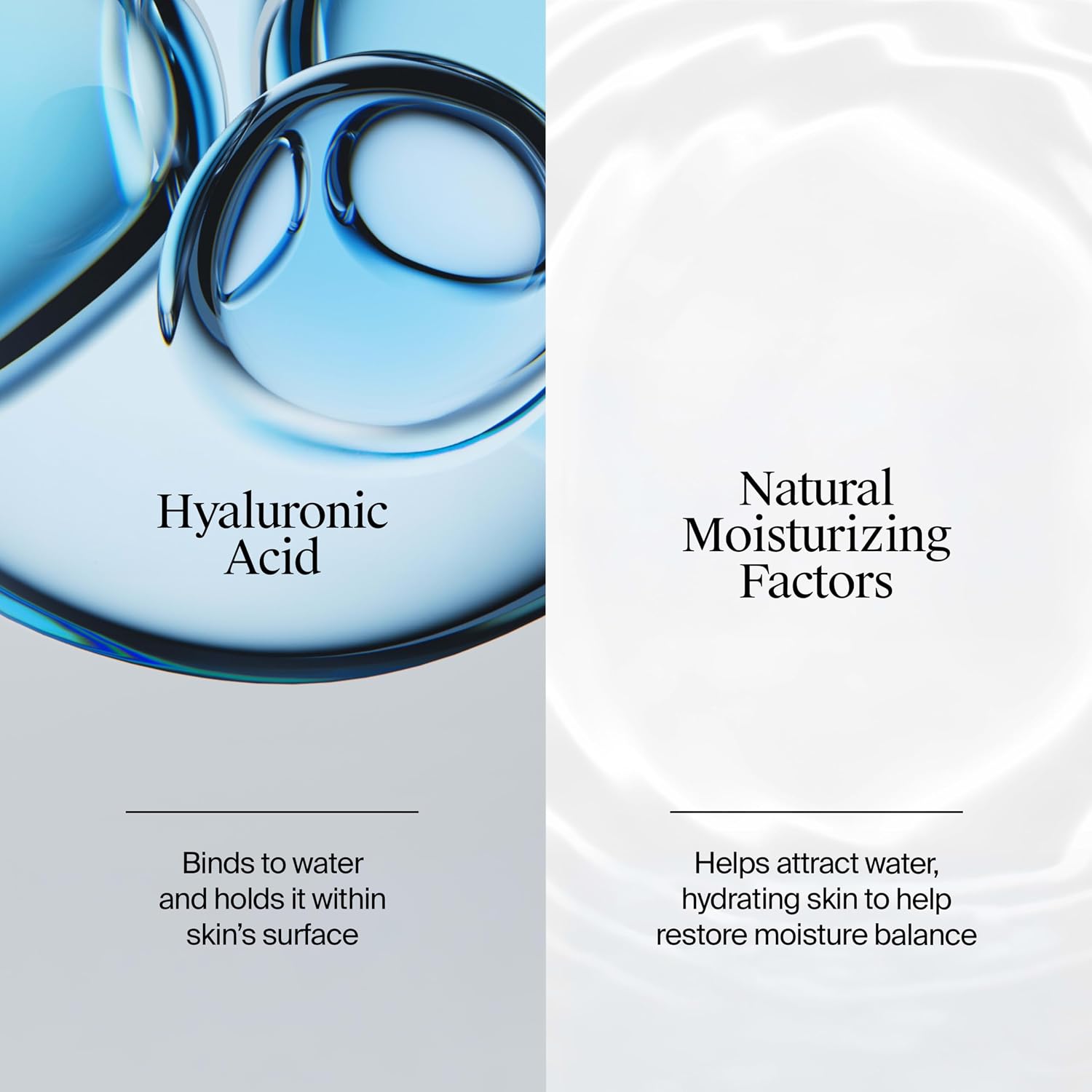
The score, its distribution, and the themes under it
Aggregate ratings come straight from the platform. Review substance is summarised by aspect rather than quoted: no reviewer name, handle, avatar, identifier or profile link appears anywhere in this dossier.
Distribution of ratings
82% of the 4,858 ratings sit at five stars and 11% at four, so 93% of the record is positive. The tail is thin but not absent: 4% lands at one or two stars, which is the share of buyers the formula did not work for.
What buyers write about
| Aspect | Mentions | Positive | Negative | Positive share |
|---|---|---|---|---|
| Moisturizing | 288 | 236 | 52 | 82% |
| Lightweight | 100 | 90 | 10 | 90% |
| Non-Greasy | 98 | 75 | 23 | 77% |
| Skin Compatibility | 77 | 48 | 29 | 62% |
| Fragrance-Free | 68 | 50 | 18 | 74% |
| Absorption | 64 | 58 | 6 | 91% |
| Consistency | 41 | 19 | 22 | 46% |
| Application | 36 | 32 | 4 | 89% |
Aspect counts are a model-generated summary of the review corpus, not a vote tally, and do not sum to the rating total.
The platform's own summary
Customers find the moisturizer effective at hydrating skin and appreciate its lightweight, non-greasy formula that absorbs quickly without leaving a residue. They like its mild scent and smooth application, and one customer notes it's particularly suitable for summer use. The skin compatibility receives mixed feedback - while some say it doesn't irritate sensitive skin, others report burning sensations. The consistency also gets mixed reviews, with some finding it feels like water while others wish it was thicker.
Reading the signal
The strongest theme is absorption (91% positive across 64 mentions) and the weakest is consistency (46% of 41). A 4.7 average with a 3% one-star tail is the profile of a product that works for most buyers and irritates a small, identifiable minority — the pattern to check against your own skin before committing to the set.
Confidence: high for the score, the count and the histogram (published directly); medium for the aspect split, which is a summary layer over the review corpus rather than a count of votes.
Two databases, one formula, and where they disagree
COSDNA supplies acne risk, irritant and safety grades; Skinsort supplies INCI position, function and comedogenic / irritancy ratings plus the consumer claim matrix. Rows were normalised and fused on ingredient name: 34 matched exactly, 0 sit only in COSDNA, 0 only in Skinsort.
Level classification
Every ingredient carrying a COSDNA safety grade is bucketed by it. The scale runs the other way round from a conventional score: 1 is the least concerning reading and higher numbers mean more caution is warranted. The two left-hand bands are therefore the clean ones. Not rated means the database holds no entry — it is missing data, not a clean bill.
| Safety band | Ingredients | Share of table |
|---|---|---|
| Band 1 — least concerning | 24 | 70.6% |
| Band 2 — low | 6 | 17.6% |
| Band 3 — moderate | 2 | 5.9% |
| Band 4 — elevated | 2 | 5.9% |
| Not rated | 0 | 0.0% |
Functional architecture
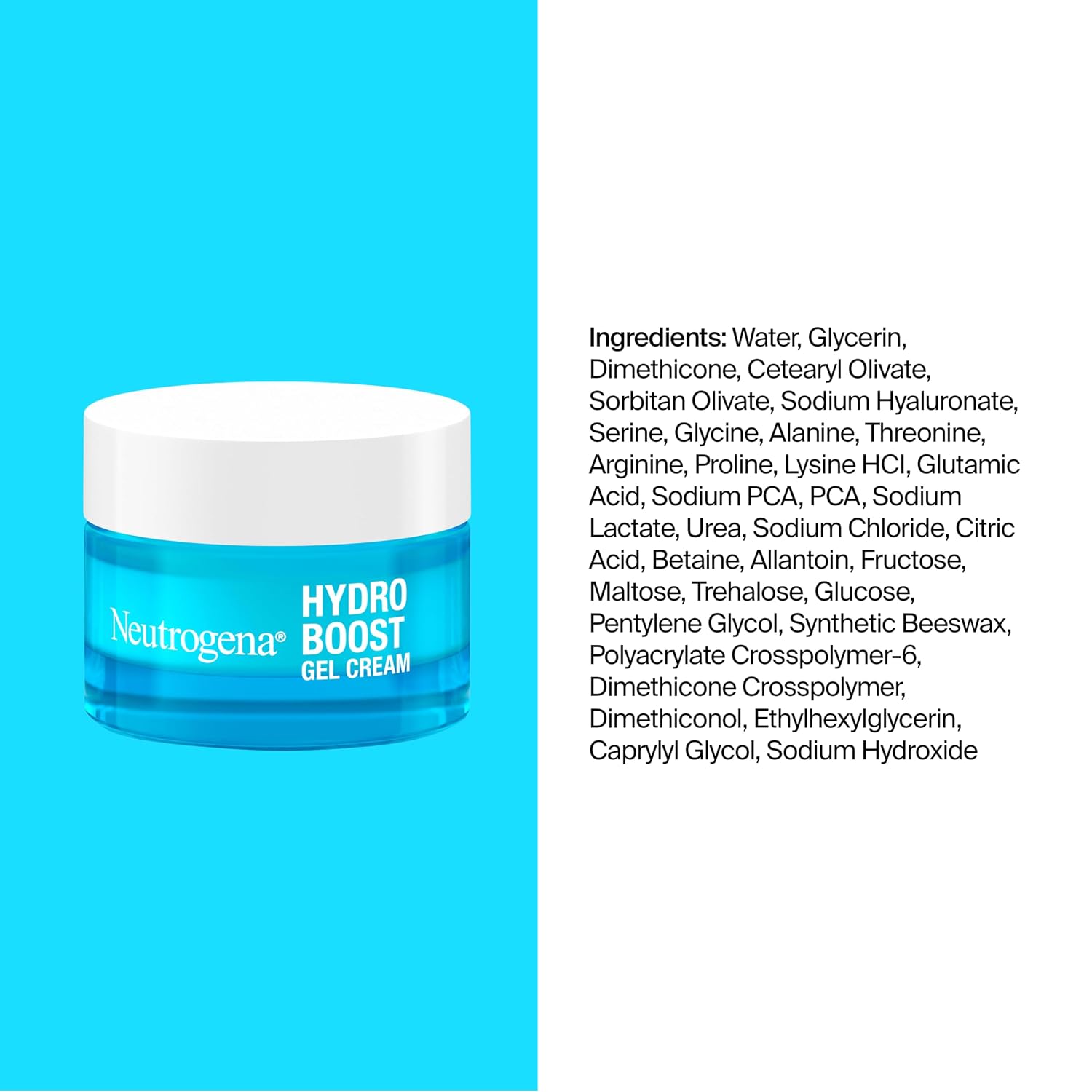
Read the profile as a shape rather than a list. The table holds 34 ingredients; the largest functional block is Humectant / hydrating (17 rows), followed by Emollient / conditioning (6). Position order opens with Water, Glycerin, Dimethicone, which is where the load-bearing part of the formula sits, and closes with Ethylhexylglycerin, Caprylyl Glycol, Sodium Hydroxide at the level of a trace. The water phase, the oil phase and the preservation system are all present, so this reads as a conventional emulsion with the actives placed where the marketing claims them.
Ingredients that carry a flag
A row appears here when at least one published grade reaches 3. Read it as a class-level signal about an ingredient, not a prediction about this jar for your skin.
| Ingredient | Function | Acne | Irritant | Safety | Comedo. | Irritancy |
|---|---|---|---|---|---|---|
| Dimethicone | Skin conditioning, Emollient | 1 | 0 | 2-5 | 1 | 0 |
| Sodium Hydroxide | pH Adjusters | – | – | 1-4 | – | – |
| Sodium Lactate | pH Adjusters, Moisturizer, Exfoliator | – | – | 1-3 | – | – |
| Urea | Antistatic, Skin conditioning, Moisturizer, Anti-inflammatory, Exfoliator | – | – | 1-3 | – | – |
| Sodium Chloride | Viscosity Control | 0-3 | – | 1 | – | – |
What's inside: the claim matrix
Labels are printed as the aggregator grades them. A cross is a failing claim, not a neutral reading — for a cream marketed to reactive skin, the fragrance line is the one worth reading twice.
Flagged concerns
Key ingredient groups
Claims the formula can support
Bar length is the number of ingredients the aggregator credits for each benefit. A one-ingredient claim is a weak signal, not a promise.
Complete ingredient table
34 rows in published order. Acne, irritant and safety come from COSDNA; comedogenic and irritancy from Skinsort. A dash means the database holds no rating.
| # | Ingredient (INCI) | Function | Acne | Irritant | Safety | Comedo. | Irritancy |
|---|---|---|---|---|---|---|---|
| 01 | Water | Solvent | – | – | 1 | – | – |
| 02 | Glycerin | Solvent, Viscosity Control, Skin conditioning, Moisturizer | 0 | 0 | 1-2 | 0 | 0 |
| 03 | Dimethicone | Skin conditioning, Emollient | 1 | 0 | 2-5 | 1 | 0 |
| 04 | Cetearyl Olivate | Emulsifier | – | – | 1 | – | – |
| 05 | Sorbitan Olivate | Emulsifier | – | – | 1 | – | – |
| 06 | Sodium Hyaluronate | Skin conditioning, Moisturizer | 0 | 0 | 1 | 0 | 0 |
| 07 | Serine | Antistatic, Moisturizer | – | – | 1 | – | – |
| 08 | Glycine | Skin conditioning | – | – | 1 | – | – |
| 09 | Alanine | Antistatic, Moisturizer | – | – | 1 | – | – |
| 10 | Threonine | Antistatic | – | – | 1 | – | – |
| 11 | Arginine | Antistatic, Skin conditioning, Moisturizer | – | – | 1 | – | – |
| 12 | Proline | Antistatic, Skin conditioning | – | – | 1 | – | – |
| 13 | Lysine HCl | Skin conditioning | – | – | 1 | – | – |
| 14 | Glutamic Acid | Antioxidant | – | – | 1 | – | – |
| 15 | Sodium PCA | Antistatic, Skin conditioning, Moisturizer | 0 | 0 | 1 | 0 | 0 |
| 16 | PCA | Moisturizer | – | – | 2 | – | – |
| 17 | Sodium Lactate | pH Adjusters, Moisturizer, Exfoliator | – | – | 1-3 | – | – |
| 18 | Urea | Antistatic, Skin conditioning, Moisturizer, Anti-inflammatory, Exfoliator | – | – | 1-3 | – | – |
| 19 | Sodium Chloride | Viscosity Control | 0-3 | – | 1 | – | – |
| 20 | Citric Acid | pH Adjusters | – | – | 1-2 | – | – |
| 21 | Betaine | Viscosity Control, Antistatic, Moisturizer | – | – | 1 | – | – |
| 22 | Allantoin | Skin conditioning, Anti-inflammatory, Anti-allergic | 0 | 0 | 1 | 0 | 0 |
| 23 | Fructose | Moisturizer | – | – | 1 | – | – |
| 24 | Maltose | Moisturizer | – | – | 1 | – | – |
| 25 | Trehalose | Moisturizer | – | – | 1 | – | – |
| 26 | Glucose | Moisturizer | – | – | 1 | – | – |
| 27 | Pentylene Glycol | Moisturizer | – | – | 1 | – | – |
| 28 | Synthetic Beeswax | Viscosity Control, Emollient, Emulsifier | 0-2 | 0-2 | 1-2 | – | – |
| 29 | Polyacrylate Crosspolymer-6 | Viscosity Control | – | – | 1 | – | – |
| 30 | Dimethicone Crosspolymer | Viscosity Control | – | – | 1-2 | – | – |
| 31 | Dimethiconol | Moisturizer, Emollient | – | – | 1 | – | – |
| 32 | Ethylhexylglycerin | EM | – | – | 2 | – | – |
| 33 | Caprylyl Glycol | Moisturizer, Emollient | – | – | 1 | – | – |
| 34 | Sodium Hydroxide | pH Adjusters | – | – | 1-4 | – | – |
Reading notes. Acne risk and irritancy are read low-is-safer; safety is an inverse grade where 1 is the least concerning. Where a source prints a range, the upper bound is used for banding so an ingredient is never quietly upgraded. Two rows carried a range across the acne column (Sodium Chloride, Synthetic Beeswax); the printed values were assigned to acne risk and safety with irritant left unrated. Urea and Sodium Lactate print an exfoliation grade of 1-3 that is read on the upper bound throughout.
Where the ask sits inside its own record
The current ask, the surrounding history, and how the price behaves against its floor, its average and the list price. Every figure is USD as rendered for a US delivery address; nothing is converted and nothing is estimated.
Price history by channel
| Price type | Lowest ever | Low date | Highest ever | High date | Current | Current date | Average |
|---|---|---|---|---|---|---|---|
| Amazon | $14.97 | 2025-10-05 | $44.98 | 2025-08-12 | $22.13 | 2026-10-29 | $21.89 |
| 3rd Party New | $14.00 | 2025-09-11 | $46.50 | 2025-10-15 | $22.13 | 2026-10-30 | $25.83 |
| 3rd Party Used | — | — | — | — | — | — | — |
The tracker's summary block is all-time by construction: changing the chart window rescales the line but never re-computes these values, so no period-specific low or high can be read from it. The last observation in the record is dated 2026-10-29, 3 days before this capture, and the tracker reports its last scan as “1 day ago”. Treat the live figure as up to 3 days old, not as a quote for today.
Channel comparison
Four bars per channel — the floor, the average, the live ask and the ceiling. A channel with no data is drawn as no bars at all rather than as a zero.
Dated observations
The tracker publishes the dated extremes and the last observation, not a full series, so the line below connects the actual dated points rather than inventing the days in between.
Derived position
| Metric | Value | Percent | Reading |
|---|---|---|---|
| All-time range, Amazon | $30.01 | 200.5% | Highest ever minus lowest ever, as a share of the floor |
| Current vs all-time low (Amazon) | +47.8% | — | How far the live price sits above the floor |
| Current vs all-time average (Amazon) | +1.1% | — | Above average puts the price in the upper half of its own history |
| Current vs list price | — | — | List price is the brand's reference, not a promotional anchor |
| Marketplace premium (3P new average minus Amazon average) | $+3.94 | — | Positive means third-party sellers average above Amazon itself |
What the record says
The live ask of $22.13 sits +1.1% against its own all-time average of $21.89 and +47.8% above the floor of $14.97, first touched on 2025-10-05. That distance is the real promotional room: a discount that never approaches the floor is cosmetic, not structural.
Amazon itself held the buy box at $22.13, and the record spans $14.97 to $44.98. A ceiling dated to the first weeks of monitoring is usually a launch or reseller artefact rather than a market high, so read the range as the shape of the record, not as a demand curve.
Confidence: high for the transcribed prices and dates, medium for the interpretive paragraphs, which reason from five values per channel rather than from an observation log.
Scope, limits and confidence
One marketplace (Amazon US), one SKU, one capture per source on 2026-11-01. Prices read with a US delivery address active and quoted in native USD. Ratings are the platform's own aggregate, not a re-scored sample.
34 COSDNA rows and 34 Skinsort rows were normalised and joined on ingredient name: 34 matched, 0 COSDNA-only, 0 Skinsort-only. Position order follows Skinsort where it exists.
Both ingredient sources are community databases, not regulatory filings; their grades are class-level references. The price record holds five values per channel, so period-specific extremes cannot be derived from it. The set contains two SKUs and the ingredient table covers the cream; the mist is a separate formula.
No reviewer name, handle, avatar, identifier or profile link is reproduced. Review content appears only as aggregated aspects and the platform's own summary paragraph.