United States · Face & neck cream · Single-product teardown
30 October 2026
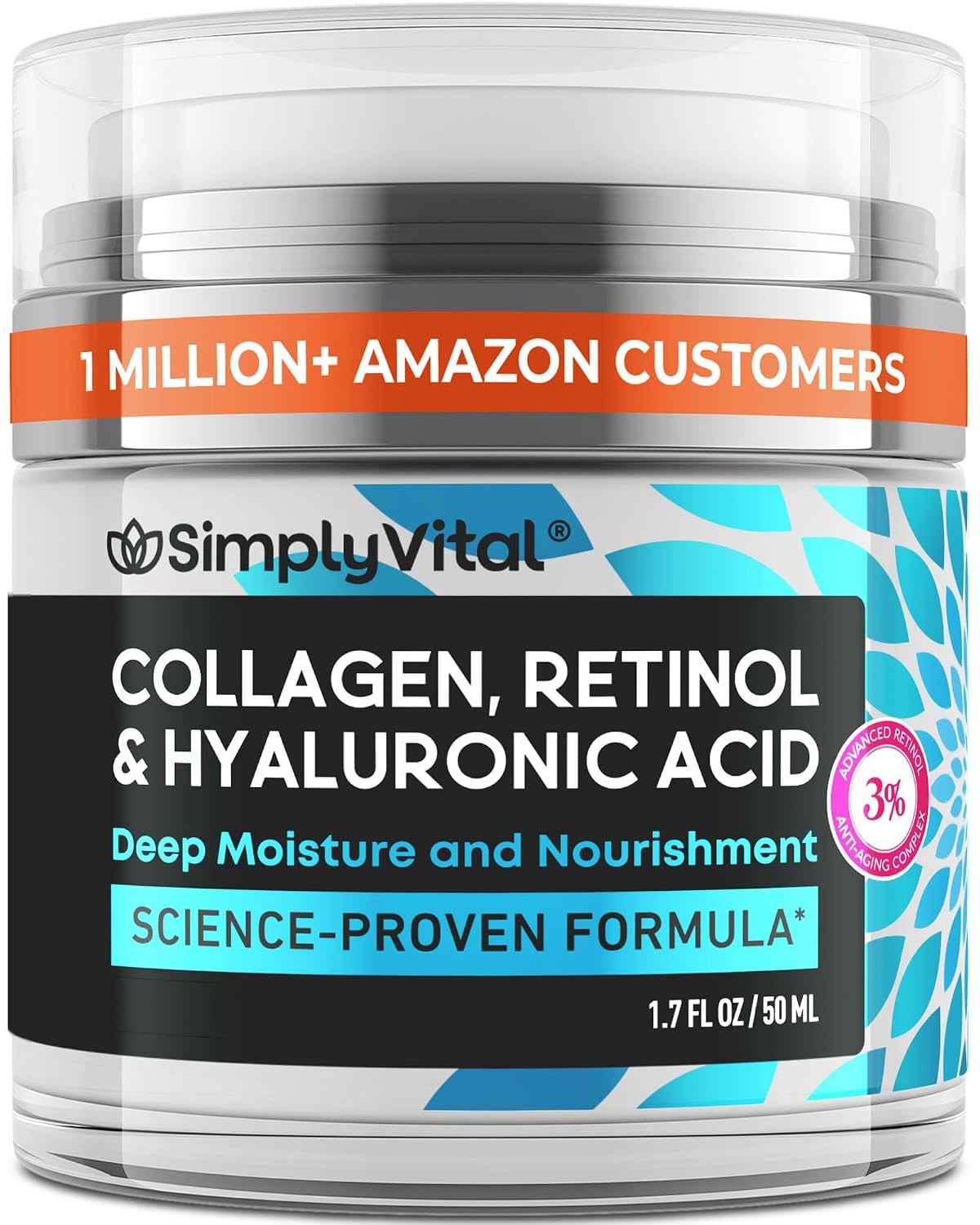
Ranked #1 in Neck & Décolleté moisturisers with 38,320 ratings at 4.4. Twenty-one ingredients, four preservatives, and a 3% retinol claim the panel cannot confirm. Buyers rate the finish at 98%. They rate the irritation at 45%.
Assembled from the live listing, a four-year price archive, and two ingredient databases - neither of which would answer for this brand.
A four-year-old bestseller with a 3% retinol badge
A 50 ml jarred face and neck cream. The specification table is transcribed from the listing; the claims are quoted as written, and the ones that can be checked against the ingredient panel are checked in section 03.
| Brand | SimplyVital |
|---|---|
| Item Volume | 1.7 fluid ounces |
| Item dimensions L x W x H | 2.28 x 2.28 x 3.03 inches |
| Age Range (Description) | Adult |
| Special Feature | Natural Ingredients |
| Item Dimensions | 2.28 x 2.28 x 3.03 inches |
| Unit Count | 1.7 Fluid Ounces |
| Item Weight | 1.7 ounces |
| Product Dimensions | 2.28 x 2.28 x 3.03 inches; 1.7 ounces |
| Item model number | SimplyVital Collagen Cream |
| UPC | 691027234679 |
| Manufacturer | SimplyVital |
| ASIN | B0BBSP2JNQ |
| Best Sellers Rank | #194 in Beauty & Personal Care; #1 in Neck & Décolleté Moisturizers |
- Format
- 50 ml / 1.7 fl oz jar; a cream, not a gel
- Named actives
- Retinol, hydrolysed marine collagen, hyaluronic acid
- Declared use
- Face and neck; daily, building up from 1-2× a week
- Hard requirement
- SPF 30+ during the day, stated in the copy
- Declared scent
- None in the panel - yet 582 reviews discuss one
The five claims, as written
- Nourishing Face Moisturizer - Enhance your anti-aging skincare routine with this moisturizing face cream and facial moisturizer, designed to help your skin feel smooth and refreshed. Collagen supports the look of skin's flexibility while promoting a visibly firmer texture for both face and neck. Enjoy a youthful glow with a gentle solution that provides enduring hydration and care, ideal as a hydrating face moisturizer.
- Advanced Retinol Face Cream - Formulated with a balanced concentration of retinol, this moisturizer promotes a renewed and smoother, refreshed appearance. Hyaluronic acid complements retinol to help maintain hydration, leaving skin feeling soft and nourished without tightness. This product complements your collection of facial skin care products and daily beauty products.
- Expertly Formulated, Rigorously Tested - SimplyVital guarantees exceptional quality in each jar. We carefully select effective yet gentle components to create potent formulas, ensuring your skin gets the attention it deserves while enhancing your natural elegance. Also effective as a facial firming cream and supportive of visibly neck firming and tightening when used daily on targeted areas.
- Comprehensive Skincare for All - Designed for both men and women, this cream also serves as a mens face moisturizer and face moisturizer for men, offering flexibility in any routine. It may be used in place of visible skin firming and tightening lotion or alternated with it, making it a smart addition to your skincare routine.
- How to Use - Apply a small amount to clean, dry skin, massaging until absorbed. Start 1-2 times a week for sensitive skin, then increase as needed. Use daily for optimal results. Always apply SPF 30+ during the day, as retinol may heighten sun sensitivity. Perform a patch test before initial use. Discontinue use if irritation occurs. Individual sensitivity to components is possible.
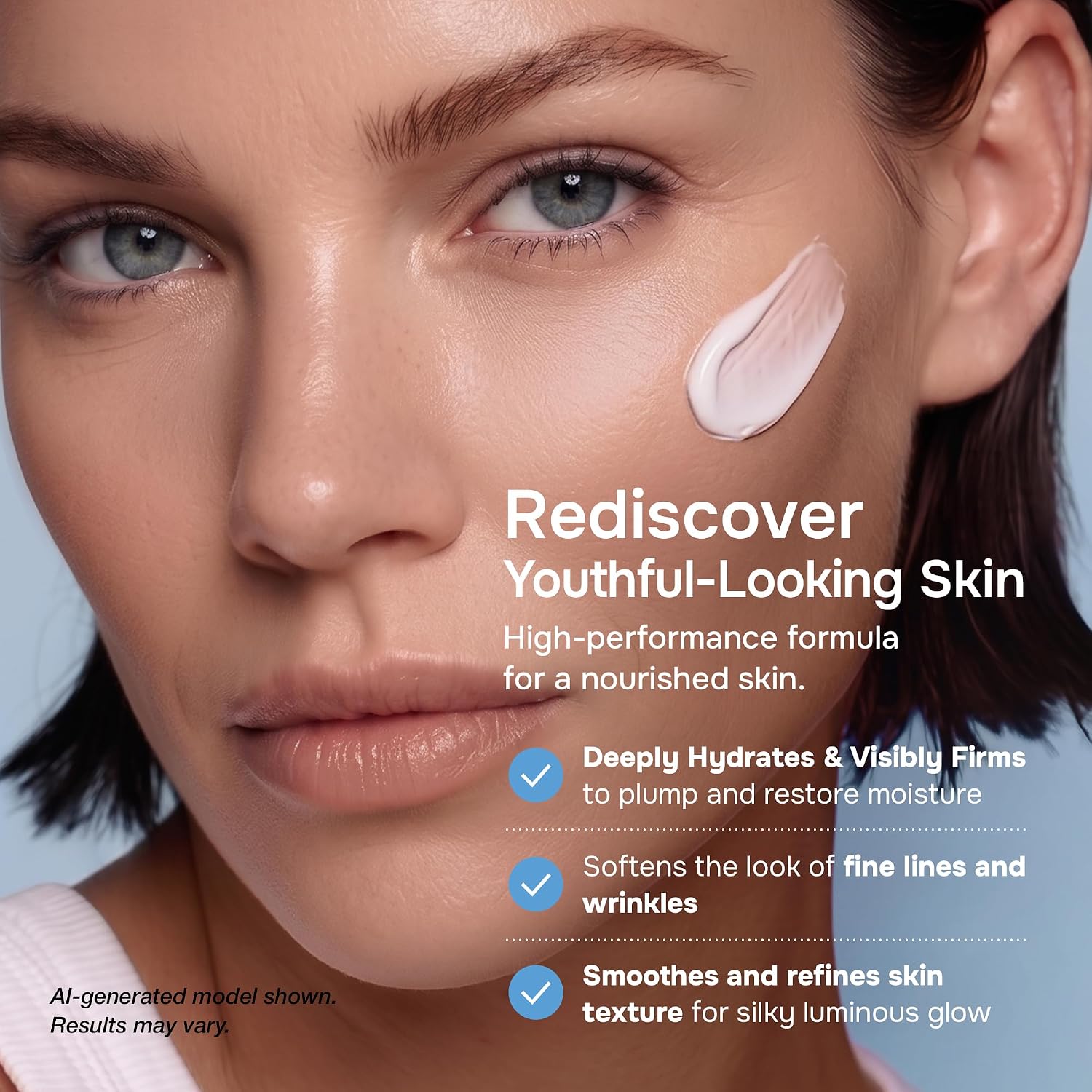
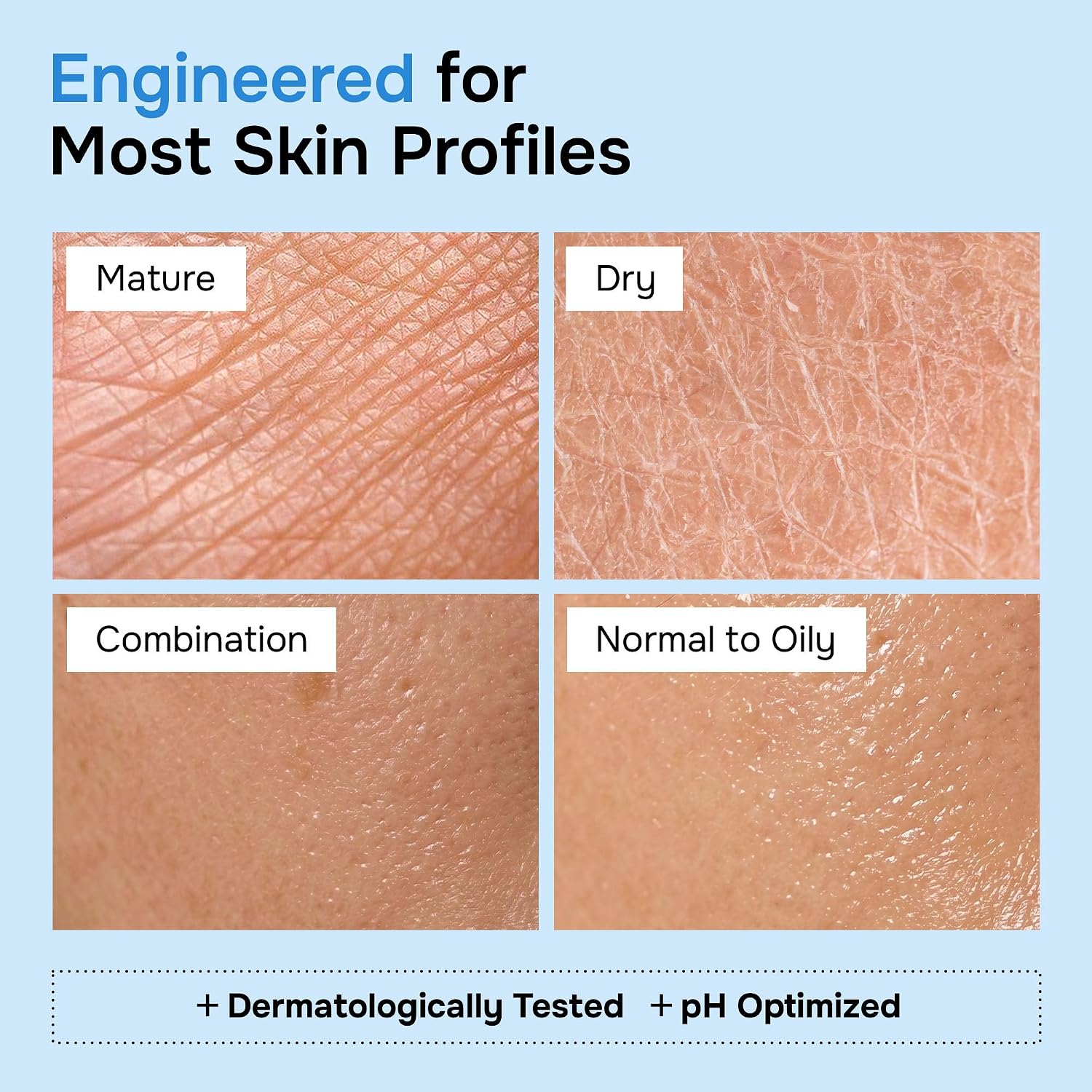
The product, as photographed
Three carousel frames. The listing exposes no buyer photos, so these are the only images available.
Thirty-eight thousand ratings, one clear fault line
38,320 ratings at 4.4 out of 5. The distribution is orderly and the praise is consistent - texture and finish score in the nineties. Exactly one theme falls below 77%, and it is the one that matters most to a buyer with reactive skin.
Star distribution
What buyers talk about, and how they split
Mentions per themed aspect, split positive and negative. Bars are ordered by volume.
| Aspect | Mentions | Positive | Negative | Positive share |
|---|---|---|---|---|
| effectiveness | 3,243 | 2,786 | 457 | 86% |
| non-greasy | 1,806 | 1,403 | 403 | 78% |
| texture | 1,636 | 1,535 | 101 | 94% |
| moisturizing | 1,204 | 981 | 223 | 81% |
| skin softness | 913 | 892 | 21 | 98% |
| skin irritation | 660 | 297 | 363 | 45% |
| fragrance | 582 | 447 | 135 | 77% |
| application | 418 | 346 | 72 | 83% |
The summary the platform itself gives
Customers find the moisturizer effective and appreciate that it doesn't leave their face feeling greasy. The cream is creamy, hydrating, and leaves skin soft, with a very mild scent and smooth application. Regarding skin irritation, opinions are mixed - while some find it gentle enough for sensitive skin, others report burning sensations.
Twenty-one declarations, and the arithmetic behind the badge
The merged ingredient reading. Neither community database would answer for this brand, so the section rests on the manufacturer's own declaration - all 21 entries, counted by role, with the pack's 3% retinol claim tested against the panel as far as the panel allows.
Distribution by level
Classified by the job each ingredient does, not by any safety score.
| Level | What it contains | Count | Share |
|---|---|---|---|
| L1 Base & oil phase | Water, five emollient oils, the fatty alcohol and the fatty acid | 7 | 33% |
| L2 Functional actives | Retinol, marine collagen, hyaluronic acid, aloe, chamomile, vitamin E | 6 | 29% |
| L3 Texture & stabiliser | Two thickeners, a chelator, avocado oil | 4 | 19% |
| L4 Preservation | Four preservatives, one a formaldehyde releaser | 4 | 19% |
| Total | 21 | 100% |
The formula by functional family
Counted from the declaration. The emollient block is the largest single group.
The 3% claim, examined
The full declaration, all 21 entries
In label order, which is descending concentration. Position is the only concentration signal available.
| # | INCI name | Function | Level | Note |
|---|---|---|---|---|
| 1 | Purified Water | Solvent; continuous phase | L1 | First-declared, so water-dominant despite the rich base |
| 2 | Caprylic/Capric Triglyceride | Emollient ester, oil phase | L1 | Light fractionated coconut-derived oil; the main emollient |
| 3 | Cocos Nucifera (Coconut) Oil | Emollient, occlusive | L1 | Comedogenic for some; the richest component here |
| 4 | Simmondsia Chinensis (Jojoba) Seed Oil | Emollient wax ester | L1 | Closest natural match to sebum |
| 5 | Aloe Barbadensis (Aloe Vera) Gel | Soothing humectant | L2 | First functional ingredient after the oils |
| 6 | Stearyl Alcohol | Fatty alcohol; emulsion stabiliser, body | L1 | Not a drying alcohol; gives the cream its structure |
| 7 | Stearic Acid | Fatty acid; emulsifier partner | L1 | Reacts with the base to form the emulsion |
| 8 | Isopropyl Myristate | Emollient, penetration enhancer | L1 | Light spreading agent; carries the actives |
| 9 | Retinol | Cell-turnover active | L2 | The headline active, and the reason for the SPF warning |
| 10 | Hydrolyzed Marine Collagen | Protein film former, humectant | L2 | Marine, not bovine - the label says so explicitly |
| 11 | Hyaluronic Acid | Humectant | L2 | Single molecular form only, unlike multi-weight serums |
| 12 | Acrylates/Steareth-20 Methacrylate Copolymer | Thickener, rheology modifier | L3 | Gives the cream its shear-thinning body |
| 13 | Phenoxyethanol | Preservative | L4 | Primary preservative at the usual 1% ceiling |
| 14 | Caprylyl Glycol | Preservative booster, skin conditioning | L4 | - |
| 15 | Potassium Sorbate | Preservative | L4 | Mould and yeast control |
| 16 | Imidazolidinyl Urea | Preservative; formaldehyde releaser | L4 | The most contentious entry on the panel |
| 17 | EDTA | Chelator | L3 | Stabilises the emulsion against metal ions |
| 18 | Carbomer | Thickener, gelling agent | L3 | Works with the acrylate copolymer |
| 19 | Persea Gratissima (Avocado) Oil | Emollient | L3 | Declared late, so a low share |
| 20 | Organic Matricaria Recutita (Chamomile) Flower Extract | Soothing botanical | L2 | The only certified-organic entry |
| 21 | Tocopheryl Acetate (Vitamin E) | Antioxidant | L2 | Protects the oils from oxidising; stabiliser as much as active |
The one ASIN here where the marketplace undercuts Amazon
Four years of price record, two channels, and a first-party series that averages 40% above the list price while the buy box charges list exactly. The channel inversion is the story, and it is also a warning about reading the first-party line at face value.
Both channels, the same four fixed points
Grouped so the inversion is visible: on the average and the high the first-party bar towers over the marketplace, and on the current price it is the other way round.
| Price type | Lowest ever | Highest ever | Current | Average |
|---|---|---|---|---|
| Amazon (first party) | $18.98 (27 Jun 2026) | $42.39 (13 Sep 2026) | $28.02 (28 Oct 2026) | $33.64 |
| 3rd Party New | $13.99 (27 Mar 2023) | $50.99 (09 Oct 2024) | $23.97 (06 Sep 2026) | $22.02 |
| 3rd Party Used | no data | no data | no data | no data |
The first-party current was last observed 2 days before collection; the marketplace current 54 days before. Both are last-observation values, not live quotes. The marketplace figure is stale enough to re-check before any transaction.
Position against its own history
| Benchmark | Amazon | 3rd Party New | Reading |
|---|---|---|---|
| Current vs all-time low | +47.6% | +71.3% | both channels sit well above their floors |
| Current vs all-time high | -33.9% | -53.0% | the spikes have fully unwound |
| Current vs lifetime average | -16.7% | +8.9% | the two channels disagree on direction |
| Current vs list price | +16.9% | +0.0% | first party above list, marketplace at list |
| Average vs list price | +40.3% | -8.1% | a 48-point gap between the channels' averages |
| Recorded spread | $23.41 | $37.00 | 123% and 264% of their respective lows |
What holds up, what does not
- The sensory result is real and it is the product's strength: 98% positive on skin softness, 94% on texture, 78% on non-greasy across 1,806 mentions.
- Retinol is declared at position 9 of 21, before the thickeners - it is not a token inclusion.
- The usage instructions are more honest than the category norm: patch test, build up slowly, wear SPF 30+.
- Four years of continuous monitoring with a stable rating base of 38,320 - the review signal is not thin.
- The 3% retinol figure cannot be verified from the panel and is most likely a share of a complex, not neat retinol.
- “Science-Proven Formula*” carries an asterisk with no footnote anywhere on the listing.
- Imidazolidinyl urea, a formaldehyde releaser, remains in the preservation system.
- Skin irritation at 45% positive is the lowest theme in the table by a wide margin - 363 negative mentions.
- Collagen and a single-form hyaluronic acid do less here than the title implies: one is a surface film, the other hydrates at one molecular weight only.
How this was assembled, and where it is weak
| Element | Confidence | Basis |
|---|---|---|
| Specification table, claims, price at capture | High | Read from the live listing with a US delivery address, prices in native USD |
| Rating average, star distribution, aspect tallies | High | Published aggregates, 38,320 ratings |
| Ingredient identity and order (21 entries) | High | Manufacturer declaration transcribed verbatim and counted |
| Level and family classification | Medium | Analyst scheme from each ingredient's role; not a source field |
| The 3% retinol figure | Unverified | Pack claim only; no percentage in the panel, no database entry |
| Individual review text | Not available | No review bodies rendered on the capture, at any variant or retry |
| Comedogenic / irritancy ratings | Not available | One database blocked, the other does not carry the brand |
| Price history | Medium | Five fixed points per price type, all-time only; the first-party row does not reconcile with the buy box |
What is a snapshot. Price, rank and rating are live values. The marketplace current was last observed 54 days before collection and the first-party current 2 days before. Every figure here is dated 30 October 2026.
What is a derivation. Every percentage, spread and position figure is computed from transcribed values and labelled as such. No percentage is presented as a source figure.
What is an inference. Explanations for the channel inversion, the irritation reports and the 3% claim are marked as inferential where they appear. A review distribution is not a clinical finding.
What is absent on purpose. No reviewer name, handle, profile or ID appears anywhere, because no review text was obtainable. No source URLs are reproduced in the body. No ingredient concentration is estimated from label position.